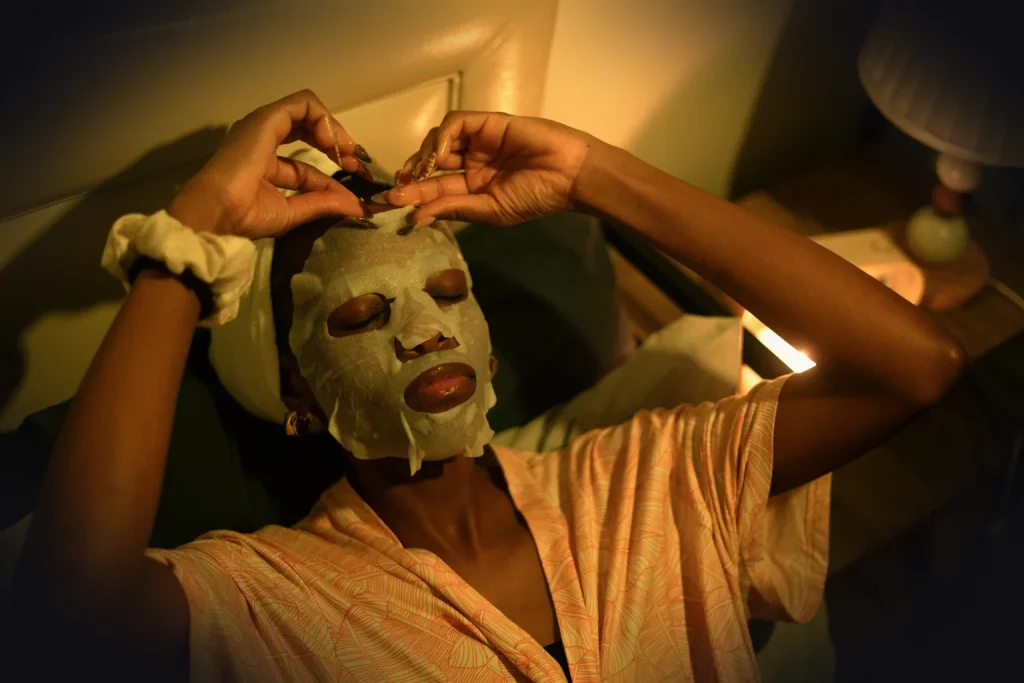
TL;DR
During an active flare, your skin is asking for less, not more. A calming mask should be barrier-friendly and brief: 10 to 15 minutes, no actives, no fragrance, no clay. Pair it with a stripped routine for 7 to 14 days. If redness persists beyond two weeks or breaks the skin, see a dermatologist.
I get this question constantly: my skin is flaring, what mask do I use? The honest answer disappoints people. A mask during a flare is a comfort tool, not a treatment. It buys you a calmer afternoon. It does not undo whatever triggered the reaction. That’s a different conversation, and one most skincare brands would rather not have you hear.
What a flare actually looks like
Reactive skin shows up in patterns. Stinging within seconds of application. Burning when water hits the face. Redness that bleeds past the usual zones. A rough, sandpaper feel where smooth skin used to be. Sometimes tight, sometimes oddly puffy, sometimes both within the same hour.
You can spot it fast. The mistake people make is calling every irritation a flare. A flare is a sustained inflammatory response, not a single bad day. If your skin has been angry for 72 hours and your usual routine now feels hostile, that’s the territory we’re talking about.
Rosacea flares add visible vessels and warmth. Eczema flares add itch and dryness. Sensitization from over-exfoliation adds a glossy, stretched look. Different mechanisms, similar surface signal: leave it alone.
Why the right mask helps and the wrong one doesn’t
A calming mask works because of what it omits. No alpha hydroxy acids. No retinoids. No fragrance, including natural essential oils. No clay, which dehydrates compromised skin further. No menthol or eucalyptus, which feel cooling but read as irritation to inflamed nerves.
What works is occlusion plus humectants plus a couple of anti-inflammatory actives at low concentration. Centella asiatica at around 0.5 to 1 percent has reasonable evidence for reducing erythema. Panthenol supports barrier recovery. Beta-glucan calms reactive immune signaling on the surface.
Elelaf’s Mindful Masks are formulated with this calculus in mind: a short ingredient list, no fragrance, and a fabric carrier that holds humectants against the skin without pressure. I use them on my own face during travel and the week after any procedural treatment.
What actually helps during a flare
The protocol is small and boring. Cleanse with lukewarm water and a sulfate-free cream cleanser, or skip cleanser entirely in the morning. Apply a single humectant serum without acids. Layer a basic ceramide moisturizer. Add SPF 30 mineral in the morning. That’s it.
Mask three or four times across the first week. Ten to 15 minutes per session. Remove before the sheet starts drying, because evaporative loss reverses the benefit. Press the leftover essence in rather than rinsing. Most people overuse masks during flares and undermine recovery, which sounds counterintuitive until you remember that more occlusion isn’t always more healing.
A 2019 review in the Journal of Clinical and Aesthetic Dermatology found that barrier-supportive formulations reduced transepidermal water loss by roughly 32 percent over two weeks in sensitized skin, compared with no measurable benefit from active-heavy regimens. That number maps to what I see clinically. Less is more.
What doesn’t work
Clay masks during a flare. They strip the surface lipids that are already depleted. Ice rolling for hours. Brief cold reduces inflammation; sustained cold causes rebound vasodilation. DIY honey, oatmeal, and turmeric concoctions, which introduce variables you cannot control. Switching brands every two days because the current one isn’t fixing things in 48 hours.
The other failure mode is layering. Five products onto compromised skin is five chances to trigger another reaction. I’ve watched readers stack a calming serum, a soothing essence, a barrier ampoule, a centella moisturizer, and a recovery balm in one routine. The mask was the only thing not making it worse.
When to see a dermatologist
Flares that last beyond 14 days warrant a visit. So does any flare that breaks the skin, weeps, or develops a yellow crust. Persistent burning that doesn’t ease with stripped routines. New patterns of redness that match a butterfly distribution, since that raises concerns beyond standard sensitization. Rosacea that’s progressed to papules or ocular involvement.
Prescription tools matter here. Topical ivermectin for papulopustular rosacea. Brimonidine for persistent flushing. Pimecrolimus or tacrolimus for stubborn dermatitis without the rebound of steroids. None of these are available over the counter, and none should be self-prescribed.
See also our notes on sensitive skin, rosacea management, and the barrier repair framework. For ongoing reactive skin, browse the soothing skincare tag hub.
FAQ
Can I use a calming mask daily during a flare? Three or four times a week is the sweet spot. Daily masking can over-hydrate and macerate the surface.
Should I refrigerate the mask? Briefly cool is fine and feels good. Cold from the freezer can constrict vessels enough to cause rebound flushing in rosacea-prone skin.
Is sheet better than wash-off for flares? Sheet, in my experience. Wash-off masks involve more product manipulation and water exposure, which compromised skin tolerates poorly.
Can I use a calming mask after retinoid irritation? Yes, and pause the retinoid entirely until the flare resolves. Resuming at half-frequency is the comeback path.
What if the mask itself stings? Remove it. A calming product should not burn. Sting on application means an ingredient is being read as a threat by inflamed skin.
Sources
Draelos ZD. The science behind skin care: moisturizers. Journal of Cosmetic Dermatology, 2018. Levin J, Momin SB. How much do we really know about our favorite cosmeceutical ingredients? Journal of Clinical and Aesthetic Dermatology, 2010. National Eczema Association clinical guidance, 2023.
Keep reading
- Skin ConcernsRosacea or Eczema? How to Tell Flushing Redness From Reactive Redness
- Redness & SensitivityRosacea triggers: a practical list that goes beyond ‘spicy food’
- Compare & DecideBest rosacea flare tracker and trigger diary apps in 2026
Related: Why do my cheeks flush bright red after cleansing? Three common triggers.
References
- Tan J, Schöfer H, Araviiskaia E, et al.. Prevalence of rosacea in the general population. J Eur Acad Dermatol Venereol. 2018. PubMed.
- Two AM, Wu W, Gallo RL, Hata TR. Rosacea: introduction, categorization, histology, pathogenesis. J Am Acad Dermatol. 2015. PubMed.
Have a question about “Calming Mask During a Flare: What to Apply When Your Skin Is Reacting”?
Ask our editorial desk. Best questions become full follow-up articles, reviewed by our medical reviewer. No medical advice given in private — answers run as articles or not at all.