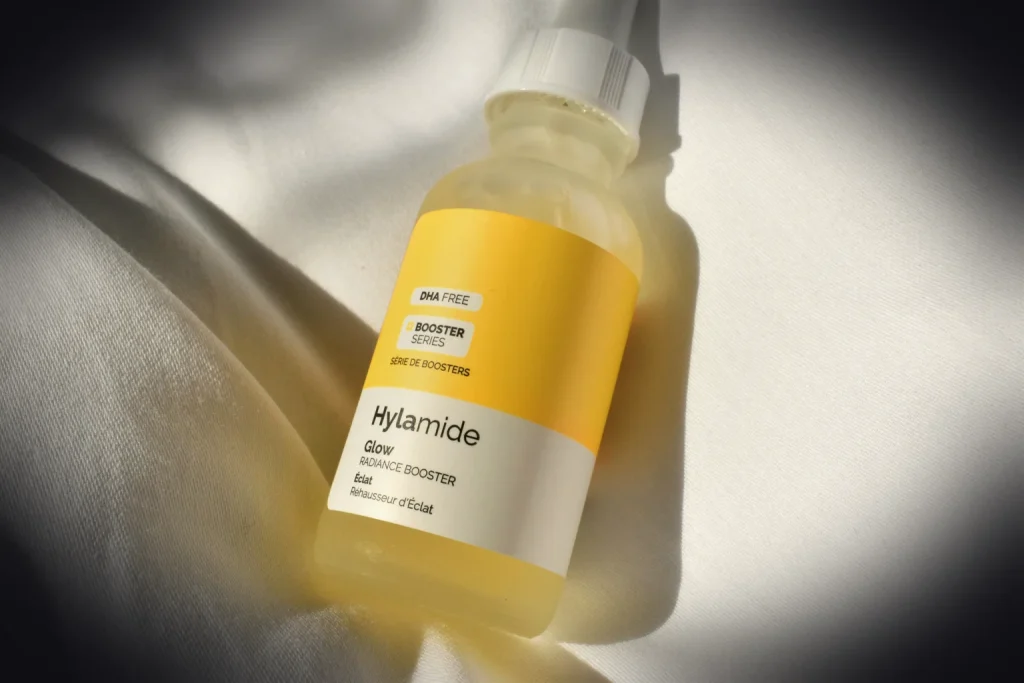
This pairing myth is one of the more confused ones because it inverts the actual chemistry. People warn against combining glycolic acid and vitamin C as if they would destroy each other on contact. They actually live in the same pH neighborhood and tolerate each other better than most active pairings. The thing to manage is irritation, not chemistry.
The pH question, properly framed
L-ascorbic acid works best at pH around 3.0 to 3.5, where it is stable, penetrates skin efficiently, and converts to the active form. Glycolic acid works at pH 3.5 to 4.0, where the free acid form is bioavailable. The pH windows overlap. A glycolic acid product layered after a vitamin C serum does not push the pH out of the vitamin C’s working range. If anything, the acidic environment from one product complements the other.
This is the opposite of the situation with niacinamide and vitamin C, where the pH difference is meaningful (though, as covered separately, also not a real conflict in finished products). Glycolic and vitamin C are compatible in part because they overlap.
Tool: niacinamide vs vitamin C — which one to pick, and whether you can layer them.
What the actual concern is
Irritation. Both ingredients accelerate cell turnover and can produce stinging, redness, or barrier disruption with overuse. Stacking them in one session is the equivalent of doing two intense treatments back to back. Healthy skin can handle it occasionally. Sensitive skin cannot. Compromised skin really cannot.
The classic split is vitamin C in the morning, glycolic at night. That separates them in time, gives the skin recovery between treatments, and prevents the cumulative load that causes most problems. Our layering order guide covers the AM/PM split in detail.
The contrarian take: most people overuse glycolic
The bigger story in skincare is not whether glycolic and vitamin C can coexist. It is that most people using glycolic acid are using it more often than they need to. Three nights a week of 10% glycolic is a routine. Five nights a week is too much for most skin. Daily use produces visible barrier disruption in almost everyone over a few months, regardless of vitamin C use. If you are worried about pairing, you might be worried about the wrong thing. Look at total weekly exposure to acids and consider scaling back. Our chemical exfoliation tag covers the realistic frequency rules.
What the numbers actually show
A 2012 study in the Journal of the American Academy of Dermatology by Sharad on glycolic acid in combination regimens for hyperpigmentation reported good outcomes when glycolic peels were paired with topical antioxidants including vitamin C in the patient’s daily routine. Adherence was the variable that predicted outcomes. Compatible chemistry plus a sane schedule plus consistent use over 12 to 24 weeks produced the documented improvements. The same paper notes that aggressive home stacking of both within minutes of each other produced more irritation reports without proportional benefit.
How to actually pair them
Pattern one: AM vitamin C, PM glycolic. This is the cleanest default. Two or three nights a week of glycolic, every morning vitamin C. SPF in the morning is non-negotiable.
Pattern two: alternate nights. Vitamin C on Monday, Wednesday, Friday. Glycolic on Tuesday and Thursday. Rest on Saturday and Sunday. This works if you do not want a vitamin C step in your AM routine.
Pattern three: same evening with a gap. Vitamin C first, wait 15 minutes, glycolic on top. This is reserved for healthy non-sensitive skin with prior exposure to both. Not a default.
The pattern to avoid: stacking both at full strength in the same session every night. That overshoots almost any skin’s recovery capacity and is the actual basis for most pairing complaints.
What about polyhydroxy acids
For sensitive skin, a PHA (gluconolactone or lactobionic acid) is a gentler exfoliating acid that can pair with vitamin C with less irritation risk. PHAs work at slightly higher pH and over a longer time horizon. Worth considering if glycolic is too much.
Sensitive and reactive skin
If your skin is reactive, you may not be a candidate for both ingredients in heavy rotation. A vitamin C derivative (sodium ascorbyl phosphate, magnesium ascorbyl phosphate) is gentler than L-ascorbic acid and pairs more easily with exfoliating acids. Our vitamin C format guide covers the alternatives.
FAQ
Does glycolic acid destabilize vitamin C? No. The pH windows overlap and the molecules do not chemically degrade each other in finished products.
Can I use them in the same routine? Yes, with a gap, or by splitting AM and PM. The risk to manage is irritation, not chemistry.
How often should I do glycolic if I am using vitamin C daily? Two to three nights a week is the sustainable range for most skin types.
What if I have sensitive skin? Switch to a PHA, or use a vitamin C derivative instead of L-ascorbic acid, or both.
Should I worry about sun sensitivity from this combination? SPF is mandatory regardless. Both ingredients increase short-term UV sensitivity, vitamin C less so than glycolic.
Sources
Sharad J. Glycolic acid peel therapy: a current review. Clinical, Cosmetic and Investigational Dermatology, 2013. Pinnell SR et al. Topical L-ascorbic acid: percutaneous absorption studies. Dermatologic Surgery, 2001. AAD.org/” rel=”noopener” target=”_blank”>American Academy of Dermatology. Chemical peels patient information, 2023.
Keep reading
References
- Pinnell SR, Yang H, Omar M, et al.. Topical L-ascorbic acid percutaneous absorption studies. Dermatol Surg. 2001. PubMed.
- Stamford NPJ. Stability, transdermal penetration, and cutaneous effects of ascorbic acid. J Cosmet Dermatol. 2012. PubMed.
Have a question about “The glycolic acid and vitamin C pairing myth, carefully re-examined”?
Ask our editorial desk. Best questions become full follow-up articles, reviewed by our medical reviewer. No medical advice given in private — answers run as articles or not at all.