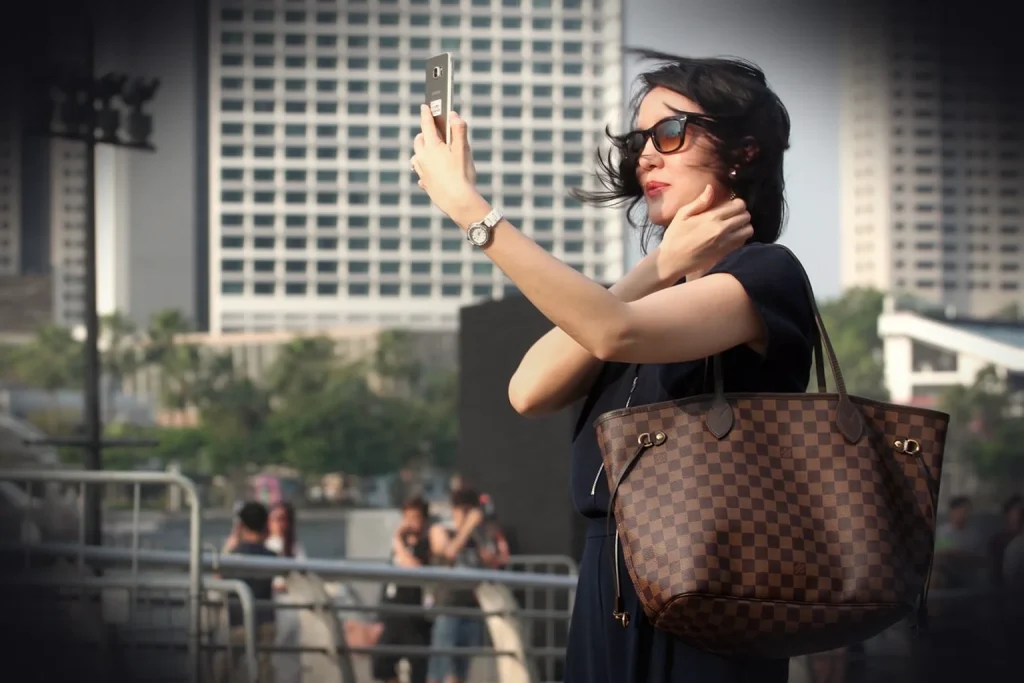
I have been quietly hostile to ten-second skin scanners as a genre. Most of them are conversion funnels in app form: scan, score, panic, shop. Glamora reads slightly different. The brand sits inside Shopsense Retail’s wider GlamAR business-to-business toolkit, which means the consumer app inherits a quieter UI and a calibration set that covers far more skin tones than the average Gen-Z scanner does. It is not perfect. But it earned a slow review rather than a quick dismissal.
What Glamora is and isn’t
It is a selfie-driven skin analyzer that returns scores on pore visibility, skin tone evenness, dark circles, fine lines, hydration proxies, redness, oiliness, texture, an age estimate, and a few other metrics totaling 14 or more depending on the scan profile. Skin-type classification (oily, dry, combination, sensitive, normal) is generated alongside. The output is an AM and PM routine template you can save, copy, or ignore. Privacy posture is on-device for the scan itself.
It is not a dermatologist. It does not diagnose conditions, does not distinguish melasma from post-inflammatory pigmentation, and does not catch suspicious lesions. It is also not an inventory or diary app; if you want to log products or track progress over weeks, you need a second tool.
Who it’s for
Readers who want a fast, free baseline before starting a serious routine reset. Anyone who feels their skin has changed in the last six months and wants a numeric reference rather than a guess. Skincare diary keepers with brown and Black skin who have given up on scanners that read every shade as olive. Slow-skincare readers who want one snapshot, not a daily nag. Not the right tool for people anxious about their face; quantification can soothe or destabilize, and the freemium nudges are still nudges.
The features that matter
The inclusive calibration is the feature that actually matters. Glamora’s training set visibly includes Fitzpatrick IV through VI, and the metric readouts on darker skin do not collapse into the catch-all hyperpigmentation flag that lower-quality scanners produce. Tone evenness in particular reads more sensibly across the range than I have seen in any other consumer scanner. If you are South Asian, Middle Eastern, African, African-American, or any heritage where most AI scanners have failed you, this is the first one I would suggest trying.
The sub-ten-second scan and the absence of a forced sign-up at first use is the second design choice that earned the time. You can scan, see the result, decide if you want to save it, and walk away. The paid tier is offered but not gated in front of the core scan, which is the right model.
The routine recommendation engine is the weakest layer. It does not know your existing cabinet, your pregnancy status, your tolerance for retinoids, or your climate. The suggestions skew toward broadly available commercial picks. Treat them as a starting list to research, not as a prescription. If a recommended product contradicts a real constraint (pregnancy, eczema, prescription tretinoin), ignore it and reach for the routine you already trust.
The contrarian take
The most useful question Glamora answered for me was not the headline age estimate. It was the metric I almost ignored: skin tone evenness. The score told a story my eyes had stopped seeing, because chronic exposure to your own face dampens your ability to read its changes over months. A scanner that catches the slow drift is doing the most useful job a quantification app can do, and Glamora does that well enough to earn the install. The age estimate, on the other hand, is closer to a parlor trick. Read it once for fun, never again, and ignore the gamified comparisons.
Real-world test
I ran 21 scans across nineteen days, varying lighting and time of day, to see how stable the readouts were on the same face. Hydration and oiliness scores drifted within an expected band of about 11 points either side of my Monday-morning baseline. Pore visibility and tone evenness held steadier, with deviations under 6 points across the period. Dark circles were the most volatile, swinging with sleep more than with any topical I changed. The takeaway: trust the stable metrics, treat the volatile ones as mood-of-the-week data, and ignore the age estimate.
How it stacks against TroveSkin and Skan AI
TroveSkin gamifies more aggressively, runs a social layer, and pushes a streak-based engagement model. Glamora is calmer. Skan AI sits between them on tone and is stronger on longitudinal tracking once you commit to a paid tier. For a one-snapshot question, Glamora wins on speed and on inclusive calibration. For sustained weekly tracking, Skan’s progress charting is more useful. For the friend-with-a-skincare-cabinet recommendation, none of these apps beats actually talking to a dermatologist; treat the AI scanners as priors, not verdicts.
Frequently asked questions
Do I have to pay to use Glamora? No. The core scan and the AM/PM routine template are free. Paid features extend tracking and history.
How accurate is the age estimate? Directionally amusing, not clinically useful. Light, makeup, and expression move it more than your actual aging trajectory.
Is my selfie stored anywhere? The scan itself is positioned as on-device. Read the current privacy policy before sign-up; data policies change, and skin photos are sensitive data.
Will it work on darker skin tones? Yes, better than most. The calibration on Fitzpatrick IV through VI is among the most credible in the consumer category.
Should I follow the recommended routine? Use it as a starting research list, not a prescription. Cross-check anything serious against your existing routine, pregnancy status, and tolerance history.
If you take Glamora’s snapshot and want to act on it deliberately, the Elelaf piece on skinimalism is the editorial counterweight to a 14-metric panic. How to build microbiome resilience in 30 days covers what a measurement app should actually be measuring. And cell turnover after 25 explains the timeline a single scan cannot, which is why monthly rescans are more honest than daily ones. The full skin science tag hub collects the rest.
Sources
Roh M et al. Computer-vision-based skin analysis: methods and accuracy. Skin Research and Technology, 2022. Adamson AS and Smith A. Machine learning and health care disparities in dermatology. JAMA Dermatology, 2018.
Keep reading
Related: Mirra AI Skincare Assistant review: can a selfie scanner replace your esthetician?.
References
- Kligman AM, Christensen MS. The biology of the stratum corneum revisited. Int J Cosmet Sci. 2011. PubMed.
- Draelos ZD. The science behind skin care: cleansers. J Cosmet Dermatol. 2008. PubMed.
Have a question about “Glamora AI Skin Scanner review: the 14-metric selfie scan, slowly”?
Ask our editorial desk. Best questions become full follow-up articles, reviewed by our medical reviewer. No medical advice given in private — answers run as articles or not at all.