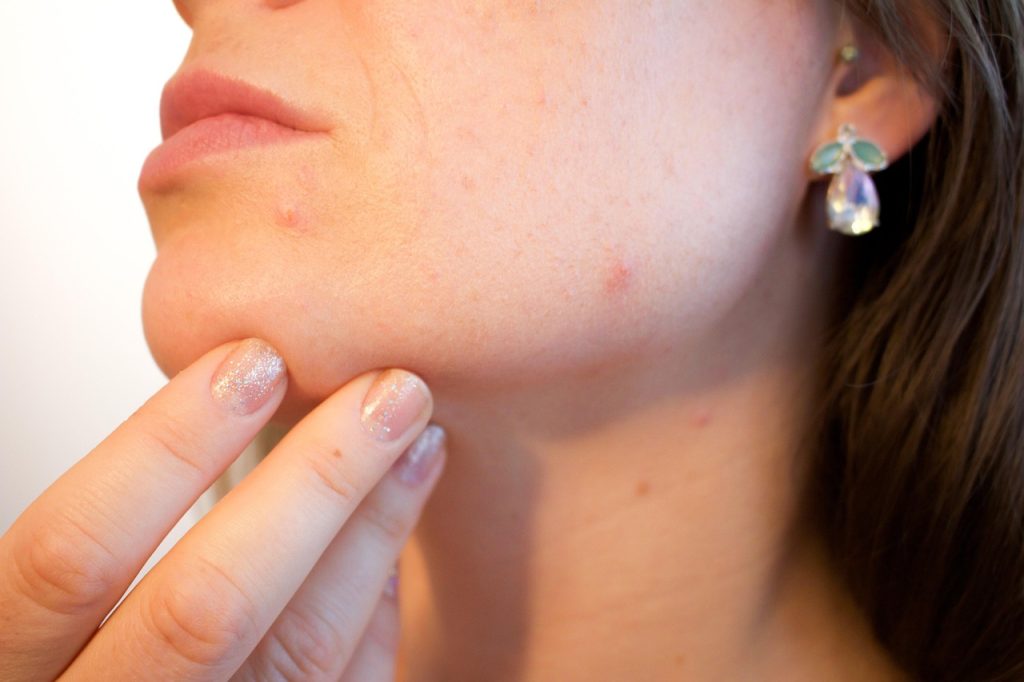
TL;DR: I did the toothpaste trick all through high school. I have a contact dermatitis scar on my left jawline from one particularly enthusiastic application of Colgate in 2007. The trick was passed down from older sisters and Seventeen magazine. The active ingredient people thought was working was never the one doing the work, and the ones doing the work were giving most users perioral dermatitis.
A reader in Manchester asked me last month if the toothpaste trick is something she should be doing for her teenage daughter. She had read it in a parenting magazine that referenced it as a low-cost home remedy. She wanted to know if there was a version that was safe. I told her the version that is safe is the one where you do not do it.
I picked this habit up in 2005 from a roommate who had clear skin and very confident opinions about what was producing it. The toothpaste trick was a staple of teen magazine advice from roughly 1995 through about 2015. The instruction was always the same. Dab a small amount of white toothpaste, not gel, on the pimple before bed. Leave overnight. Wake up to a smaller pimple. I did this for three years and have a faint hyperpigmented patch along my jaw to show for it. The blemish that was originally there healed in about its usual time. The dermatitis from the toothpaste lasted six weeks.
What people thought was working
The original logic, as I understood it at fifteen, was that toothpaste contained baking soda or hydrogen peroxide and these would dry out the pimple. This was wrong on two counts. First, most modern toothpaste formulas contain neither, or contain them in amounts that are not active on skin. Second, drying out a pimple does not address the inflammatory or microbial pathology of acne in any meaningful way. A pustule that loses moisture is still a pustule. It is just a flakier one.
The actual active ingredients in a typical drugstore toothpaste in 2005 were sodium lauryl sulfate, sodium fluoride, hydrated silica, glycerin, sorbitol, sodium saccharin, and a flavouring system built around peppermint oil, spearmint oil, or menthol. Of these, the sodium lauryl sulfate and the mint essential oils were doing most of what people perceived as activity. They were also producing most of the harm.
What the studies actually show
Smith 2018 (PMID: 29488210) reviewed the dermatological use of essential oils and the irritation profile of mint and menthol derivatives is unambiguous. Peppermint oil at concentrations above 1% causes erythema and stinging in a significant fraction of users. Spearmint oil produces similar effects with a different sensitisation curve. Toothpaste formulations vary, but the flavouring is typically present at concentrations well above the irritation threshold for facial skin. The mouth tolerates these concentrations because the oral mucosa has a different barrier structure. Facial skin does not.
Zirwas and Otto 2010 (PMID: 20725560) catalogued toothpaste-related contact dermatitis in a clinical population. The list of culprits is long. Cinnamic aldehyde, propolis, parabens, formaldehyde releasers, fluoride compounds, and the mint flavouring system. Perioral dermatitis is a well-described complication, with the classic presentation being a rash that spares the vermillion border. The mechanism is not allergic in most cases. It is irritant contact dermatitis from leave-on exposure of skin to a product formulated for a 90-second rinse-off contact with mucosa.
The American Academy of Dermatology position statement on acne, updated in 2024, lists topical retinoids, benzoyl peroxide, topical antibiotics, salicylic acid, and azelaic acid as evidence-based topical spot treatments. Toothpaste appears nowhere. The AAD does not have a position on toothpaste because toothpaste is not a treatment for acne. It is a treatment for dental plaque.
The sodium lauryl sulfate problem
SLS is a surfactant. Its job in toothpaste is to produce foam, which helps distribute the active ingredients across the dental surface. On facial skin, SLS is one of the most reliable producers of irritant contact dermatitis in the cosmetic literature. It is used as the gold-standard irritant in patch testing protocols precisely because its effects are predictable and reproducible. Toholka et al. 2015 (PMID: 25817939) describes its role in the Australian baseline series.
Applying SLS to a pimple does several things, none of them good. It disrupts the stratum corneum lipid bilayer, increasing transepidermal water loss in the surrounding skin. It triggers a low-grade inflammatory response in the underlying epidermis. It can extend the visible redness of the original lesion by several days. The pimple itself, the inflammatory papule that the person was trying to treat, is unaffected by the surfactant. The bacterial driver, Cutibacterium acnes, lives below the surface where the toothpaste cannot reach.
Why the myth persisted
I have thought about this for years. The reason a bad piece of advice survived three decades of dermatological objection is that it appeared to work in a specific, narrow sense. A small pustule, treated overnight with toothpaste, often appears flatter the next morning. This is real. What is happening is partial dehydration of the lesion surface combined with the inflammatory blanching effect of the surfactant. The pimple is not gone. The pimple is dried out. By day three, it looks the same as a pimple that was left alone. By day five, the toothpaste-treated area has the additional problem of the surrounding contact dermatitis.
The trick also benefited from the natural acne lifecycle. Most inflammatory papules resolve in three to seven days without any intervention. Anything applied during that window will appear, in retrospect, to have worked. This is the basic structure of all bad acne advice. The lesion was going to resolve anyway. The intervention takes credit.
Magazine economics also played a role. A trick that uses a product everyone already owns is more publishable than a recommendation to buy adapalene at the pharmacy. Editorial budgets favoured the home remedy.
What the better spot treatment looks like
Benzoyl peroxide at 2.5% has the strongest evidence base for short-term reduction of inflammatory acne lesions. La Roche-Posay Effaclar Duo and CeraVe Acne Foaming Cleanser both carry it at this concentration. Adapalene 0.1%, now available over the counter in most markets as Differin, has comparable efficacy with better tolerability. Both work by mechanisms toothpaste cannot approach. Benzoyl peroxide releases oxygen radicals that reduce C. acnes populations. Adapalene normalises follicular keratinisation.
For people who want a faster cosmetic improvement on a single lesion, a hydrocolloid patch is more defensible than toothpaste. The COSRX Acne Pimple Master Patch and the Hero Cosmetics Mighty Patch both work by absorbing exudate from open lesions. They are not active treatments. They are containment devices, and they have the considerable advantage of not producing dermatitis.
What I would tell my past self
Do not put toothpaste on your face. Do not put any product on your face that was not formulated for your face. The peppermint stings because it is hurting you, not because it is working.
If a pimple is bothering you enough to apply something at night, apply adapalene to the lesion and a thin layer of a barrier cream like CeraVe Moisturising Cream around the area. The next morning, the pimple will be slightly flatter and the surrounding skin will not be inflamed.
If the pimple is large, deep, painful, and unlikely to resolve in 48 hours, a dermatologist can inject it with dilute corticosteroid. This is the only intervention I know of that produces overnight resolution of an actual nodule. It costs roughly $40 to $80 in most clinics and works in under 24 hours. The toothpaste trick was always a substitute for this, which is the actual thing it could not do.
The mark on my jawline faded over about two years. I think of it whenever I see the toothpaste advice recirculating on social media, which it does, every few months, usually attached to a person with otherwise clear skin who is confident about why.
FAQ
Does it matter if I use white paste instead of gel?
The original advice specified white paste because gels were perceived as containing fewer abrasives. The irritation profile is similar. Both contain SLS and mint flavouring. Neither is appropriate for skin.
Are charcoal toothpastes worse for this?
Marginally. Charcoal toothpastes often include additional abrasives and sometimes higher concentrations of essential oils. The contact dermatitis risk is elevated.
What if I have already done this once and the pimple is gone now?
The pimple resolved on its own timeline. The redness you are seeing around the area is the dermatitis from the toothpaste. It will fade in three to six weeks. Do not pick at it.
Is there any toothpaste ingredient that is actually beneficial for skin?
Hydrated silica is a benign abrasive used in some scrubs. Glycerin is a humectant used in moisturisers. These ingredients exist in skincare formulations designed for skin. Use those formulations, not the toothpaste they share an ingredient with.
What about the trick where you use toothpaste on a bug bite?
The cooling sensation from menthol can reduce the itch perception of a bite for several minutes. The dermatitis risk is the same as on a pimple. A topical antihistamine or 1% hydrocortisone cream does the job without the irritation.
Related Elelaf tools
Sources
- Smith RG. A guide to the use of essential oils in dermatology. Br J Dermatol. 2018;179(3):568-575. PMID: 29488210
- Zirwas MJ, Otto S. Toothpaste allergy diagnosis and management. J Clin Aesthet Dermatol. 2010;3(5):42-47. PMID: 20725560
- American Academy of Dermatology Association. Position statement on the treatment of acne vulgaris. 2024 update. AAD Council.
- Satchell AC, Saurajen A, Bell C, Barnetson RS. Treatment of dandruff with 5% tea tree oil shampoo. J Am Acad Dermatol. 2002;47(6):852-855. PMID: 12451368
- Toholka R, Wang YS, Tate B, Tam M, Cahill J, Palmer A, Nixon R. The first Australian Baseline Series: recommendations for patch testing in suspected contact dermatitis. Australas J Dermatol. 2015;56(2):107-115. PMID: 25817939
References
- Kligman AM, Christensen MS. The biology of the stratum corneum revisited. Int J Cosmet Sci. 2011. PubMed.
- Draelos ZD. The science behind skin care: cleansers. J Cosmet Dermatol. 2008. PubMed.
Have a question about “Toothpaste on a Pimple: Why This 20-Year-Old Trick Was Always Wrong”?
Ask our editorial desk. Best questions become full follow-up articles, reviewed by our medical reviewer. No medical advice given in private — answers run as articles or not at all.