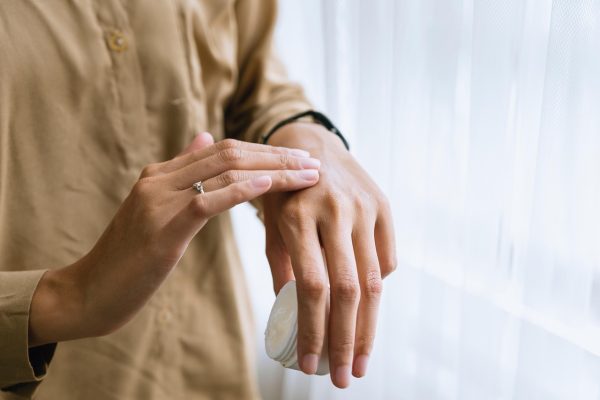
Order & Layering
Why pH chasing in skincare layering is mostly anxiety
TL;DR: The internet rule that you must wait twenty or thirty minutes between products to “let the pH stabilize” is mostly anxiety…
We use cookies to count readers (Google Analytics) and to send you our newsletter (Klaviyo, if you sign up). Nothing is sold. Read our privacy notice.
Category
Start here. Everything you need before you buy anything.
Quick answer
Skincare 101 is the foundation library of the Elelaf Journal. It explains how skin actually works — barrier, microbiome, sebum, cell turnover — in plain English, then translates that into beginner routines you can build in five minutes. Every piece is dermatologist-reviewed and free of marketing hype.
How skin actually works at a layer level.
Identify your real type — and how it shifts with age.
The acid mantle and why it's non-negotiable.
What lives on your skin and why it matters.
AM and PM application order, decoded.
How to read an ingredient list without falling for marketing.
The minimum viable routines that actually work.
Plain-English definitions for every term you'll encounter.
Quick myth-busts beginners run into early.
From gua sha to LED — what's worth using.
TL;DR: The internet rule that you must wait twenty or thirty minutes between products to “let the pH stabilize” is mostly anxiety…

TL;DR: The number 5.5 became gospel because one cosmetic company put it on a bottle in the 1980s. The actual range of…
TL;DR: In the United States and the EU, “fragrance-free” has almost no enforced definition, and brands routinely use scented botanicals or fragrance-masking…

TL;DR: Almost everyone has slightly higher sebum on the central face than on the cheeks. The marketing category called combination skin treats…
TL;DR: Every brightening serum has to reach a layer about 60 microns deep where melanocytes sit and where pigment gets manufactured. Most…

If your cleanser leaves a film, the culprit is usually one of three formulation choices. Here's how to identify which is yours…

Sirtuin pathways drive cellular longevity but topical activation evidence is thinner than marketing suggests. A clear-eyed look at SIRT1 skincare.

Telomere shortening drives cellular aging but topical preservation claims need scrutiny. The real research, the lifestyle inputs, and the marketing.

The handprint test reveals microbial transfer patterns from hand to face. A simple at-home method to audit your face-touching microbial load.

Collagen and elastin degrade on different timelines via different enzymes. Why most anti-aging routines miss elastin entirely and how to fix it.
Most people start buying skincare before they understand what their skin actually needs. That's why so many routines fail: the wrong order, the wrong actives, the wrong assumption that more products equals better skin. Skincare 101 fixes that.
This category is the entry point for everyone — whether you're 19 and just figured out moisturizer is non-negotiable, or 38 and rebuilding your routine from scratch after a barrier flare. The articles here give you the working knowledge that turns skincare from a confusing aisle into a small set of decisions you can make confidently.
Long-form, plain-English explainers covering skin anatomy and biology, the four common skin types and how to identify yours, the science of the skin barrier and pH, an introduction to the skin microbiome (the field that's reshaping skincare in 2026), the actual order to apply skincare products, and how to read an INCI label without falling for marketing.
Skincare is built on a small handful of truths. Your barrier is non-negotiable. Sunscreen prevents more aging than every anti-aging product combined. Cell turnover slows with age, and that's the lever almost every active ingredient pulls on. Once you understand these, the difference between a product that helps and a product that just costs money becomes obvious.
True beginners, returners after a long break, and anyone who feels they've been guessing at skincare for years. If you've ever wondered which order things go in, or whether your skin type actually changed when you turned 30, you're in the right place.