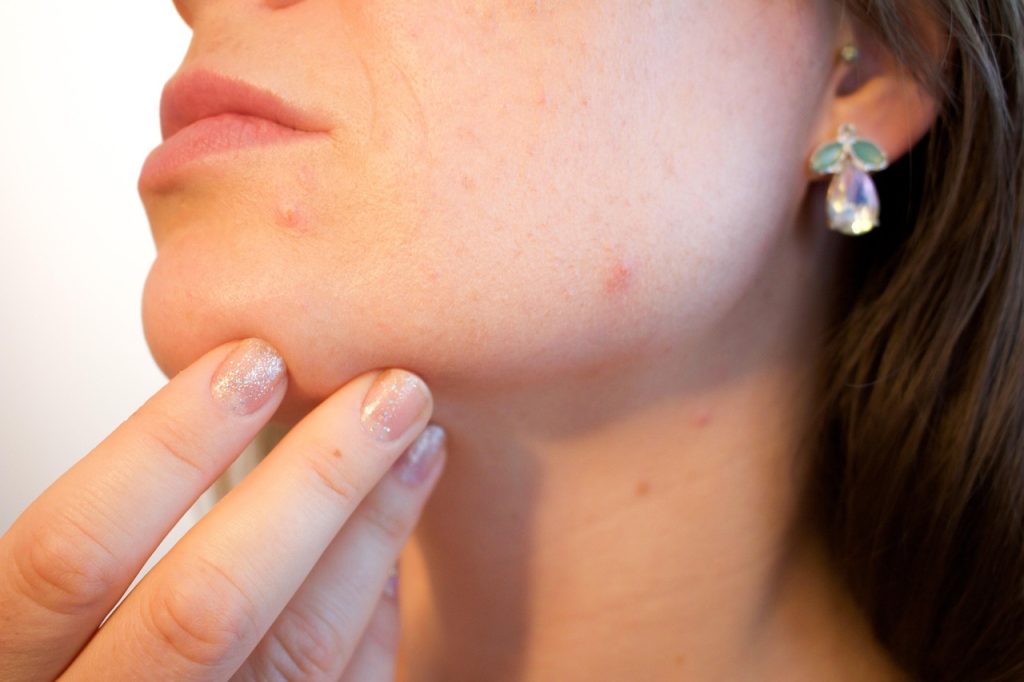
Hidradenitis suppurativa affects approximately 1% of the population worldwide. In the US, prevalence in Black women is roughly three times the general population rate. The condition is chronic, painful, frequently misdiagnosed for years, and almost entirely absent from mainstream skincare media coverage.
That last fact is the coverage gap that frustrates me most about this corner of dermatology. Skincare publishing has thirty articles about niacinamide for every one article about HS. The 1% of the population most affected by HS overlaps substantially with the readers most desperate for accurate information — women in their 20s-40s dealing with painful chronic skin disease that their primary care physicians often don’t recognize.
I’ll cover what HS actually is, why darker skin tones are disproportionately affected and ignored in coverage, the Hurley staging system that determines what topical care can do at each stage, the underprescribed topical clindamycin + resorcinol combination, the lifestyle modifiers with real evidence, and when to push past topicals to biologic therapy.
What HS actually is
Hidradenitis suppurativa is a chronic inflammatory disease of the apocrine sweat gland-bearing skin. Despite the historical name suggesting otherwise, HS is not an infection of the sweat glands. The current pathogenesis model (Sabat and colleagues, Lancet 2020) positions HS as a folliculocentric autoinflammatory disease driven by follicular occlusion, cytokine dysregulation (particularly TNF-α and IL-17 axes), and downstream tissue destruction.
The clinical presentation: painful inflammatory nodules in the axillae (armpits), groin, inframammary folds, perianal area, and gluteal cleft. Nodules can persist, drain, scar, and recur in cycles. Severe cases develop sinus tracts (subcutaneous channels connecting recurrent lesions) and dense scarring that limits range of motion.
Time to correct diagnosis from first lesion: the median in published series is 7-10 years. Most patients see multiple clinicians who treat the lesions as boils, ingrown hairs, or skin infections without recognizing the underlying disease pattern. This delay matters because early intervention substantially affects long-term outcomes.
If you have recurrent painful nodules in the apocrine areas and they keep coming back in the same locations, the working diagnosis until proven otherwise should be HS.
Why darker skin tones are disproportionately affected
The epidemiologic data is consistent across multiple population studies. Vossen and colleagues (J Am Acad Dermatol 2017) documented the demographic skew: Black patients have approximately 3x the prevalence of white patients in US cohorts, with similar disparities in Hispanic populations.
The reasons are multifactorial and not fully resolved. Genetic predisposition pattern, hormonal contributors (HS shows clear hormonal modulation with menstrual cycle and pregnancy), metabolic syndrome and obesity co-incidence (which themselves have demographic disparities driven by social determinants), and follicular structure differences have all been implicated.
The coverage gap compounds the disparity. SoC patients with HS are looking for information about a condition that disproportionately affects them, and finding skincare media dominated by acne, anti-aging, and routine optimization content that doesn’t address their actual problem. The information asymmetry pushes patients toward online forums and self-treatment patterns that often miss the underlying disease entirely.
The Hurley staging system
HS staging matters because the staging determines what topical care can accomplish. Hurley I and II are amenable to medical management including topicals. Hurley III usually requires biologics and surgical evaluation.
Hurley I: isolated inflammatory nodules without sinus tracts or scarring. Lesions occur, resolve, and recur but don’t connect to each other or leave significant scarring. This is the stage where topical care has the most leverage and where early diagnosis matters most.
Hurley II: recurrent abscesses with sinus tract formation and scarring. Lesions in this stage may be connected by subcutaneous tracts; visible scars from healed lesions are evident. Topical care has supportive value but systemic therapy is usually needed.
Hurley III: diffuse involvement with multiple interconnected sinus tracts across an entire anatomic region. Topical care is supportive only; biologics, antibiotics, and surgical management are first-line.
For Hurley I and early Hurley II, the topical protocols below can meaningfully reduce flare frequency and severity. For Hurley III, the topicals are supporting therapy alongside biologics — they’re not the primary tool.
Topical clindamycin + resorcinol — the underprescribed combination
The most evidence-supported topical regimen for Hurley I-II HS is topical clindamycin 1% solution combined with topical resorcinol 15%. The combination addresses two different mechanisms — the antibacterial component reduces secondary bacterial colonization that exacerbates lesions, and resorcinol exfoliates follicular occlusion and has its own anti-inflammatory effects.
Boer and Jemec’s 2010 work (Br J Dermatol) documented the resorcinol component. The 15% concentration is well-tolerated in the apocrine areas (axillae, groin) where standard concentrations of comedolytics like salicylic acid would be too irritating.
The combination is underprescribed because resorcinol 15% isn’t routinely available in retail pharmacy formulations. Most dermatologists prescribe it as a compounded preparation, which adds steps and cost. Patients without a knowledgeable dermatologist often end up on topical clindamycin alone, which is meaningfully less effective than the combination.
If you have a confirmed HS diagnosis and you’re not on a clindamycin + resorcinol combination, the question for your dermatologist is whether compounded resorcinol 15% is available through your prescribing pharmacy. The combination is the most evidence-supported topical-only regimen.
Antibacterial cleansers that help
Three antibacterial cleanser categories have evidence for reducing flare frequency in HS:
Chlorhexidine 4% wash. Used 1-2 times weekly in affected areas. Reduces bacterial colonization of the follicular outlets without the irritation profile of standard antibacterial soaps. Available OTC in surgical scrub formulations (Hibiclens is the most common US brand).
Benzoyl peroxide 4-5% wash. Counterintuitive for SoC patients given the PIH risk profile covered in earlier articles, but in HS-affected apocrine areas the BP wash use is brief contact (60-90 seconds) and the antibacterial action reduces C. acnes and Staphylococcus colonization that contributes to flare initiation. The PIH risk in axillary and groin skin is lower than facial skin because the anatomic locations have different pigmentary response patterns.
Zinc pyrithione 2% wash. Less evidenced but well-tolerated. Useful as a maintenance wash when BP and chlorhexidine cause irritation.
Standard antibacterial bar soaps and harsh body washes (anything marketed for “deep cleansing” or “acne prevention” with sulfates and fragrance) actively worsen HS by disrupting the barrier and increasing local irritation. The pattern I see clinically: patients self-treating HS with aggressive scrubs and harsh antibacterial soaps consistently report worse flare frequency than patients on the gentler chlorhexidine or BP wash protocols.
Lifestyle modifiers with real evidence
Several modifiable factors have published evidence for affecting HS severity:
Weight and metabolic management. Modest weight reduction (5-10% body weight) in overweight HS patients reduces flare frequency in published series. The mechanism involves both mechanical (less friction in apocrine areas) and metabolic (inflammatory cytokine reduction).
Smoking cessation. Current smoking is associated with worse HS severity and faster progression. Cessation reduces flare frequency over 6-12 months in cohort studies. This is one of the strongest evidence-based interventions in HS management.
Friction reduction. Tight clothing, repeated friction in affected areas, and synthetic fabrics that trap heat all increase flare frequency. Cotton clothing, looser fits in affected areas, and avoiding tight waistbands (in groin-affected patients) have practical benefit.
Heat avoidance. Heat exposure (saunas, hot showers, intense workouts in affected areas) consistently triggers flares in self-report data. Cooler showers and post-exercise cooldown protocols reduce trigger exposure.
Hormonal modulation. Women with menstrual cycle-correlated flares often respond to combined oral contraceptives or anti-androgenic therapy (spironolactone). This is a discussion for a dermatologist or gynecologist familiar with HS.
The frustrating pattern in HS care is that these modifiers are rarely discussed with patients. The clinical visit focuses on the active lesion and skips the underlying disease modifiers that affect long-term trajectory.
When to push for biologics
The treatment landscape for HS has changed substantially since 2015. Adalimumab (Humira) received FDA approval for moderate-to-severe HS in 2015. Secukinumab (Cosentyx) received approval in 2023. Multiple additional biologics are in late-stage trials.
The clinical heuristic: if you have Hurley II or III HS, or Hurley I HS that’s progressing despite consistent topical and lifestyle management for 6-12 months, the biologic conversation should be on the table.
The questions to ask a dermatologist:
What’s my current Hurley stage and what’s the projected trajectory without biologic therapy?
What biologics are appropriate for my disease severity and what are the access pathways through my insurance?
If biologics aren’t currently appropriate, what would change my staging that would make them appropriate?
Has my disease been progressing despite consistent management, and at what point would we revisit?
Patients in earlier disease stages often benefit substantially from biologic intervention before extensive scarring develops. The wait-and-see approach that’s traditional in dermatology has been challenged by the long-term outcomes data — earlier biologic intervention preserves more tissue and reduces lifetime morbidity in many cases.
What to do tomorrow if you suspect HS
Photograph the affected areas. The clinical history is the most important diagnostic tool, and the lesion pattern over time is what distinguishes HS from misdiagnosed alternatives.
Track your flares for 4-6 weeks. Note the locations, the triggers (heat, friction, menstrual cycle, food, stress), and the duration of each lesion. A flare diary is more valuable than a single visit observation.
Request a dermatology referral, specifically asking whether your primary care office can refer to a dermatologist with HS-specific experience. Not all dermatologists are equally trained in HS; ask about their HS patient volume.
If access to specialty care is limited, bring this article or similar evidence-based material to your primary care appointment. The single best leverage in HS management is the correct diagnosis. Once diagnosis is established, the treatment pathway opens.
FAQ
*What’s the best skincare routine for hidradenitis suppurativa?*
For Hurley I-II HS, the evidence-supported topical regimen is compounded topical clindamycin 1% + resorcinol 15%, applied to affected areas as prescribed. Supportive cleansing with chlorhexidine 4% wash or BP 5% wash 1-2 times weekly. Avoid harsh antibacterial soaps, sulfates, and aggressive scrubs in affected areas.
*Is hidradenitis more common in darker skin tones?*
Yes. Black patients in US cohorts have approximately 3x the prevalence of white patients, with similar disparities in Hispanic populations. The reasons are multifactorial (genetic, hormonal, metabolic, follicular structure) and the disparity is compounded by under-coverage in mainstream skincare media.
*Does benzoyl peroxide help HS?*
Yes, in wash format (BP 5% wash, 60-90 second short contact, 1-2 times weekly) for the antibacterial effect on follicular colonization. Leave-on BP isn’t appropriate for apocrine areas. The wash format reduces flare initiation by reducing local bacterial load.
*When should I ask my dermatologist about biologics for HS?*
At Hurley II or III, or at Hurley I HS that’s progressing despite consistent topical and lifestyle management for 6-12 months. Adalimumab and secukinumab are FDA-approved for moderate-to-severe HS. Earlier intervention before extensive scarring develops produces better long-term outcomes than delayed escalation.
References
- Boer J, Jemec GBE. Resorcinol peels as a possible self-treatment of painful nodules in hidradenitis suppurativa. Clin Exp Dermatol. 2010. PubMed.
- Vossen ARJV, van der Zee HH, Prens EP. Hidradenitis suppurativa: a systematic review integrating inflammatory pathways into a cohesive pathogenic model. Front Immunol. 2017. PubMed.
- Sabat R, Jemec GBE, Matusiak Ł, et al.. Hidradenitis suppurativa. Nat Rev Dis Primers. 2020. PubMed.
Khabir Uddin is the founder of Elelaf Journal. This article is editorial, not medical advice. HS requires clinical diagnosis and management — bring this material to a dermatologist with HS-specific experience for evaluation if the lesion pattern fits.