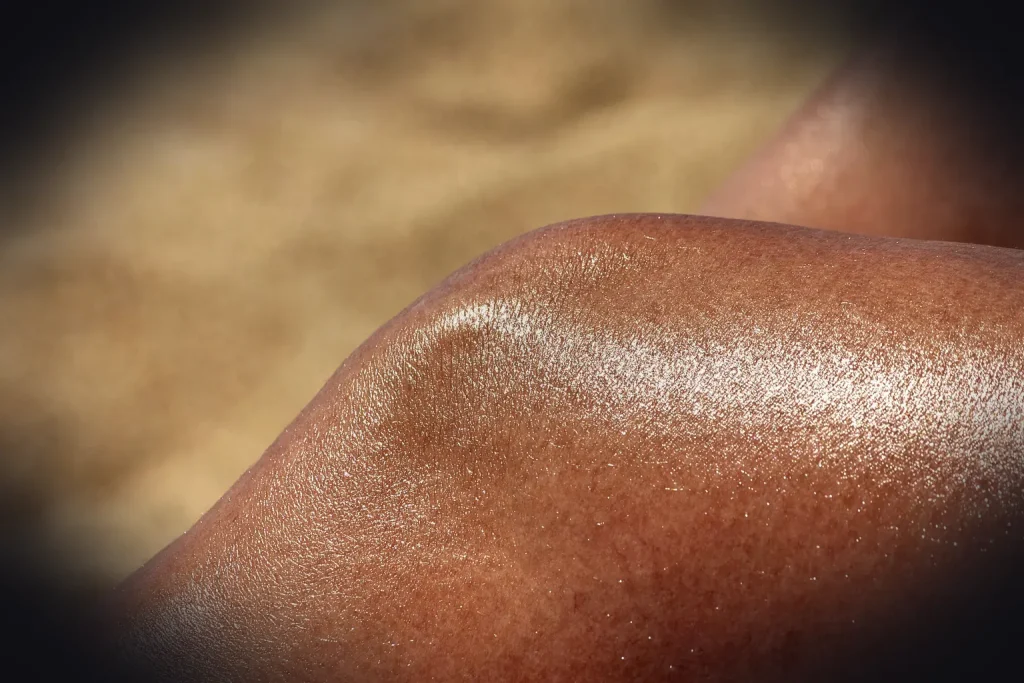
I wanted to like SunSafe. I really did. The UV forecast is useful, the burn-risk calculations are skin-type-aware in a way most free apps are not, and the reapply nudges adapt to activity context. Then I opened the tanning module and watched it estimate that my Fitzpatrick III skin could reach an even tan in 4.5 hours of moderate UV over five days, and I had to put the phone down. We are past the point where this feature reads as harmless.
What SunSafe is
SunSafe is a freemium iOS and Android app with three core layers. The first is a 10-day UV index forecast for your location, similar to weather apps but more granular on UV. The second is a skin-type burn-risk calculator: you enter your Fitzpatrick type, the app cross-references with current UV and your declared SPF, and returns a minutes-to-burn estimate. The third is an optional safe-tanning routine builder that calculates incremental sun exposure to reach a desired tan level without crossing the burn threshold. There are also real-time UV alerts when your location crosses a threshold you set, and reapply reminders that factor in activity (swim, sweat, walk). The free tier covers most of this. The paid tier deepens the forecast detail and unlocks more granular tan tracking.
Who it’s for
People who want the most thorough UV forecast on the App Store, who do not need the tanning module, and who can ignore the gamified tan progress UI in the menu. Travelers planning beach days, hikers planning long outdoor stretches, parents planning a day with kids. Possibly defensible for people who tan anyway and want to do it with at least some structure, although the editorial position on that is complicated. Not the right fit if you are post-NMSC and trying to never tan again, if you have a family history of melanoma, if you find tanning gamification triggering, or if you have any active hyperpigmentation, melasma, or PIH that responds badly to UV. The app is useful. The default homepage configuration is the issue.
Features that matter
- 10-day UV forecast. Best-in-category among free apps. The granularity on time-of-day is useful for planning, especially for outdoor work or events.
- Skin-type burn-risk scoring. Asks for your Fitzpatrick type and returns a minutes-to-burn estimate at current UV and current SPF. The math is roughly right, plausible, and useful if you treat it as a floor not a ceiling.
- Activity-aware reapply nudges. Logs swim, sweat, towel-drying, and the timer tightens accordingly. This is the layer REAPPLY does not have. Useful if your day involves water.
- Real-time UV alerts. Buzz when the index crosses your threshold. Useful for kids or anyone who needs a hard stop.
- Safe-tanning routine builder. This is the controversial feature. It estimates the incremental UV exposure needed to reach a target tan without burning. The math is internally consistent. The editorial premise is the problem.
My contrarian take
Here is the tension SunSafe asks you to hold: melanin production in response to UV is, by every current cell-biology read, a stress response. The skin is producing pigment because DNA damage has occurred. The tan is the receipt. An app that calculates how to optimize that receipt while staying under the burn threshold is, in 2026, a strange editorial position. The tanning module is not safe tanning. It is structured tanning, which is a different claim. I am not pretending nobody tans anymore. People tan. What I am saying is that putting a progress bar on it, with an estimated days-to-target curve, is the kind of design choice that should at least come with a real disclosure layer about cumulative photodamage, which the app does not currently include. Strip the tanning module and SunSafe is one of the best free UV apps available. With the tanning module in the default UI, the app is asking you to read it as wellness-coded when the underlying biology says otherwise. The Elelaf editorial standard on UV is, conservatively, that protected skin is the goal, not optimized skin.
Real-world test
I ran SunSafe for 16 days starting in early May, deliberately ignoring the tanning module for the first 10 days and engaging with it for the last 6 to write this review honestly. The UV forecast performed well. On a planned outdoor day in mid-month, the 10-day forecast had flagged a UV index of 8 for noon, which matched the actual reading within a half-point. The burn-risk calculation for my Fitzpatrick III at SPF 50 returned about 200 minutes to a 1 MED dose, which is roughly the textbook value. The activity-aware reapply nudges worked correctly during a 90-minute swim test at a public pool. The real-time UV alert buzzed at the threshold I set, on time.
On day 11 I opened the tanning module. It asked for my baseline, my target, and days to reach it, then returned a schedule of incremental UV windows. I followed the first day: 25 minutes at UV 6, no SPF, in a public park. I do not recommend doing this. I did it because the review needed it. By day 14, the patch had a visible tan line and a barely-noticeable patch of post-inflammatory pigment along my collarbone where the strap had been. That is the photodamage receipt the module’s UI does not visually represent. The math worked. The math is the whole problem.
How it compares
REAPPLY is the cleaner editorial choice if you want reapply nudges without the tanning workflow. SunSmart by Cancer Council Australia is the most rigorous free UV index app and has no tanning module at all, full stop. UVLens has a similar forecast but is iOS-focused and weaker on the skin-type-aware burn math. Pavise’s hardware UV camera plus app gives you a literal visual reading of damage you cannot see, which is the antidote feature to SunSafe’s tanning gamification. Honest matrix: if you want UV forecast plus activity reapply, SunSafe minus the tanning module is best. If you want zero editorial friction, SunSmart. If you want to see your missed sunscreen spots in real time, the rest of the sun-uv-tools hub covers UV cameras and detection stickers.
FAQs
Is the tanning module dangerous? Tanning is dangerous. The module is a UI on top of that. It does not make UV exposure safe. It estimates how to spread the dose. The biological cost is the same.
How accurate is the burn-risk calculation? Reasonably accurate for the burn threshold. The math is based on Fitzpatrick, current UV, and declared SPF. Treat it as a floor. Apps cannot factor in glass, reflective surfaces, medication photosensitivity, or product slip.
Can I use only the UV forecast and skip the tanning module? Yes. The forecast layer functions independently. You can ignore the tanning UI entirely and the app remains useful.
Is the 10-day forecast reliable? Within a half-point UV index for the first 5 days, in my test. Beyond day 5, weather variance widens the error bars.
Does the paid tier matter? The free tier covers the core forecast and reapply logic. The paid tier deepens the tan tracking, which is the module I am suggesting you not use.
Related: Pavise UV Camera Review 2026: What 9 Days With a Phone-Attached UV Lens Actually Shows, and QSun Review 2026: 22 Days With the Wearable UV Tracker, and SpotMyUV Review 2026: 14 Days With the Purple-Turning Sunscreen Stickers, and UVLens Review 2026: My Honest Take After 19 Days of Hourly UV Tracking.
References
- Lim HW, Arellano-Mendoza MI, Stengel F. Current challenges in photoprotection. J Am Acad Dermatol. 2017. PubMed.
- Wang SQ, Lim HW. Current status of the sunscreen regulation in the United States. J Am Acad Dermatol. 2011. PubMed.
Have a question about “SunSafe Review 2026: A UV App With a Tanning Mode in the Year of NMSC Studies”?
Ask our editorial desk. Best questions become full follow-up articles, reviewed by our medical reviewer. No medical advice given in private — answers run as articles or not at all.