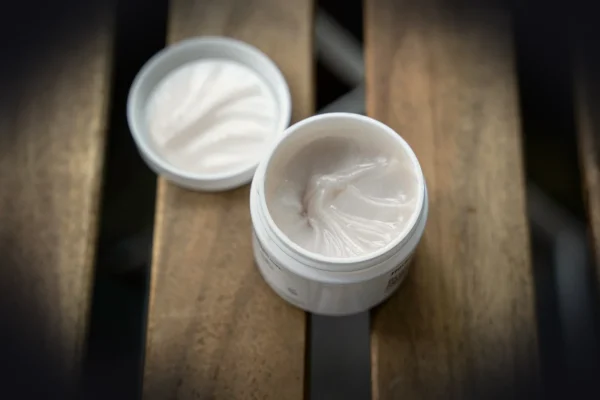
Eye skincare is the category where marketing most aggressively conflates separate problems. "Anti-aging eye cream for dark circles, puffiness, and wrinkles" is selling four different conditions with one product. Some of those respond to topicals. Others do not. The triage matters more than the product choice, and most readers who write to me about "eye cream that does not work" have actually picked the wrong tool for the cause they are trying to address.
Diagnose the dark circle before treating it
The most useful piece in this hub is Dark circles: four different kinds, four different fixes, which walks through pigmented (true melanin deposition, common in deeper skin tones, treated with vitamin C, niacinamide, and sun protection), vascular (visible underlying veins through thin skin, treated with caffeine, peptides, and sometimes laser), hollow (tear-trough volume loss, treated only with filler or fat transfer, not a cream), and structural (genetics-driven, often visible from late childhood). Eye bags, dark circles, hollows: how to actually tell them apart is the diagnostic companion piece. The reason this matters: a vitamin C eye cream will not fade a hollow, and a caffeine roller will not depigment true PIH. Match the tool to the cause, or you will spend six months on a routine that was never going to do what you needed.
Lines and wrinkles around the eyes
The skin around the eye is the thinnest on the face, often a third of the thickness of forehead skin, and it shows expression damage early. Crow's feet: what causes them and what actually helps is the realistic version: daily broad-spectrum SPF (the single most effective preventive measure), a gentle retinoid introduced slowly, peptides for surface texture, and accepting that dynamic lines from squinting will eventually require neuromodulators if you want to soften them visibly. Forehead wrinkles: what causes them and what actually moves the needle sits in the same family of dynamic lines and is worth reading together, because the same logic about muscle action, collagen support, and SPF protection applies. For collagen support in the eye area, a peptide-rich barrier cream like the BioCell Renewal Cream is what I reach for under sunscreen during the day and as a final layer at night.
The contrarian take on eye creams
Here is what mainstream beauty media will not say plainly: most eye creams are repackaged face moisturizers at three times the price for half the volume, often with added fragrance you should not have near the eye in the first place. The eye area benefits from a fragrance-free, peptide-supportive cream and consistent SPF, but you can absolutely use your face moisturizer here, with the standard caveats: avoid actives that sting the eye, never apply retinoids closer than the orbital bone, and patch test fragrance-free formulas first. The American Academy of Dermatology guidance on eye-area care emphasises gentleness and sun protection more than specialised products. If your eye cream costs three times your face cream and contains the same emollients, you are paying for the packaging.
When to escalate beyond skincare
Three signs that mean an eye cream is the wrong tool. First, persistent puffiness or under-eye swelling lasting more than six months, which warrants a derm or primary care visit to rule out allergies, thyroid involvement, kidney issues, or chronic sinus inflammation. Second, true tear-trough hollows that are genuinely structural: no cream lifts volume. Filler placed conservatively by a board-certified dermatologist or oculoplastic surgeon is the only reliable change, and overcorrection is the most common cosmetic complication in the eye area, since under-eye filler shows complications more visibly than almost any other site. Third, sudden eye-area changes (one-sided puffiness, drooping, vision change) which are medical, not cosmetic. For everything else, a quiet routine of SPF, a gentle retinoid two or three nights a week starting at low concentration as covered in the crow's feet piece, and a peptide eye cream like the one referenced in the dark circles guide will do the slow, real work over six to twelve months. Patience, not novelty, is the currency that pays off in this category, and the eye area in particular rewards the reader who can hold a simple routine for a year over the reader who switches to a new hyped product every six weeks.
Frequently asked questions
- What causes dark circles under the eyes?
- Four main causes, often combined. Pigmentation (true melanin in the skin, common in deeper skin tones and worsened by sun and rubbing), vascular shadow (underlying veins visible through thin skin, often worse with poor sleep or allergies), hollow (tear-trough volume loss, structural), and surface texture (fine lines and crepey skin casting shadow). Identifying which type you have determines the treatment, since pigment, vascular, and structural causes respond very differently to skincare.
- Do eye creams actually work?
- For surface concerns, yes. Caffeine reduces vascular pooling temporarily. Peptides and retinoids improve fine lines and skin thickness over months. Vitamin C and niacinamide fade pigment. SPF prevents further damage. But eye creams cannot lift volume from a hollow tear trough, do not treat structural dark circles, and rarely outperform a fragrance-free face moisturizer chosen with care. The category is genuinely overpriced for what it delivers in most cases.
- Can I use retinol around my eyes?
- Yes, but introduce it slowly. Start at the lowest concentration (0.025 percent retinol, or a gentle retinaldehyde), apply on the orbital bone (not closer to the lash line), use twice a week for two weeks before increasing. Pair with a richer cream to buffer. Skip if you wear contacts and find it irritating, or if you have a history of dermatitis around the eyes. Avoid during pregnancy and discuss with a derm if uncertain.
- When should I see a doctor for under-eye puffiness?
- Three flags. First, puffiness that persists for more than three to six months without clear cause. Second, asymmetric (one side only) or sudden onset, which can indicate thyroid, kidney, allergic, or rarely tumor-related causes. Third, swelling accompanied by vision change, pain, or drooping. Chronic puffiness can also reflect ongoing allergic rhinitis or sinus issues, both of which a primary care doctor or allergist can address fairly quickly.
- Are hollows under the eyes treatable with skincare?
- No, not in any meaningful way. True tear-trough hollows are a structural volume loss caused by fat pad displacement and bone resorption, and no topical can replace that volume. Hyaluronic acid filler placed conservatively by a board-certified dermatologist or oculoplastic surgeon is the only reliable correction. Be cautious of injectors who overfill, since the eye area shows complications more visibly than any other facial site.