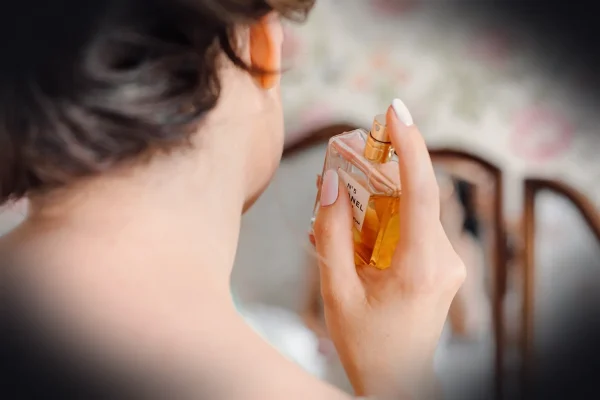
Fragrance is the single most common cause of contact dermatitis from skincare. The American Contact Dermatitis Society has named fragrance mix "Allergen of the Year" more than once, and the prevalence of sensitization in the general population is somewhere between 1 and 4 percent depending on the survey. If your skin reacts unpredictably and you cannot explain why, fragrance is the first thing to suspect.
What the label actually means
"Fragrance-free" means no ingredients added for the purpose of scent. The product can still have a faint smell from its functional ingredients (some plant oils, ceramides, and active extracts have characteristic odors). "Unscented," by contrast, often means masking fragrances have been added to neutralize the smell of the base, which is the opposite of what sensitive skin needs. If you have to choose one word on a label, fragrance-free beats unscented every time.
The contrarian read
Fragrance-free is not the same as essential-oil-free, and that distinction trips up a lot of sensitive-skin shoppers. Essential oils are often added for actives or for marketing, not for scent, which means a "fragrance-free" product can still contain rosemary leaf oil, lavender oil, ylang ylang, citrus peel oils, or tea tree. All of these are documented contact sensitizers. If your skin reacts to a product labeled fragrance-free, scan the ingredient list for botanical oils and extracts ending in "oil" or with the word "essential" implied.
What to actually avoid
The big four are: parfum or fragrance listed directly (a blend of up to dozens of undisclosed scent ingredients), the eight isolated fragrance allergens that EU rules require to be named (limonene, linalool, citronellol, geraniol, eugenol, citral, hydroxycitronellal, isoeugenol), botanical essential oils especially in leave-on products, and certain plant extracts (rose, neroli, ylang ylang) that are essentially fragrance by another name. Our routines for sensitive skin, eczema-prone skin, and perioral dermatitis all default to fragrance-free, and our roundup of best moisturizers for sensitive skin is filtered for this specifically.
Why fragrance is in skincare at all
Because most people enjoy a pleasant-smelling product, and pleasant smell drives repurchase. Brands know that fragrance does not improve performance, but it dramatically improves the sensory experience and customer loyalty. That is not a moral failing on the brand's part; it is a category fact. The cost is that 1 to 4 percent of users sensitize, and the rate is higher for chronically inflamed or post-procedure skin, where the barrier is already compromised.
Where fragrance-free matters most
Leave-on products are higher risk than rinse-off, because the molecules sit on the skin for hours. So serums, moisturizers, eye creams, sunscreens, and overnight masks are the priority. Cleansers, while ideally fragrance-free for sensitive skin, are a lower-risk swap if you are limited on budget. For postpartum skin, where hormonal shifts make even previously tolerated formulas reactive, switching to fragrance-free across the routine is a reasonable default. Our postpartum skincare guide covers what to expect and what to swap. And if you are starting from scratch, the beginner's guide to skincare walks through a fragrance-free baseline routine.
One last note. Even lip products deserve the fragrance-free treatment, because perioral and lip skin are thinner, more permeable, and more prone to sensitization. Our lip skincare routine defaults to fragrance-free balms for this reason. If you have unexplained dryness or persistent angular cheilitis, scented lip products are often the culprit.
How to switch a routine to fragrance-free
Do not try to swap every product at once. Pick the highest-risk leave-on first (usually moisturizer or serum), replace it with a fragrance-free alternative, give it two to three weeks, and see if your baseline reactivity drops. Then move to the next-highest leave-on. Cleansers and rinse-off products can wait. Over six to eight weeks, you can rebuild the entire routine without losing track of which swap helped. The most common mistake is replacing everything overnight and then having no idea which old product was the problem when the new routine feels better.
Frequently asked questions
- Is fragrance-free the same as hypoallergenic?
- No. Hypoallergenic has no FDA-defined meaning and is essentially a marketing claim. Fragrance-free is a more specific label: the product does not contain ingredients added for scent. A hypoallergenic product can still contain fragrance, essential oils, or known sensitizers. If you have reactive skin, prioritize fragrance-free over hypoallergenic, and read the full ingredient list either way.
- Why does my skin still react to fragrance-free products?
- Three common reasons. First, essential oils are not scent ingredients by regulatory definition, so they show up in fragrance-free formulas. Second, certain preservatives like methylisothiazolinone are common sensitizers unrelated to fragrance. Third, some plant extracts (witch hazel, citrus extracts, propolis) can trigger reactions even without an explicit scent. Patch test new fragrance-free products on the inner forearm for three days before applying to your face.
- Should everyone use fragrance-free skincare?
- Not necessarily, but the default-fragrance-free position is defensible. Fragrance adds no functional benefit, and 1 to 4 percent of the general population is already sensitized. For sensitive, reactive, rosacea-prone, eczema-prone, perioral dermatitis, post-procedure, pregnant, postpartum, and chronically barrier-compromised skin, the answer is closer to yes. For everyone else, it is a personal call about sensory experience versus future risk.
- Are natural fragrances better than synthetic ones?
- No, often the opposite. Natural fragrance ingredients (essential oils, botanical extracts) contain dozens of individual chemical compounds, many of which are documented contact allergens. Synthetic fragrance allergens are more predictable because they are isolated molecules, but they are still allergens. From a sensitization standpoint, the natural-versus-synthetic axis matters less than the presence of scent ingredients at all.
- Can I tell if a product is fragrance-free just by smelling it?
- Not reliably. Fragrance-free products can still have a faint scent from their functional ingredients. Conversely, an unscented product can be loaded with masking fragrances designed to neutralize the smell of the base. Read the ingredient list. Look for parfum, fragrance, the named EU allergens, and essential oils. The label and the ingredient deck are more reliable than your nose.