I write this section partly out of frustration with how skincare is sold. The marketing operates two levels above the biology, with words like "radiance" and "renewal" doing the heavy lifting. The biology itself is finite, beautiful, and far less mysterious than the industry suggests. Once you know what is happening in the stratum corneum, what the microbiome does, and why pH matters, the products almost choose themselves. The aim of this hub is to give you that working layer of knowledge so that the next time a brand pitches a "revolutionary cellular renewal molecule," you can read it for what it actually does or doesn't do.
The barrier and what damages it
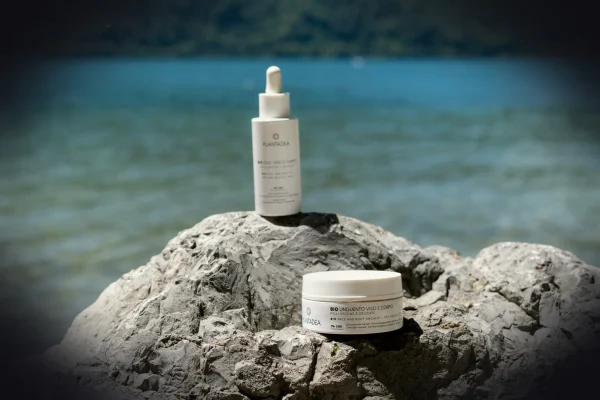
Your skin barrier is the upper part of the stratum corneum: corneocytes held together by ceramides, cholesterol, and fatty acids in a roughly 1:1:1 ratio. Your skin barrier, explained — and the 7 signs it's damaged covers what the structure actually looks like and the warning signals when it is breached: tightness within minutes of cleansing, stinging from products you used to tolerate, mid-day redness, and flaking that returns even after moisturizing. The most common driver of barrier damage is not weather, it is over-routine. Too many actives, too aggressively, on a face that needed less work in the first place. For supporting the microbiome layer that lives on top, a calm prebiotic serum like the Microbiome Glow Serum can help shorten the recovery curve when paired with strict simplification of the rest of the routine.
pH, sebum, and the natural defenses we strip on purpose
Healthy skin sits between roughly pH 4.7 and 5.5, which is mildly acidic. That acid mantle is not branding, it is a real chemical gradient that keeps pathogenic bacteria in check and keeps the enzymes that mature corneocytes working properly. Skin pH explained: why the acid mantle is quietly the MVP walks through why high-pH soap cleansers undermine this and why pH-balanced cleansers feel different on skin. Sebum is not the enemy: a defense of your skin's natural oil is the piece I most want adult-acne readers to find. Sebum is antibacterial, antioxidant-carrying, and barrier-supporting. The goal is rarely to eliminate it; the goal is to regulate it and to clear what is trapped inside follicles, which is a different intervention entirely.
The microbiome and the new model of skincare
This is where my contrarian take lands. Most skincare formulated through the 2010s was implicitly antimicrobial: alcohols, harsh preservatives, fragrance solvents, and surfactants chosen to leave skin "squeaky clean." The newer evidence on the skin microbiome, summarised across the dermatology literature including in PubMed-indexed reviews, suggests we have been overcorrecting for decades. The skin microbiome, explained: why it's the future of skincare is the long version. The short version: a diverse population of Staphylococcus epidermidis, Cutibacterium acnes strains, and others actively trains immunity and competes with pathogens. Stripping it back to zero is not the win we treated it as, and the rise of microbiome-conscious formulation (prebiotics, gentler preservatives, lower-pH formulas) is the field correcting course.
Why everything slows after 25, and what to do about it
The biology of aging skin is mostly about turnover and structural protein loss. Cell turnover after 25: why it slows and how to keep it moving covers the shift from a roughly 28-day epidermal cycle in your twenties to 40-plus days by your fifties. Collagen loss after 25: what's actually happening under your skin covers the roughly one-percent-per-year decline of dermal collagen and what slows that curve: SPF, retinoids, peptides, and to a lesser extent vitamin C and resveratrol. TEWL: the sneaky reason your skin stays dry is the piece on transepidermal water loss, the often-invisible cause of chronic dryness that no amount of hyaluronic acid quite fixes without an occlusive on top. Two more pieces round out the foundation: How to identify your real skin type (and why you're probably wrong) and INCI lists decoded: a plain-English reading guide, which is the literacy piece for actually reading what you are buying. Once you can navigate an INCI list, the skincare aisle becomes much less confusing and much less expensive, because most of the premium pricing is for marketing, packaging, and the same handful of evidence-based actives wrapped in different stories.
Frequently asked questions
- What is the skin barrier and how do I know if mine is damaged?
- The skin barrier is the outer layer of corneocytes bound by ceramides, cholesterol, and fatty acids that keeps water in and irritants out. Damage shows up as tightness immediately after cleansing, stinging from previously tolerated products, persistent redness, rough or flaky patches that moisturizer does not fully fix, and a sudden uptick in reactions. Recovery usually takes two to four weeks of stripping the routine back to basics.
- What pH should my skincare be?
- Healthy skin sits roughly between pH 4.7 and 5.5, and most leave-on products work best when they sit in or near that range. Cleansers slightly above (pH 5.5 to 6) are fine if they rinse fast, but traditional soap at pH 9 to 10 strips the acid mantle. Treatment acids like AHAs need to be at pH 3 to 4 to work, which is why they are also the most irritating step in any routine.
- What does the skin microbiome actually do?
- Your skin microbiome is a community of bacteria, fungi, and viruses that helps train immune responses, produces antimicrobial compounds that crowd out pathogens, and contributes to a healthy acid mantle. Disruption is linked in current research to acne, eczema, rosacea, and accelerated aging. Modern microbiome-conscious skincare uses prebiotics, gentler preservatives, and low-pH formulations to preserve that diversity instead of nuking it.
- Why does my skin turn over more slowly as I age?
- Cell turnover slows because basal keratinocyte division decreases with age, the signaling that triggers desquamation weakens, and DNA-repair efficiency declines. In your twenties, full epidermal renewal takes about 28 days. By your fifties, it is closer to 45 to 50. The result is duller-looking skin, more visible texture, and slower healing. Retinoids and gentle chemical exfoliation are the two best-evidenced interventions to keep turnover moving.
- Are there really skin types or is it marketing?
- Skin types are real as broad descriptors (dry, oily, combination, sensitive), but they shift with season, hormones, age, climate, and routine. Most people are misclassified for years, often calling dehydrated skin oily or confused barrier damage for sensitivity. A more useful frame is to track current behavior: how skin feels two hours after cleansing with no products, how it reacts to actives, and whether it shows congestion or surface dryness first.