
The Elelaf Edit
The scent psychology of skincare: why we left fragrance off our serums
Why a green-tea note makes you exhale, why citrus reads as clean, and why we left scent off our serums. A short…
We use cookies to count readers (Google Analytics) and to send you our newsletter (Klaviyo, if you sign up). Nothing is sold. Read our privacy notice.
Tag
Three or four products, done consistently, beat a 12-step shelf you abandon by Wednesday.
Quick answer
Skinimalism is a philosophy of building the simplest skincare routine that delivers on your specific concerns, typically three to four products morning and night. The premise is that adherence beats elaboration: a short routine you actually do every day will outperform a 10-step routine you do three times a week, and the cumulative effect over years is what changes skin.
Skinimalism started as a backlash against the 10-step K-beauty era and the influencer shelves stacked with twenty bottles. It has since stopped being a trend and become the default position of most board-certified dermatologists, who have been quietly saying the same thing for decades: most people need a cleanser, a moisturizer, a sunscreen, and one or two targeted treatments. That is it. The rest is preference.
Three reasons. First, fewer products mean fewer potential irritants, fewer fragrance exposures, and fewer chances for one ingredient to cancel another. Second, simpler routines have dramatically higher adherence, and adherence over months is where skin actually changes. Third, when something does go wrong (a flare, a breakout, sudden sensitivity), a three-product routine makes diagnosis trivial; a twelve-product routine makes it nearly impossible.
The core skinimalist routine is captured in our 3-step minimalist routine: cleanse, treat, protect (morning) and cleanse, treat, moisturize (night). The treat step is where your one specific concern goes: vitamin C in the AM for tone and protection, a retinoid or peptide in the PM for repair. That is the entire architecture. Our five-minute skincare routine walks through the timed version, and skinimalism as a long-game manifesto covers the underlying philosophy.
You do not need a 10-step K-beauty routine if your skin is intact. The original 10-step model came out of Korean beauty media in a specific cultural and climatic context (dry, polluted Seoul winters, evening skincare as ritual, status signaling around shelf elaboration). For someone in a moderate climate with healthy skin, importing the full architecture is unnecessary. Our reconsidered 10-step takes an honest look at which steps still earn their place and which are functionally decorative, and our K-beauty versus Western skincare comparison explores why the two traditions are converging on a hybrid middle.
SPF, full stop. Skinimalism does not mean dropping sunscreen. It means everything else gets justified. A good cleanser and a good moisturizer also stay; they are the boring backbone, not the savings target. The cuts come from elsewhere: the third serum, the eye cream that performs no differently from your face moisturizer, the toner that is just water plus marketing, the sheet mask habit, the weekly clay mask that the BHA in your routine already handles.
Audit the shelf. For each product, ask what specific job it does that another product in your routine does not. If the answer is unclear, that product is a candidate for removal. Pause it for two weeks (no replacement) and watch your skin. If nothing changes, it was redundant. If your skin shifts, you have learned what that product was actually doing for you. Repeat across the shelf until the survivors are obviously load-bearing.
If you use one treatment-step product, peptides are a defensible pick because they are slow, low-risk, and accumulate benefit over months without irritation. A peptide cream like BioCell Renewal Cream sitting as the treatment-and-moisturizer combined step is the kind of consolidation that a minimal routine rewards: one product, two functions, no layering math.
Skinimalism is not a 30-day program. The payoff is measured in years, in the form of skin that does not flare unpredictably, a barrier that tolerates introductions of actives without drama, and a relationship with your face that is not based on chasing trends. The layering guide still applies for the steps you do keep, because the order and texture rule matter even more when each product is doing more work. Three to four products, done well, every day, for years. That is the entire program.
Why a green-tea note makes you exhale, why citrus reads as clean, and why we left scent off our serums. A short…

Mindful Masks ship in mono-material packaging that can actually be recycled at curbside. Here is the supply-chain decision behind that careful choice.

We turned down a high-profile celebrity collaboration to keep the formulation focus tight. Here is the full reasoning behind that intentionally slow…

We pushed the Elelaf launch to 2026 to finish microbiome stability testing and clinical data. Here is the case for shipping slower…
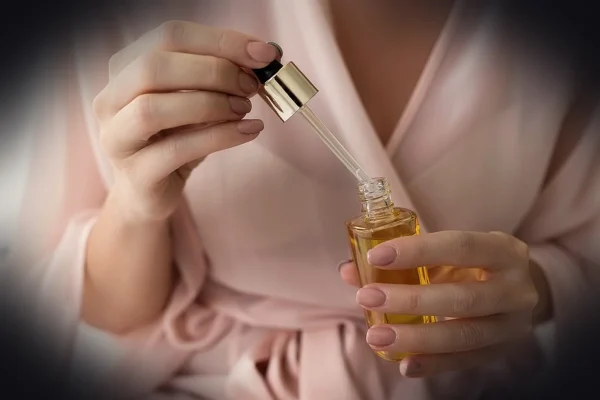
A 30ml serum bottle is paced to finish before potency drops. Here is the science behind our small-format decision, and why bigger…

Three months out is the final pre-wedding window. Here is what to retire, what to keep going, and the mask cadence that…

Twelve months before the wedding is the right time to start retinol, plan treatments, and find your hero routine. Here is the…

Six months before the wedding is the time to refine actives, lock in your treatments, and stop experimenting. Here is the 6-month…

Every six months your skin's needs shift with hormones, climate, and stress. Here is a structured 6-month routine evaluation framework with clear…

Real skin change is visible only in retrospect over twelve months. Here is a 1-year journal protocol with photo prompts, weekly notes,…