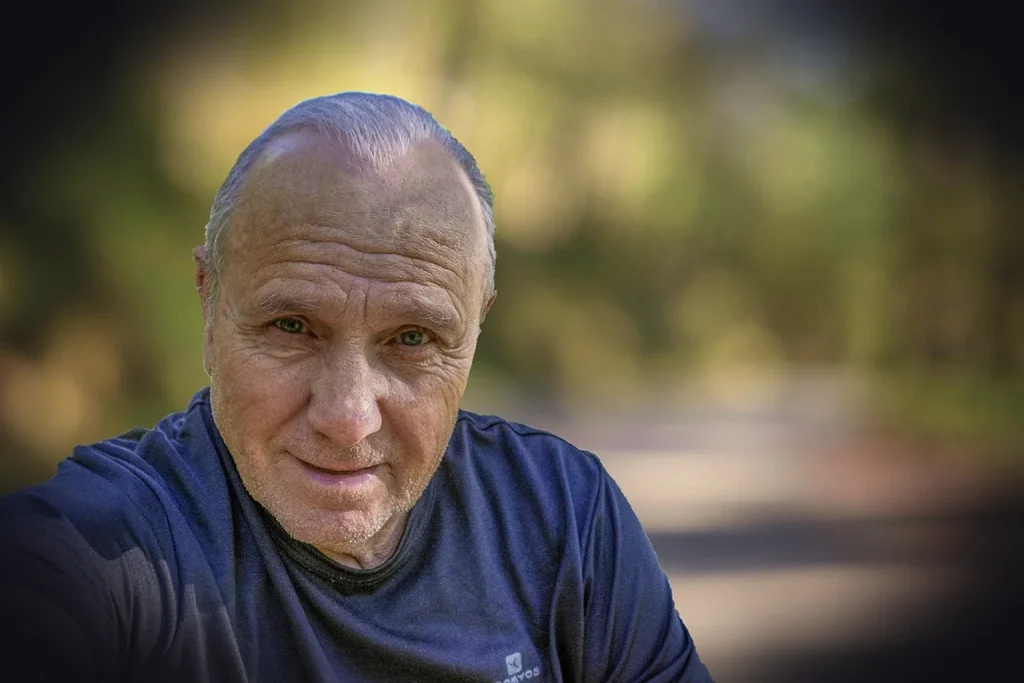
I keep noticing temples in my consultations. People walk in worried about cheek pigmentation, and there’s a quiet band of damage running from the outer brow to the hairline that they’ve never mentioned. It doesn’t show in mirror selfies. It shows in side profile photos, in driver’s license photos, in the kind of unflattering candid your friend takes at brunch. And it’s almost always more advanced than the front-of-face pigmentation that brought them in.
What temple sun damage actually looks like
Temple damage rarely shows up as the dramatic dark patch people associate with melasma. It’s more like a wash, a slightly tan haze running from the outer eye corner up into the hairline. Sometimes it’s textural: crepey skin, fine lines that fan outward when you smile, a roughness you can feel when you wash your face. Sometimes it shows up as actinic keratoses, small rough spots that catch on a towel.
The shared cause is cumulative UV. Temples sit at the side of the face, which means they catch sun through car windows on every commute, take direct light during walks even when your face is angled forward, and rarely benefit from the hats and visors people wear over the forehead.
Why this zone gets missed
Hair covers it part of the day, so people forget it’s exposed the rest of the time. Sunscreen application stops at the hairline by habit, which leaves a one-to-two centimeter strip of unprotected skin that takes a full UV dose. Mineral SPFs in particular leave a visible cast that makes people apply less near the hair, where they don’t want a white smudge.
Driver-side temples in the US (and right-side temples in the UK) show measurably more sun damage than the opposite side in long-term commuters. That asymmetry is the giveaway. If one of your temples looks older than the other, your car window is the culprit.
What helps, in order
Sunscreen first, every other step second. A mineral or hybrid SPF 30 or higher, applied past the hairline, reapplied if you’re outside for more than two hours. Sunscreen that smells nice and feels light gets used. The fanciest serum can’t undo what an unprotected commute is still adding.
Vitamin C in the morning. L-ascorbic acid at 10 to 20 percent or one of the stable derivatives if your skin doesn’t tolerate the pure form. Apply it across the whole zone, including up into the hair edge. Our Microbiome Glow Serum works well here because it doesn’t pill under SPF, which matters when you’re trying to reach a thin strip near the scalp.
Gentle retinoid at night. Adapalene 0.1 percent or retinol 0.3 to 0.5 percent, two to three nights a week to start. Retinoids remodel sun-damaged skin slowly. You’re not chasing a six-week glow, you’re chasing a six-month rebuild.
Tranexamic acid topical, 2 to 3 percent, layered with the vitamin C or applied at night if you tolerate the combo. It’s slower than hydroquinone but doesn’t carry the same risk of rebound pigmentation when you stop.
The contrarian view: laser is usually the wrong first move
People with temple damage often ask about IPL or fractional laser before they’ve tried six months of topicals. I’d push back. Topicals on a zone this small are genuinely effective if you stay consistent. Laser is faster, but it has cost, downtime, and a higher risk of post-inflammatory hyperpigmentation in darker skin tones. For most readers, the right sequence is six to nine months of disciplined topical care first, then assess whether you still want a procedural step.
The other reason to start with topicals: if you skip ahead to laser and don’t fix the underlying SPF habit, you’ll be back in eighteen months with the same damage. Procedures don’t outrun a UV problem.
What the numbers say
A 2021 JAMA Dermatology analysis of cumulative UV exposure patterns found that lateral facial zones, including the temples and lateral cheeks, accumulate roughly 60 to 70 percent more direct UV-A exposure than the central face over a typical commuting lifetime. UV-A passes through car window glass, and side windows in particular block almost none of it. The asymmetric photoaging seen in long-term left-side drivers (in countries that drive on the right) is the most-documented real-world example of this in the dermatology literature.
When to see a dermatologist
See a derm if you have rough, scaly spots that don’t soften with moisturizer, lesions that bleed or crust, a mole that’s changing shape or color anywhere on the zone, or asymmetric dark patches that have appeared in months rather than years. Actinic keratoses respond well to short cryotherapy or topical 5-fluorouracil treatment when caught early. The cost of waiting is a small squamous cell carcinoma, which is the most common skin cancer arising in this exact zone in long-term sun-exposed patients.
Anyone over fifty with significant temple damage should consider a full-body skin check every twelve months, even without a specific concerning lesion. Temples are a high-risk site, and most early lesions are still small enough to remove with no scarring.
FAQ
Can I really reverse temple damage with topicals? Pigmentation and texture often improve meaningfully over six to twelve months with consistent SPF, vitamin C, and a retinoid. Deeper wrinkle and elastosis changes improve less, but they still soften.
Should I use SPF on my temples even if my hair covers them? Yes. Hair blocks less UV than people assume, and the zone is uncovered for hours during the day depending on how you wear it. Apply past the hairline by a centimeter or two.
Why does only one temple look worse? Almost always car window UV exposure on the driver-side temple. UV-A penetrates side windows freely. Window tinting or a film with UV blocking helps long-term commuters.
Will hats fix this? Wide-brimmed hats and visors help a lot, more than you’d think. The issue is that most temple damage accumulates on days you weren’t planning to be outside.
Is there a hair-friendly SPF? Yes. Look for fluid or essence-format mineral SPFs without heavy white cast, or hybrid formulas with low titanium load. Reapply mid-day if you’re outside.
Related reading: how much sunscreen you actually need to apply, vitamin C concentrations and what they mean, and the realistic hyperpigmentation playbook.
Filed under hyperpigmentation, SPF, anti-aging, vitamin C.
Sources
Moyal D, Fourtanier A. Acute and chronic effects of UV on skin: what are they and how to study them? Photodermatology, Photoimmunology & Photomedicine, 2002. Gordon JR, Brieva JC. Unilateral dermatoheliosis. NEJM.org/” rel=”noopener” target=”_blank”>New England Journal of Medicine, 2012. AAD.org/” rel=”noopener” target=”_blank”>American Academy of Dermatology. Skin cancer: who’s at risk and how to check yourself.
Keep reading
References
- Kligman AM, Christensen MS. The biology of the stratum corneum revisited. Int J Cosmet Sci. 2011. PubMed.
- Draelos ZD. The science behind skin care: cleansers. J Cosmet Dermatol. 2008. PubMed.
Have a question about “The temples-only routine: reversing sun damage hidden by hair”?
Ask our editorial desk. Best questions become full follow-up articles, reviewed by our medical reviewer. No medical advice given in private — answers run as articles or not at all.