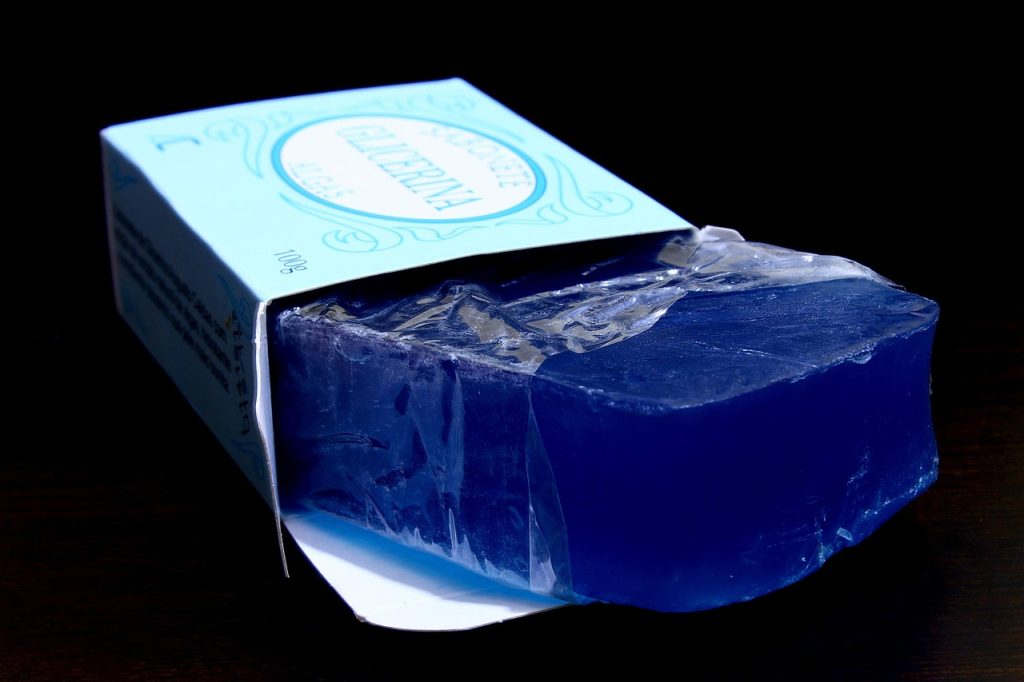
TL;DR: Glycerin has more published hydration data than any other humectant in skincare, and it costs about a dollar a kilogram in bulk. It outperformed hyaluronic acid in head-to-head trials. Most “advanced hydrating serums” rely on it and bury it on the INCI list. Here is why the boring ingredient is the one that does the work, and why the marketing keeps trying to bury that fact.
A reader in Phoenix wrote in last summer. She had spent the better part of three years cycling through hyaluronic acid serums, polyglutamic acid, snow mushroom, beta-glucan, sodium PCA. Her skin was still tight by 11am. The thing she had not tried, because it is on a drugstore shelf and costs five dollars, was glycerin. I told her to swap one product. Six weeks later she emailed back annoyed that the cheapest thing she owned was the only one that had worked.
I get a version of this email every month.
What glycerin is, biologically
Glycerin is a three-carbon alcohol with three hydroxyl groups. Your own skin makes it. The sebaceous glands and the breakdown of triglycerides in the stratum corneum produce endogenous glycerol, and aquaporin-3 channels move it through keratinocytes to regulate hydration from the inside (Fluhr et al., British Journal of Dermatology, 2008). When you apply topical glycerin you are adding to a system the skin already uses, not introducing a foreign humectant.
This matters because most of the “new” hydrators in serums are not new. Sodium hyaluronate is a synthesised version of a molecule your dermis produces. Polyglutamic acid is fermented bacterial output. Snow mushroom extract is fungal polysaccharide. They all work, to varying degrees, by holding water. Glycerin holds water and your skin knows what to do with it.
The studies most brands quote without naming
When a moisturiser claims “clinically proven hydration” there is a high chance the underlying study used glycerin as the primary active. Bettinger and colleagues compared moisturisers with different humectant systems on transepidermal water loss and corneometer readings (Skin Research and Technology, 1999). The glycerin formulations outperformed urea and lactate formulations on most measures. The followup work by Loden in 2003 (American Journal of Clinical Dermatology) consolidated decades of dry-skin research and put glycerin at the top of the practical recommendation list.
I have read these papers. They are not exciting. They use sentences like “the glycerol-treated forearms showed statistically significant improvement in capacitance values at 30 minutes and 4 hours post-application.” This is part of why glycerin loses to hyaluronic acid in marketing, even though it wins in labs. Lab data does not photograph well.
Why hyaluronic acid did not solve my reader’s tightness
Hyaluronic acid is a humectant. It pulls water. The question every honest formulator has to ask is: from where?
In a humid environment the answer is the air. Hyaluronic acid sits on the surface, attracts atmospheric moisture, and you feel a damp film. This is fine. This is what happened in Seoul and Tokyo when HA serums broke out internationally, and it worked because the relative humidity in those climates rarely drops below 60 percent for long.
In Phoenix in July the relative humidity outside can sit around 12 percent. The air is not a moisture source. If a humectant on the surface needs water and the air will not give it, the humectant pulls upward from the lower layers of the stratum corneum. The skin ends up drier than it started. This is not a fringe theory; it is the standard explanation in the cosmetic chemistry textbooks (Verdier-Sevrain and Bonte, Journal of Cosmetic Dermatology, 2007). Cosmetic chemists have been telling people this for twenty years and the consumer market has mostly ignored it.
Glycerin works differently. It is smaller than hyaluronic acid, it penetrates the stratum corneum rather than sitting on top, and it modifies the lipid lamellae so the corneocytes hold water more effectively from underneath. It does not need atmospheric humidity to function. It works in the desert.
What “advanced hydrating” formulas actually contain
I read the INCI list on every product a reader sends me. Last month I sat with a stack of fourteen “hydration serums” priced between $32 and $180. Twelve of them had glycerin in the top five ingredients. Eight had it in the top three. The expensive ones added trehalose or panthenol or a long-chain HA and used those names on the front of the bottle. The cheap ones just said “glycerin” on the front and the same buyers walked past.
There is a small industry of formulators who privately point this out and a larger industry of brands that depend on you not noticing. I am not anti-marketing. I am anti-marketing that obscures what is doing the work.
Where glycerin is in your existing routine
If you use any of the following you are already using glycerin: CeraVe Moisturising Lotion (top three), La Roche-Posay Toleriane Sensitive (top five), Cetaphil Daily Hydrating Lotion (top two), most pharmacy creams in Europe and Asia, and approximately every Korean toner in the price range under $25. The Beauty of Joseon Glow Serum, which gets credit for ginseng and propolis, is a glycerin solution with extracts. The CosRX Hyaluronic Acid Power Essence is mostly glycerin and butylene glycol with a small percentage of HA.
If a product is hydrating and pleasant on your skin, glycerin is almost certainly the reason.
The concentration question nobody answers
The trial data I trust most uses formulations between 10 and 20 percent glycerin. Below 5 percent the effect is small. Above 25 percent the product gets sticky and starts to draw water in ways that feel uncomfortable on application. The sweet spot in most published studies is around 10 percent.
Brands do not list percentages. INCI order tells you ingredients are at descending concentration with some leeway around 1 percent. If glycerin is in the top three, you are probably above 5 percent. If it is in the top two and there is no water listed first, you are looking at a high concentration. This is the closest reverse-engineering anyone outside the lab can do.
Where I have been wrong about glycerin
I used to think it was interchangeable with other polyols. Propylene glycol, butylene glycol, pentylene glycol, propanediol. They are all small humectant alcohols. They all hold water. The assumption was that the cosmetic chemistry community had selected glycerin out of inertia.
I was wrong. The aquaporin-3 mechanism is specific to glycerol. Your skin has dedicated transport channels for this molecule and not for propylene glycol. When you compare them on equal-weight bases in controlled trials, glycerin wins on capacitance, on TEWL recovery, and on subjective comfort scores. This is in the Fluhr 2008 review if you want the citations.
The other polyols are useful as co-humectants and as solvents. They are not replacements.
What I do now
I keep a 5 percent glycerin toner on the shelf and use it as the first hydrating layer on damp skin twice a day. The product I currently use is a Korean pharmacy brand my sister ships me. The ingredient list is water, glycerin, butylene glycol, panthenol, allantoin. There is no marketing on the bottle. It is the most effective hydration step in my routine and it costs about $7.
I do not use hyaluronic acid in winter. The relative humidity in my apartment with the heating on hovers around 30 percent and HA does not have enough atmospheric water to work with. I use it in summer when the windows are open.
I add a glycerin-heavy moisturiser on top, then an occlusive at night when I want to push barrier repair. The glycerin is the workhorse. Everything else is finishing.
The contrarian section: when glycerin is not enough
If your skin feels dry and a glycerin layer does not fix it, the problem is not humectant. It is barrier lipids. Glycerin holds water. It does not replace the ceramides, cholesterol, and free fatty acids that keep the water from leaving. A dry-feeling skin that does not respond to humectants needs an emollient or an occlusive step, not more glycerin.
This is why the people who use glycerin and complain that “it did not work” often also need a ceramide cream or a slugging step. Hydration is two systems. Humectants pull water in. Lipids keep it there. Asking a humectant to do both is the same mistake as asking a moisturiser to do sunscreen’s job.
Frequently asked
Is glycerin pulled from animal fat? Historically yes. Most cosmetic-grade glycerin is now plant-derived from coconut or palm. The INCI does not specify but reputable brands disclose source.
Will glycerin clog pores? No. It is not lipid-soluble and does not contribute to comedogenesis. The myth comes from old surveys of “moisturising ingredients” that did not separate humectants from oils.
Can I just buy USP glycerin from the pharmacy? Yes. It is too concentrated to apply neat. Dilute to 10 percent in water (10g glycerin in 90g distilled water) and add 0.5 percent of a preservative if you plan to keep it longer than a week. This is the cheapest hydration product you will ever own.
Why is nobody marketing glycerin then? Because the unit economics are bad. You cannot charge $80 for a 30ml bottle of an ingredient that costs less than a dollar wholesale. The brands that work are the ones that put it in the formula and let the formula speak.
Closing
I did not write this to tell you to stop using your hyaluronic acid. I wrote it because the reader in Phoenix had spent more on serums than I spend on rent that month and the thing that fixed her tightness was a $7 toner.
The boring ingredient is the one with the longest publication record and the cleanest mechanism. The exciting ingredients are useful in their place. Most people would do better starting from the boring one and adding from there.
Linked tools for working out your own setup: the dehydrated vs dry skin decoder, the build-from-scratch plan, and the slow skincare routine framework. None of them will tell you to spend more.
References
- Fluhr JW, Darlenski R, Surber C. Glycerol and the skin: holistic approach to its origin and functions. British Journal of Dermatology, 2008. PMID: 18510666.
- Bettinger J, Gloor M, Vollert A, Kleesz P, Fluhr J, Gehring W. Comparison of different non-invasive test methods with respect to the effect of different moisturizers on skin. Skin Research and Technology, 1999. PMID: 11428947.
- Loden M. Role of topical emollients and moisturizers in the treatment of dry skin barrier disorders. American Journal of Clinical Dermatology, 2003. PMID: 14640776.
- Verdier-Sevrain S, Bonte F. Skin hydration: a review on its molecular mechanisms. Journal of Cosmetic Dermatology, 2007. PMID: 17524122.
Related Elelaf tools
Sources
- Fluhr JW, Darlenski R, Surber C. Glycerol and the skin: holistic approach to its origin and functions. British Journal of Dermatology, 2008. PMID: 18510666.
- Bettinger J, Gloor M, Vollert A, Kleesz P, Fluhr J, Gehring W. Comparison of different non-invasive test methods with respect to the effect of different moisturizers on skin. Skin Research and Technology, 1999. PMID: 11428947.
- Loden M. Role of topical emollients and moisturizers in the treatment of dry skin barrier disorders. American Journal of Clinical Dermatology, 2003. PMID: 14640776.
- Verdier-Sevrain S, Bonte F. Skin hydration: a review on its molecular mechanisms. Journal of Cosmetic Dermatology, 2007. PMID: 17524122.
References
- Kligman AM, Christensen MS. The biology of the stratum corneum revisited. Int J Cosmet Sci. 2011. PubMed.
- Draelos ZD. The science behind skin care: cleansers. J Cosmet Dermatol. 2008. PubMed.
Have a question about “Glycerin is the boring humectant that actually works in your climate”?
Ask our editorial desk. Best questions become full follow-up articles, reviewed by our medical reviewer. No medical advice given in private — answers run as articles or not at all.