Free tool · method-by-method comparison
Hair removal method picker — what actually works for your skin?
Seven methods, very different outcomes — and the wrong choice for your skin tone, hair texture, or sensitivity profile costs you ingrown hairs for years. Laser doesn't work on light hair. Waxing wrecks sensitive skin. Threading is excellent for faces but useless for legs. Shaving costs nothing but takes forever. Eight questions; we match you to the right method, the right product picks, and the technique mistakes that cause 80% of post-removal problems.
Most hair-removal frustration comes from method mismatches — using the wrong method for your hair type, skin tone, body zone, or sensitivity profile. Laser hair removal needs contrast between pigmented hair and skin; it doesn\'t work on light, gray, red, or blonde hair regardless of skin tone. Waxing tears at the follicle and frequently triggers ingrown hairs in coarse or curly hair. Shaving is universally safe but requires daily maintenance. Threading is ideal for facial precision but impractical for large body zones. Electrolysis is the only permanent method that works on any hair color but is slow and expensive. This tool sorts the method to your specific situation.
The seven methods — honest tradeoffs
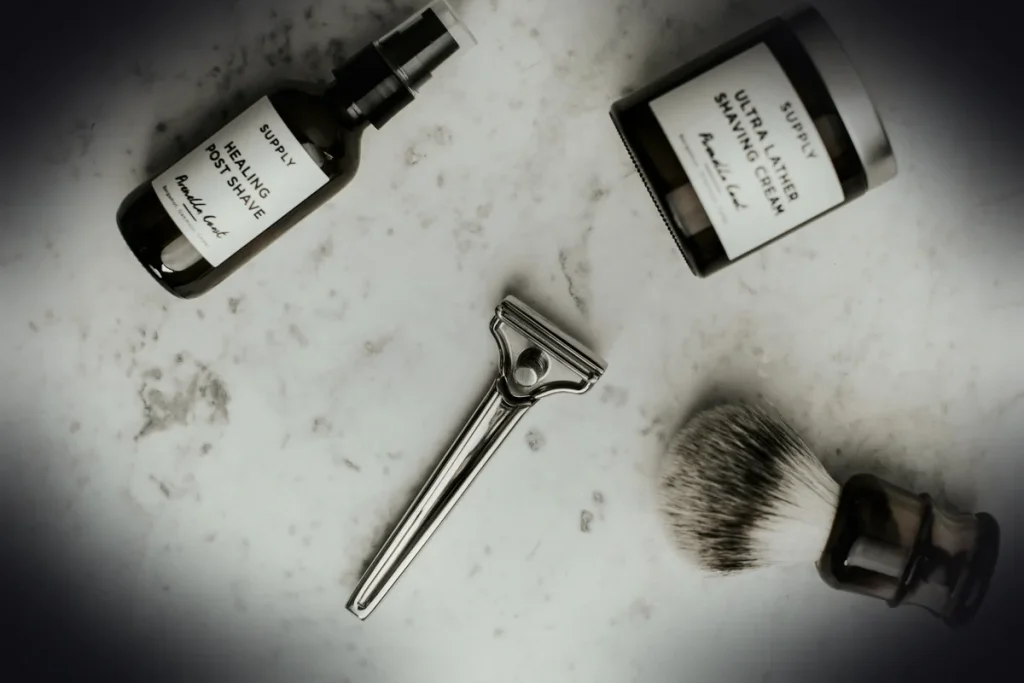
Shaving
How it works: cuts hair at the skin surface using a sharp blade.
Best for: large body zones (legs, arms, underarms, body); any hair color; any skin tone; sensitive skin (with proper technique).
Frequency: 1-3 days for most people.
Pros: cheapest, fastest, works on any hair/skin combination, no recovery time.
Cons: short-lasting, can cause razor burn, ingrown hairs in curly/coarse hair, frequent maintenance.
Best technique: shave AFTER showering (hair is softer), use shaving cream not soap, shave in the direction of hair growth (not against it) for sensitive zones, change blade every 5-7 shaves, avoid pressing hard.
Top products: Astra Superior Platinum double-edge blades ($10 for 100), Cremo Original Shave Cream ($8), Aquasentials shower mirror, plus EltaMD Aftermath aftershave ($31).
Waxing
How it works: pulls hair from the root using sticky wax (hot, warm, or strip).
Best for: people whose hair grows back finer over time (which is most people, slowly); large body zones; people who want 2-4 weeks between maintenance.
Frequency: 3-6 weeks.
Pros: 3-6 weeks of smoothness, hair grows back finer over years, removes hair from root.
Cons: painful, frequent ingrown hairs (especially in curly/coarse hair), bad for sensitive skin, requires hair to be at least 1/4" long before each session, irritation common.
Hard contraindications: active acne in the zone, recent retinoid use on the zone, sunburn, very sensitive skin, eczema flare, isotretinoin use in past 6 months (skin too fragile).
Best technique: cool the skin before waxing, pull strips quickly parallel to skin (not upward), use post-wax oil to remove residue and soothe, exfoliate 2x weekly between sessions to prevent ingrowns.
Sugaring
How it works: similar to waxing but uses a sugar paste that pulls in the direction of hair growth (waxing pulls against).
Best for: people who get ingrowns from waxing; sensitive skin tolerant of mild pulling; curly hair.
Pros: less ingrown-prone than waxing, water-soluble cleanup, generally less painful than wax.
Cons: harder to find skilled practitioners, similar cost to waxing.
Threading
How it works: cotton thread twisted to grab and pull individual hairs.
Best for: face (eyebrows, upper lip, sideburns, jaw); precise small areas; sensitive skin; any hair color; any skin tone.
Frequency: 2-4 weeks.
Pros: extremely precise, works on any hair color, gentler on skin than wax, no chemicals, fast for small zones.
Cons: impractical for large zones, can be painful initially, requires a skilled practitioner.
Depilatory creams
How it works: chemical (thioglycolate-based) dissolves the protein in the hair shaft at the skin surface.
Best for: occasional use on legs, underarms; no time for shaving.
Pros: easy, painless, no cuts; results slightly longer than shaving (a few days more).
Cons: chemical irritation common; smell; not for sensitive skin or face (except specific facial formulations); patch test mandatory; can cause chemical burns if left too long.
Top products: Nair Sensitive Formula ($10), Veet Sensitive Touch (face-specific) ($25), Avon Skin So Soft Fresh & Smooth ($14).
Laser hair removal
How it works: laser pulses target melanin in the hair follicle, damaging it permanently over multiple sessions. The hair follicle must be in active growth phase (anagen) to absorb the laser, which is why multiple sessions are needed — only about 20-30% of follicles are in anagen at any time.
Critical requirement: contrast between pigment-rich hair and surrounding skin. The laser targets melanin in hair — light or absent hair pigment means nothing to target.
Works best for: dark hair on lighter skin (the classic ideal). Fitzpatrick I-III with brown or black hair gets the best results from most lasers (Alexandrite, Diode at standard wavelengths).
Works for darker skin tones (Fitzpatrick IV-VI): with the RIGHT laser. Nd:YAG (1064 nm) is the safe choice for darker skin — it penetrates deeper and bypasses melanin in the epidermis. Many practitioners use diode lasers with darker-skin-safe settings. Insist on a Nd:YAG or Nd:YAG-equipped practitioner experienced with your skin tone. Standard alexandrite or IPL on Fitzpatrick V-VI = high risk of burns and PIH.
Does NOT work on: blonde, red, gray, or white hair regardless of skin tone — no melanin to target.
Sessions needed: typically 6-10, spaced 4-8 weeks apart. Touch-ups annually.
Cost: $200-500 per session per zone in the US. Total course $1,500-4,000 per zone.
At-home devices: Tria Beauty Hair Removal Laser 4X ($449, true diode laser), Nood ($199), Braun Silk-expert Pro 5 ($499, IPL). Important: at-home IPL devices have Fitzpatrick restrictions printed on the box — most are NOT safe for skin tones V-VI. Use only as labeled.
IPL (Intense Pulsed Light)
How it works: broad-spectrum light targets melanin similar to laser, but with less focused energy and broader wavelength range.
Compared to laser: usually less effective per session, more sessions needed (8-12), worse safety profile for darker skin tones than Nd:YAG laser.
At-home options: most "home laser" devices are actually IPL. Effective for dark hair on lighter skin; restricted for darker skin tones.
Electrolysis
How it works: a fine needle inserted into each follicle delivers electrical current that destroys it.
Best for: people for whom laser doesn\'t work — blonde, red, gray, white hair on any skin tone; areas where precision matters; permanent removal of specific hairs.
Pros: only truly permanent method, works on any hair color and skin tone.
Cons: slow (one follicle at a time), expensive over course of treatment, requires many sessions, can be painful.
Cost: $50-100 per hour. Total treatment for a zone like upper lip can be 10-30 hours over a year.
The post-removal mistakes that cause 80% of problems
Ingrown hairs
Caused by hair regrowing curled back into the skin instead of out. Worst in curly/coarse hair, oily zones (bikini, beard), and after waxing.
Prevention:
- Gentle exfoliation 2x weekly between sessions — chemical preferred (BHA or AHA) over physical scrubs
- Pull skin taut while shaving
- Shave in direction of hair growth in ingrown-prone zones
- Hydrating moisturizer post-removal
- Loose-fitting clothing for 24 hours after wax in friction zones
- For chronic ingrowns: see our ingrown hair prevention tool
Razor burn
Red, irritated rash from blade friction. Worst in coarse hair zones.
Prevention: sharp blade (change every 5-7 shaves), pre-shave oil under shaving cream, single-direction strokes, no repeat passes, post-shave cool water rinse and lightweight aftershave.
Folliculitis (infected follicles)
Small red pus-filled bumps in the hair removal zone. Caused by bacteria entering the follicle through tiny abrasions.
Prevention: clean equipment (single-use razors or sterilized between uses), gentle removal, BPO 2.5% as wash on the zone if recurrent.
Hyperpigmentation
Dark marks left after hair removal, especially in darker skin tones and after laser. Driven by either friction (waxing, friction) or laser-induced inflammation (PIH).
Prevention: gentle technique, daily SPF on exposed zones, avoid sun for 24-48 hours after any procedure, skin-of-color-experienced provider for laser.
Method by zone — quick matrix
- Eyebrows: threading > tweezing > waxing
- Upper lip / chin: threading > sugaring > waxing > depilatory (sensitive formulation only)
- Underarms: laser > shaving > waxing > sugaring
- Bikini / Brazilian: laser > sugaring > waxing > shaving
- Legs: shaving > laser > waxing > epilator > depilatory
- Arms: shaving > laser > waxing
- Back / chest: laser > shaving
- Face (women): threading > sugaring > dermaplaning > laser
- Face (men, beard): shaving > laser (for ingrown-prone) > electrolysis
Common questions
Does laser hair removal work on dark skin?
Yes — with the right laser. Nd:YAG (1064 nm) is the safest choice for Fitzpatrick V-VI skin tones; it penetrates deeper and bypasses melanin in the epidermis. Diode lasers with darker-skin-safe settings can also work. Standard alexandrite (755 nm) and most IPL devices target melanin too aggressively for darker skin tones and cause burns, hyperpigmentation, or paradoxical hair growth. The most important factor is provider experience: insist on a board-certified provider with documented experience treating your skin tone. Most at-home IPL devices are restricted to Fitzpatrick I-IV — they are NOT safe for V-VI.
What\'s the best hair removal for sensitive skin?
Depends on the zone. For face and small zones: threading is the most sensitive-skin-friendly option — no chemicals, no heat, no chemicals, pulls only the hair. For legs/arms: shaving with proper technique (sharp blade, shaving cream, direction-of-growth strokes) is gentle and works for almost any sensitive skin. Sugaring is gentler than waxing for those who want longer-lasting results. Avoid waxing, depilatory creams, and IPL on very sensitive skin. Laser (specifically Nd:YAG) can work for sensitive skin if performed by an experienced provider; the long-term result of less hair growth is gentler over time than ongoing maintenance methods.
Why doesn\'t laser hair removal work on blonde or gray hair?
Laser targets melanin (pigment) in the hair follicle. Light, blonde, red, gray, and white hair contain insufficient melanin for the laser to bind to and destroy the follicle. No light-based device — laser or IPL — can effectively treat hair without significant melanin content. The only permanent removal option for these hair colors is electrolysis, which uses electrical current rather than light and is unaffected by hair color. Electrolysis is slow (one follicle at a time) and expensive over a course of treatment but works on any hair color and any skin tone.
Can I wax if I\'m using retinol?
No, not safely. Retinol and tretinoin thin the upper skin layer (stratum corneum), and waxing can tear actively thinned skin causing significant abrasions, scarring, and prolonged healing. Stop topical retinoids for at least 7 days before waxing in the zone, longer for prescription tretinoin. Same for isotretinoin (Accutane): wait 6 months after finishing the course before waxing — the skin remains fragile for months after stopping. Shaving, threading, and laser are all safe with topical retinoids in nearby zones. Laser specifically on the retinoid zone: pause retinoid 5-7 days before laser session.