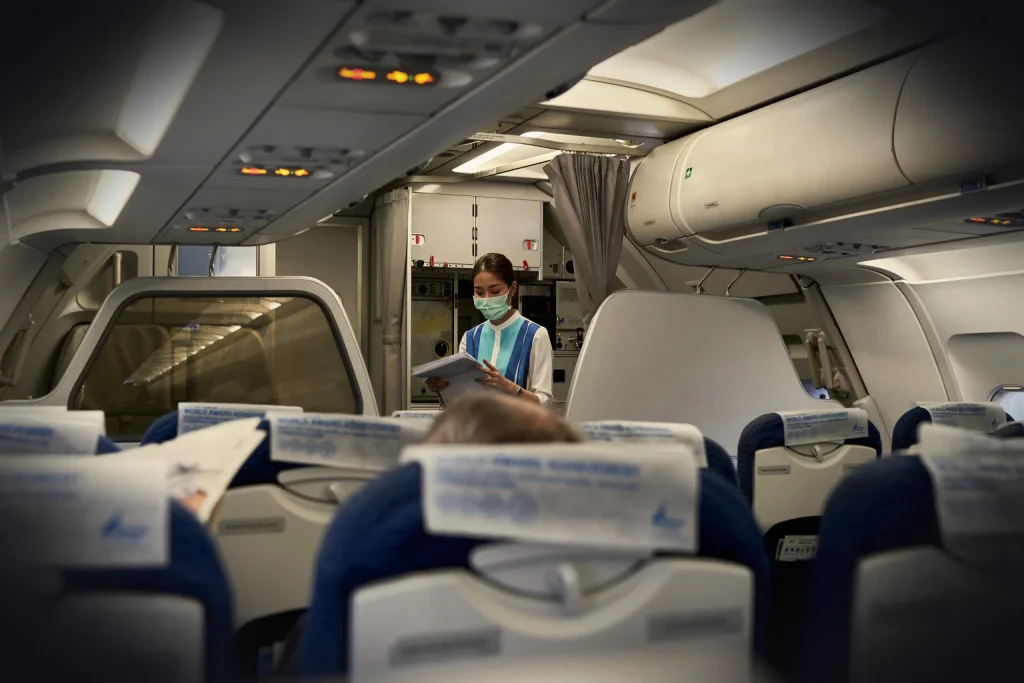
The plane cabin is one of the harshest environments most people regularly expose skin to — 10-20% humidity, recycled air with concentrated particulates, sustained UV exposure through windows, and the chronic dehydration of cardiovascular changes at altitude. The masking protocol that actually works isn’t the “wear a sheet mask in the cabin” advice that’s dominant in influencer content. It’s a sequenced approach: pre-flight prep, in-flight occlusion, post-flight recovery.
The “wear a sheet mask on the plane” content that’s flooded skincare social media gets the in-flight protocol exactly wrong. The cabin environment is too dry for sheet mask materials to maintain their hydration delivery — the mask dries out within 20-30 minutes (versus the 60 minutes the manufacturer expects), pulling moisture from skin rather than into it. The result is a routine that produces less hydration than no intervention at all, with the added cost of strange looks from fellow passengers.
The actual flight skincare protocol focuses on three distinct windows: pre-flight preparation that loads skin with moisture before exposure to dry cabin air, in-flight occlusion that maintains the loaded moisture without trying to add more through cabin-incompatible products, and post-flight recovery that addresses the cumulative damage and the post-flight skin pattern. Done correctly, the protocol prevents the post-flight “travel skin” pattern that most travelers accept as inevitable.
Why plane cabins damage skin
The cabin environment combines four skin stressors. First: ultra-low humidity. Commercial aircraft cabins sit at 10-20% relative humidity during flight (the Sahara averages 25%). At this humidity, skin loses water to ambient air through transepidermal water loss at significantly elevated rates.
Second: recycled air with concentrated particulates. Cabin air is partially recirculated and contains higher particulate concentrations than ground-level outdoor air. The particulates produce oxidative stress on skin cells and contribute to the post-flight inflammation pattern.
Third: sustained UV exposure through windows. Aircraft windows block some UV but not all. At cruise altitude, UV intensity is significantly higher than at ground level. East-west flights during daylight hours produce cumulative UV exposure that the typical “I’m indoors” framing doesn’t capture.
Fourth: altitude-related cardiovascular changes. Cabin altitude (typically pressurized to 6,000-8,000 ft equivalent) produces mild hypoxia that affects circulation, including dermal capillary patterns. The combination of reduced oxygen plus dehydration plus particulate exposure compounds the visible effects.
The pre-flight protocol (24 hours before)
Skip new actives for 48 hours before the flight. The barrier should be at maximum stability when cabin air hits it. Any active that introduces irritation in the pre-flight window compounds with cabin dehydration to produce flares.
Hydrate aggressively. Skin hydration is downstream of systemic hydration. Start increasing water intake 24-48 hours before the flight, not just hours before.
Apply ceramide-rich moisturizer twice daily for the 48-hour pre-flight window. The reinforced barrier handles cabin air better than baseline-condition barrier.
For long-haul flights (6+ hours): consider an overnight hydrating mask the night before. The skin enters the flight loaded with moisture.
The pre-boarding protocol (60 minutes before)
Cleanse face gently. Apply a humectant-rich essence or hyaluronic acid serum to damp skin. The pre-flight hydration baseline matters more than any in-flight intervention.
Apply occlusive moisturizer. This is the layer that will stay on skin throughout the flight. CeraVe Moisturizing Cream, La Roche-Posay Lipikar Baume AP+ M, or a heavier balm-format product (Aquaphor, Vaseline) all appropriate.
Apply mineral SPF if any seat assignment with window exposure. SPF for the flight, not just for ground time.
For long-haul flights: bring travel sizes of the occlusive moisturizer for in-flight reapplication. Sealed travel sizes are appropriate; opened bottles dehydrate too quickly in cabin air.
The in-flight protocol
Skip new product introductions during the flight. Whatever you applied before boarding is what stays on skin. Adding sheet masks, new serums, or active ingredients in cabin air produces unpredictable results.
Reapply occlusive moisturizer every 2-3 hours throughout the flight. The occlusive layer wears off through normal facial movement and contact with cabin air; reapplication maintains the barrier.
Drink water continuously. The standard recommendation of 8 oz per hour of flight time is appropriate. Skip alcohol and caffeine during long flights — both compound the dehydration.
Apply lip balm frequently. Lip skin has reduced lipid content compared to facial skin and dehydrates faster. Reapply every hour during long flights.
For face masks (the PPE kind, not the skincare kind): the masks reduce direct cabin air contact with parts of face. The “maskne” pattern that affects some travelers is preventable with lighter moisturizer under the mask area and avoiding heavy occlusives that trap sebum.
The post-flight recovery protocol
Within 30 minutes of leaving the airport: cleanse face gently. The accumulated cabin particulates need to be removed; oil-based cleanser plus gentle foaming cleanser is appropriate.
Apply hydrating essence or serum to damp skin. The post-flight skin is dehydrated; immediate hydration support reduces recovery time.
Apply ceramide-forward moisturizer. Apply slightly more than usual amount.
For destinations with significantly different water/air composition than home: maintain home routine for the first 48 hours. The microbiome and barrier adjustment to new environments compounds with post-flight recovery; minimizing new variables produces better outcomes.
Hydrate aggressively. 24-32 oz water in the first 2 hours post-flight, with electrolyte support for very long flights.
Sleep when possible. The skin’s recovery processes that were disrupted during the flight catch up during proper sleep windows.
What doesn’t work (and why people keep trying)
Sheet masks on the plane: The cabin air is too dry for the mask material to maintain hydration delivery. The mask dehydrates within 20-30 minutes and pulls moisture from skin. Produces worse results than no intervention.
Active ingredient application during flight: Retinoids, vitamin C, AHA — all produce unpredictable irritation in cabin air. Skip during flight.
Mineral water spritz during flight: Spritzing water on skin in cabin air accelerates evaporation and net-dehydrates skin. Only effective if immediately followed by occlusive application.
Heavy makeup during flight: The makeup interacts poorly with cabin dehydration and produces the “flight face” pattern. Minimal or no makeup is the right choice.
Trying to “freshen up” with cleansing wipes mid-flight: Most cleansing wipes contain ingredients that further dehydrate skin. Plain water on a tissue is gentler than most wipe products.
Specific flight types
Short-haul (under 3 hours): Pre-flight moisturizer + lip balm is sufficient. Skip in-flight reapplication; recovery happens on the ground.
Medium-haul (3-6 hours): Pre-flight protocol + one mid-flight occlusive reapplication. Hydration aggressive throughout.
Long-haul (6-12 hours): Full protocol applies. Reapplication every 2-3 hours. Eye drops if eye dryness is significant.
Ultra-long-haul (12+ hours): Full protocol plus an overnight occlusive reapplication during the sleep window. Plan for a recovery day at destination.
Red-eye flights: The night travel disrupts circadian rhythm beyond the cabin environment effects. Add melatonin-supportive routines at destination if needed.
FAQ
Should I do a sheet mask on the plane? No. Cabin air is too dry for sheet mask materials to maintain hydration delivery. The mask dehydrates within 20-30 minutes and pulls moisture from skin. Use the same occlusive moisturizer you’d use at home, reapplied every 2-3 hours.
Why does my skin look terrible after flights? Cabin air dehydration (10-20% humidity), recycled air particulates, sustained UV through windows, and altitude-related circulatory changes combine to produce the “flight face” pattern. The damage is preventable with appropriate pre/in/post-flight protocol.
What’s the best moisturizer for plane travel? Heavy occlusive: CeraVe Moisturizing Cream, La Roche-Posay Lipikar Baume AP+ M, or balm-format products (Aquaphor, Vaseline). The occlusion layer matters more than the formulation specifics.
Should I wear sunscreen on a plane? Yes if any window seat assignment. UV intensity at cruise altitude is significantly higher than ground level. Aircraft windows block some UV but not all. Mineral SPF before boarding.
How long does it take skin to recover from a flight? Short flights: 12-24 hours. Long flights: 48-72 hours. Ultra-long flights with time zone changes: 3-5 days. Aggressive post-flight hydration and avoiding new product introductions accelerate recovery.
Related: Flight attendant skincare: the real routine for 30,000-feet skin day after day.
References
- Wick G, Hu Y, Schwarz S, Kroemer G. Immunoendocrine communication via the hypothalamo-pituitary-adrenal axis in autoimmune diseases. Endocr Rev. 1993. PubMed.
- Grice EA, Segre JA. The skin microbiome. Nat Rev Microbiol. 2011. PubMed.
Have a question about “Mask on a plane: a cabin protocol that actually survives recycled air”?
Ask our editorial desk. Best questions become full follow-up articles, reviewed by our medical reviewer. No medical advice given in private — answers run as articles or not at all.