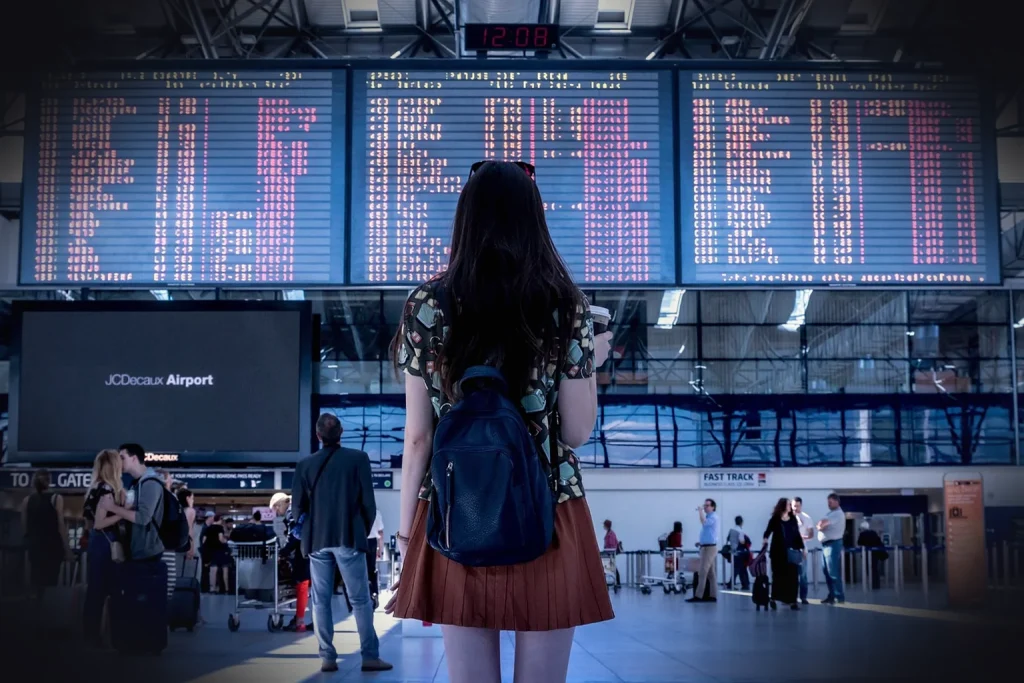
Air travel and rapid climate transitions destabilize the skin microbiome faster than any other common environment. The dry cabin air, the unfamiliar tap water at destination, the time-zone disruption to skin’s circadian patterns — all converge to produce the predictable “travel skin” pattern of dryness, breakouts, and flare-ups within 48 hours of arrival. The protocol below is built to maintain microbiome stability across the transition.
The skin microbiome is a stable ecosystem at any given location — the bacterial and fungal populations on your skin are calibrated to your local environment, your water, your humidity range, and your daily routines. Travel disrupts every variable simultaneously. The aircraft cabin sits at approximately 10-20% humidity (the Sahara averages 25%); the destination city may have radically different water chemistry, UV index, pollution, and microbial pressure on skin surfaces.
The visible result is the “travel skin” pattern that frequent travelers know: dryness within the first cabin hour, mild breakouts within 48 hours of arrival, and the general “my skin isn’t behaving” experience that frequently shows up at exactly the moments when you’d like your skin to look its best. The protocol below is built around microbiome stability — minimizing the variables that disrupt the ecosystem, supporting recovery during transition periods.
Why the microbiome matters for travel skin
The skin microbiome serves three functions relevant to travel resilience. First: competitive inhibition. The established bacterial population occupies surface receptor sites that pathogenic organisms would otherwise colonize. A stable microbiome reduces the risk of acne flares and bacterial folliculitis from unfamiliar water and air exposure.
Second: pH regulation. The microbiome contributes to the acidic skin surface pH (around 5.0) that maintains barrier function. Disruption of the microbiome shifts skin pH toward neutral, which compromises ceramide synthesis and accelerates transepidermal water loss.
Third: inflammatory tone. The established microbiome maintains a low-grade tolerance signal that downregulates the inflammatory response to minor irritants. Acute microbiome disruption upregulates inflammatory sensitivity for 7-14 days — which is exactly the window when most travelers experience unexplained skin reactivity at new destinations.
The travel skincare protocol focuses on preserving as much of the home microbiome as possible while supporting recovery when disruption is inevitable.
Pre-flight: the 48-hour preparation window
Skip new actives for 48 hours before travel. The barrier should be at its most stable baseline when the cabin air hits it. Any active that introduces irritation in the days before travel compounds with the cabin dehydration to produce flare patterns that are difficult to recover from at destination.
Increase ceramide application twice daily for the 48-hour pre-flight window. The reinforced barrier handles the cabin dehydration better than baseline skin. CeraVe Daily Moisturizing Lotion, La Roche-Posay Toleriane Double Repair, or Vanicream Moisturizing Cream — applied morning and evening to damp skin.
Hydrate aggressively in the 24 hours before flight. Skin hydration is downstream of systemic hydration. The cabin dehydration affects already-dehydrated skin more severely than well-hydrated skin.
In-flight: minimize disruption
Apply occlusive moisturizer immediately before boarding. A heavier occlusive (Aquaphor, Vaseline, or a balm-format product) creates a barrier between cabin air and skin surface. The aesthetic concern of looking shiny during the flight is real; the alternative is post-flight dehydration that takes 24-48 hours to recover from.
Skip in-flight masking. The popular “wear a sheet mask on the plane” advice is microbiome-disruptive. The mask material introduces unfamiliar fermentation products and the prolonged occlusion in cabin air alters surface pH. Use the same occlusive moisturizer you’d use at home, reapplied every 2-3 hours.
Drink water continuously. Not at the pace flight attendants offer it — at the pace your body needs. The standard recommendation of 8 ounces per hour of flight time is appropriate.
For flights longer than 6 hours: pack a 1 oz mineral SPF for reapplication. UV exposure through cabin windows is meaningful, particularly at altitude and on east/west flights. The cumulative cabin UV exposure over a few long flights produces measurable photoaging.
Arrival: the first 48 hours at destination
Skip your home cleanser if the destination water is significantly different from home water. Hard water + sulfate cleansers + already-disrupted barrier produces predictable irritation. Switch to micellar water or oil cleansing for the first 24-48 hours at destination, even if your home routine includes a foaming cleanser.
Bring your home moisturizer. Don’t rely on hotel toiletries or destination-purchased products during the adjustment window. The microbiome is in transition; introducing new product variables compounds the destabilization.
Maintain the home active schedule. If you use retinol on Sunday/Wednesday/Friday at home, maintain that schedule at destination. The circadian disruption to skin patterns is meaningfully addressed by maintaining as much routine continuity as possible.
For destinations with significantly different climate (humidity, temperature, altitude): expect 3-5 days for skin adaptation. Layer extra hydration during this window without adding new actives.
Long-stay destinations: the 14-day adaptation curve
For travel windows longer than 7 days, the microbiome gradually adapts to the new environment. By day 10-14, the bacterial population begins shifting toward calibration for destination water and air. This is normal and shouldn’t be fought.
What you can do: maintain barrier support through the adaptation window. The microbiome shift produces brief windows of barrier vulnerability around days 5-10. Continue ceramide application twice daily and minimize new product introductions during this period.
By day 14, most travelers’ skin has adapted to the new environment and a more typical routine can resume. The return journey will produce another adaptation cycle on the way back.
Specific destination patterns
Tropical destinations (Southeast Asia, Caribbean, equatorial regions): High humidity supports skin hydration but increases bacterial pressure on skin surfaces. Expect fungal/yeast-driven flares (particularly in oily skin). Light antifungal washes (Selsun Blue 2.5% selenium sulfide, ketoconazole 1%) used 2x weekly during stay can prevent the pattern.
Desert/high-altitude destinations: Extreme dehydration plus UV exposure. Increase moisturizer frequency, add humidifier in hotel room if possible, expect 24-48 hour recovery period after return.
Cold/dry destinations (winter Europe, northern latitudes): Combined cold and dry air strips barrier rapidly. Heavier occlusives (Aquaphor, La Roche-Posay Lipikar Baume) for the duration. Expect chapped patterns on lips, hands, and high-friction areas.
Polluted urban destinations: Add an antioxidant serum (vitamin C derivative, niacinamide) for the duration. Cleanse twice daily even if your home routine is once daily — particulate matter accumulation drives oxidative stress on skin.
FAQ
Why does my skin break out when I travel? Three converging factors: cabin dehydration disrupts the barrier, destination water/air shifts the microbiome, and circadian disruption affects skin’s normal repair cycle. The combination produces predictable flare patterns within 48 hours of arrival.
Should I do a sheet mask on the plane? No. The sheet mask material introduces unfamiliar fermentation products and prolonged occlusion in cabin air alters surface pH. Use the same occlusive moisturizer you’d use at home, reapplied every 2-3 hours.
How can I prevent travel skin issues? Pre-flight: skip new actives for 48 hours, increase ceramide application, hydrate aggressively. In-flight: occlusive moisturizer, continuous water intake, mineral SPF reapplication on long flights. At destination: maintain home routine for first 48 hours, switch to gentler cleanser if water is significantly different, expect 3-5 day adaptation period.
Do I need different products for different destinations? Mostly no — the home routine should travel. Specific exceptions: tropical destinations benefit from antifungal washes 2x weekly; cold/dry destinations need heavier occlusives; polluted destinations benefit from added antioxidant serum.
How long does it take for skin to adjust to a new place? 3-5 days for short stays, 10-14 days for the microbiome to actually recalibrate to a new environment. The skin patterns that show up in the first 48 hours often resolve naturally by day 5-7 of staying in one place.
Related: Recovery day masking: the 24-hour reset after a heavy active week.
References
- Grice EA, Segre JA. The skin microbiome. Nat Rev Microbiol. 2011. PubMed.
- Sanford JA, Gallo RL. Functions of the skin microbiota in health and disease. Semin Immunol. 2013. PubMed.
Have a question about “Your traveling microbiome: a skincare protocol for climate whiplash”?
Ask our editorial desk. Best questions become full follow-up articles, reviewed by our medical reviewer. No medical advice given in private — answers run as articles or not at all.