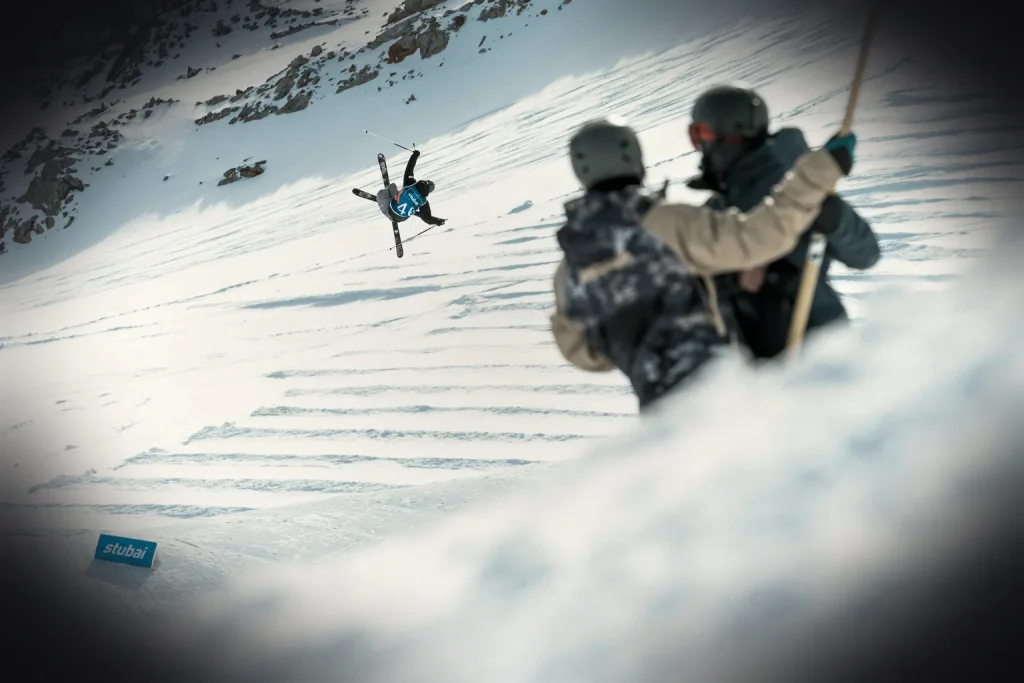
I spent a winter at 8,000 feet and watched my skincare routine collapse in three days. The moisturizer that worked in the city sat on my face without sinking in. The SPF I trusted at the beach didn’t hold up against alpine sun. My cheeks went from balanced to peeling in under a week.
Altitude isn’t weather. It’s a climate category. Skin behaves differently at elevation than anywhere else, and the routine has to change to match.
Why this matters
UV intensity rises roughly 10 to 12 percent for every 1,000 meters of elevation, according to the WHO’s INTERSUN program. At 3,000 meters, that’s about a 30 percent increase in UV dose compared to sea level. Snow on the ground adds another 80 percent through reflection, which is why the worst sunburns I’ve ever had came from ski days, not beach days.
Humidity at elevation is also lower. Relative humidity at 2,500 meters often sits below 30 percent year-round, and below 15 percent in dry seasons. The skin’s water loss rate, TEWL, climbs sharply in low-humidity air. A 2007 paper in Skin Pharmacology and Physiology measured TEWL increases of 50 to 80 percent in low-humidity environments versus baseline.
How to build the altitude routine
Layer for water loss, not for comfort. The instinct at altitude is to use a lighter routine because the air feels dry but cool. That instinct is wrong. The skin needs more occlusion, not less.
Morning: gentle cleanser, then a humectant serum with hyaluronic acid or glycerin. Apply this to slightly damp skin so the humectants have water to bind. On dry skin in dry air, hyaluronic acid pulls moisture out of the deeper layers instead of locking it in, which is the opposite of what you want.
Then a barrier-supporting cream. Our BioCell Renewal Cream sits in this slot because it combines ceramides with a mild occlusive to slow water loss. Apply enough that you can still feel a slight film thirty seconds later.
Then SPF 50, no exceptions, even on cloudy days. UV at altitude penetrates clouds more efficiently than at sea level because the atmospheric column is thinner. Reapply every two hours if you’re outside. For the reapplication mechanics, see our layered SPF reapplication strategy.
Evening: oil cleanser first if you wore SPF, then a water-based cleanser. Skip toner. A peptide or panthenol serum on damp skin. Then either the same BioCell Renewal Cream again or, in extreme cold and dry conditions, a heavier occlusive layered on top. Petrolatum on the cheeks before bed is not glamorous, but it stops the overnight TEWL spike that wakes you up with flaking.
Run a humidifier in the bedroom. Aim for 40 to 50 percent overnight. Cheap ultrasonic units work fine. For more on dry-air protocols, see our indoor heating skincare protocol.
The contrarian take
Travel skincare advice for altitude trips focuses on sheet masks and hyaluronic acid serums. I think this misses the actual problem. The bigger issue at elevation is occlusion, not hydration. You can pump hyaluronic acid into skin all day and lose it back to the atmosphere by evening if nothing seals it. Pack a heavy cream and a small tin of petrolatum balm. Skip sheet masks. They evaporate fast in dry air.
For ski or trekking days, apply barrier cream a second time over your SPF before going outside. The cream-over-sunscreen sandwich looks excessive, but it’s the only thing I’ve found that prevents wind-and-cold redness from sticking for days.
Real numbers
Solar UV erythemal dose at 4,300 meters in summer averages about 600 W-m-squared at midday in low latitudes, roughly 60 percent above sea-level peaks at the same latitude, per the Mauna Loa Solar Observatory and WHO joint datasets. SPF 50 applied at standard testing quantity blocks about 98 percent of UVB; at real-world application volumes that closer to 0.7 mg/cm-squared, the effective SPF drops to around SPF 15 to 20 in usage testing, which leaves significant burn risk at altitude even with sunscreen on.
For dry-air barrier loss, a 2015 study in the British Journal of Dermatology showed that subjects in low-humidity environments developed measurable barrier dysfunction within 72 hours, with TEWL rising 60 percent above baseline and resolution taking two weeks of consistent occlusive use after returning to normal humidity. Altitude trips longer than a few days build cumulative barrier deficit if you don’t treat for it.
FAQ
Do I need to change my routine for a weekend ski trip? For two or three days, the routine survives most of the impact, but apply more SPF than you’d think you need and pack a heavier night cream.
What about altitude over 12,000 feet? Above 3,500 meters, treat the skin as if it’s in active recovery the entire time. Occlusive every night, SPF every two hours outside, humidifier non-negotiable.
Is my skin worse at altitude or just different? Worse for most people. Some oily or acne-prone types see temporary improvement in oil control. The cost shows up later.
Should I use retinoid at altitude? Pull back. If you use it daily at sea level, drop to every other night. Retinoid plus dry air plus UV is the fastest route to irritation I’ve seen.
How long does it take to recover after a trip? One to three weeks of normal routine, depending on trip length.
See more in our barrier damage tag.
Sources
World Health Organization. INTERSUN: Global UV Project, 2003. Engelsen O. The relationship between ultraviolet radiation exposure and vitamin D status. Nutrients, 2010. Egawa M, Oguri M, Kuwahara T, Takahashi M. Effect of exposure of human skin to a dry environment. Skin Research and Technology, 2002.
Keep reading
- Routines & How-TosWedding Skin Recovery the Week After Travel: A Day-by-Day Plan
- Routines & How-TosMindful Masks for Travel Stress: The Plane-to-Hotel Recovery Plan
- Routines & How-TosThe outdoor educator’s skincare routine: wind, sun, and field-day reality
Related: Marathon runner skincare: from long-run chafing to race-day skin resilience.
References
- Lim HW, Arellano-Mendoza MI, Stengel F. Current challenges in photoprotection. J Am Acad Dermatol. 2017. PubMed.
- Wang SQ, Lim HW. Current status of the sunscreen regulation in the United States. J Am Acad Dermatol. 2011. PubMed.
Have a question about “Altitude skincare: a protocol for high-elevation living and travel”?
Ask our editorial desk. Best questions become full follow-up articles, reviewed by our medical reviewer. No medical advice given in private — answers run as articles or not at all.