TL;DR
Stress acne is barrier inflammation that happens to break out, not pore congestion that needs scrubbing. Cut actives, mask twice weekly with a soothing Mindful Mask, lean on a low-pH cleanser, and add a ceramide cream at night. The single best lever is sleep. Most people make stress acne worse by adding products in the first ten days of a flare.
The first thing I tell anyone with a stress flare is the part they do not want to hear. The breakouts on your jaw and temples are not telling you to buy a new acid. They are telling you your barrier has been quietly under-resourced for three to six weeks and the skin has run out of grace. Stress acne behaves like inflammation first and congestion second, which is why the usual acne playbook tends to fail it.
Why this matters
Cortisol does two things that show up on the face. It raises sebum production, especially on the lower third, and it suppresses local immune function in skin, which lets routine surface microbes turn into actual inflammation. The result looks like cystic breakouts along the jaw, temples, and sides of the chin, often more painful and less head-forming than typical acne. That is the inflammation signature.
What does not work here is the standard acne ladder. Adding benzoyl peroxide, salicylic acid, and a retinoid at the same time is a barrier insult on already inflamed skin. You get more redness, no fewer cysts, and a longer flare. The Mindful Masks cadence is the opposite move. Calm first. Decongest later.
The two-week stress acne reset
For the first three days, you remove. No actives. No exfoliating tools. No clay masks. Cleanser, moisturizer, sunscreen. That is the whole routine. The barrier needs a window to repair before any active touches it.
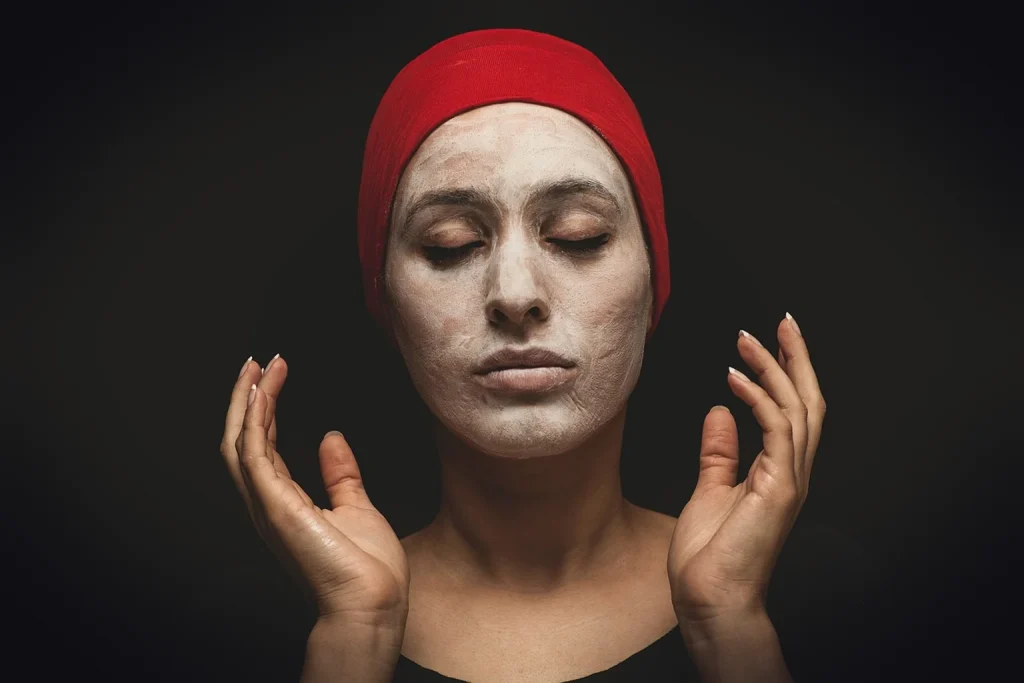
From day four, twice a week, apply a soothing Mindful Mask for ten to fifteen minutes on damp skin. Centella, panthenol, oat, and a low-percentage niacinamide all sit in this category. The mask is not pulling anything out. It is delivering anti-inflammatory inputs to skin that is genuinely inflamed.
From day eight to fourteen, if the active flare is calming, you can reintroduce one targeted product. A 10 percent azelaic acid at night, three times the first week, has the best evidence base for inflammatory acne on stressed skin. It is anti-inflammatory and gently keratolytic without the irritation profile of benzoyl peroxide.
Keep the Mindful Mask cadence twice a week through the entire reset and into your maintenance routine. This is not a one-off rescue tool. It is the calm channel inside an otherwise reactive face.
The contrarian bit: stop double-cleansing during a flare
I know it feels right. The face feels grimy, the day was stressful, you want to scrub it all off. Resist. A double cleanse on inflamed skin lifts the residual barrier lipids and leaves the cysts sitting on a thinner film than they were. One gentle low-pH gel cleanse is enough. The dirt was never the problem.
The other unpopular call is sleep. I have watched routines that looked perfect on paper fail because the person averaged five hours for the third week running. The Mindful Mask cadence cannot out-work a chronic sleep deficit. If you have to pick one intervention this week, pick the one that adds two hours per night.
The numbers
A 2017 study published in Acta Dermato-Venereologica followed 144 university students during exam periods and found that self-reported acne severity correlated significantly with perceived stress scores, with the strongest association in inflammatory papular lesions on the jawline and temples. The mechanism the authors proposed was elevated cortisol increasing sebum production and impairing local barrier and immune function simultaneously. Sleep duration under six hours was an independent predictor of severity.
That finding reframes the whole intervention. You are not failing at acne care. You are running an acne protocol against an inflammation problem, and the protocol cannot win.
FAQ
How long does a stress flare usually last? Active inflammation calms in two to four weeks with a barrier-first reset. Post-inflammatory marks can take three to six months to fully fade.
Can I still use my retinol? Pause it for the first two weeks of the flare. Reintroduce at half your usual frequency once the cysts are no longer actively forming.
Is dairy or sugar the real cause? Diet can contribute but rarely explains a flare that maps cleanly onto a stressful month at work. Address the stress first, then experiment with diet if breakouts persist.
What about prescription spironolactone? If your flares are predictable and severe, it is worth a derm conversation. It does not replace the barrier reset; it works alongside it.
For more on calming reactive skin, see our soothing skincare tag, our hormonal acne tag, and our acne-prone tag. The retinol reintroduction guide covers what to do once the flare has settled.
Sources
Yosipovitch G, et al. Study of psychological stress, sebum production and acne vulgaris. Acta Dermato-Venereologica, 2007. Chiu A, Chon SY, Kimball AB. The response of skin disease to stress. Archives of Dermatology, 2017. AAD position on adult acne management, 2024.
Keep reading
- Routines & How-TosPost-Wedding Cake Breakout Recovery: Sugar, Stress, and Skin
- Routines & How-TosMindful Masks for Cycle Phase 3: A Luteal Slowdown Ritual
- Routines & How-TosLate-Puberty Skincare for Teens 17-19: Hormones Aren’t Done With Your Skin
References
- Zaenglein AL, Pathy AL, Schlosser BJ, et al.. Guidelines of care for the management of acne vulgaris. J Am Acad Dermatol. 2016. PubMed.
- Mills OH Jr, Kligman AM, Pochi P, Comite H. Comparing 2.5%, 5%, and 10% benzoyl peroxide on inflammatory acne vulgaris. Int J Dermatol. 1986. PubMed.
Have a question about “Mindful Masks for Stress Acne: A Cadence That Calms Cortisol Skin”?
Ask our editorial desk. Best questions become full follow-up articles, reviewed by our medical reviewer. No medical advice given in private — answers run as articles or not at all.