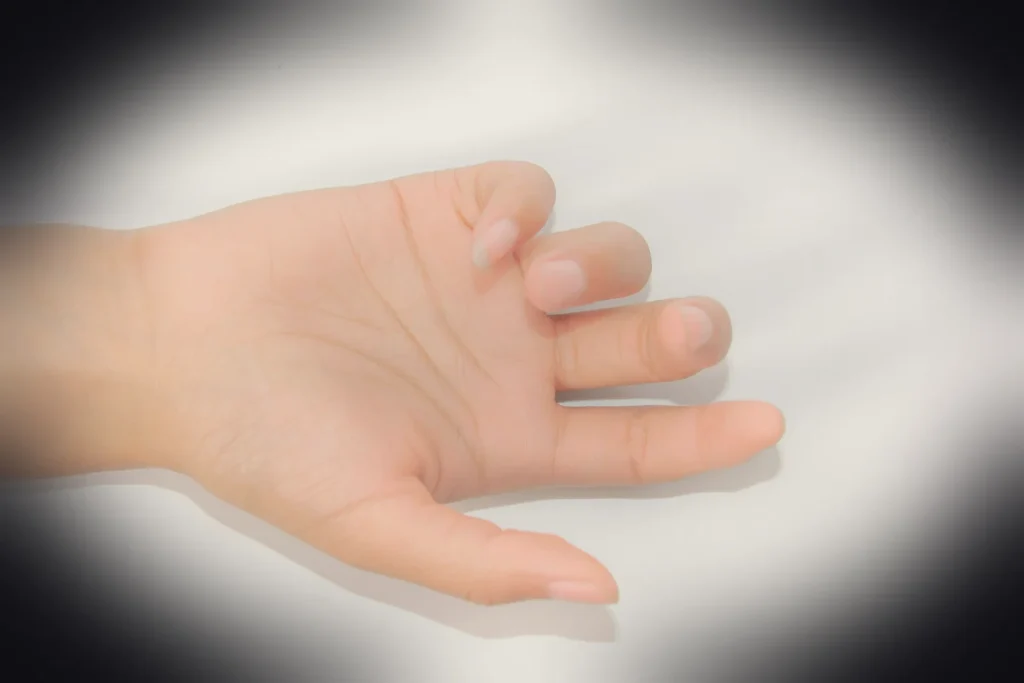
I noticed this on a magazine shoot last year. The model’s hands were beautiful, smooth, even-toned, well-moisturized. The cuticles told a different story. Tight, slightly dry, with that pinched look that reads older than the rest of the hand. The makeup artist mentioned in passing that cuticle care is the part of the routine almost everyone skips, even people who are otherwise meticulous. Once you see it you can’t unsee it, and it changes how you look at hand aging.
Why this matters

The nail fold and cuticle are skin, but they are a specialized kind of skin with their own structure and their own aging path. The cuticle is the seal between the visible nail and the living nail matrix underneath. When the cuticle dries out, it cracks. When it cracks, the seal breaks. When the seal breaks, the nail matrix is exposed to mild trauma, soaps, fragrance, and microbial colonization that can subtly slow nail growth and dull the nail plate.
Hand skin ages from sun exposure, repeated washing, and the slow loss of subcutaneous fat. Cuticle and nail-fold tissue ages from dehydration, repeated detergent contact, and habitual picking or trimming. The two zones share an address but not a routine. People doing everything right for the back of the hand often have neglected cuticles because the products that work on hand skin (heavy creams, often with fragrance, sometimes with retinol) are not appropriate for the cuticle area.
The 90-second nightly protocol
After your final hand wash of the day. Pat dry. Apply one drop of a plant oil, jojoba, squalane, or a dedicated cuticle oil like CND Solar Oil or Sally Hansen Vitamin E. Massage into the cuticle and nail fold on each finger, about 10 seconds per hand. This is the rehydration step.
Then a pea of peptide cream on the back of each hand, worked toward the fingertips and across the cuticles. The BioCell Renewal Cream works well here because the ceramide and peptide combination supports the nail fold without the fragrance load that most hand creams carry. If you do not have peptide cream, any fragrance-free ceramide hand cream will do.
One or two nights a week, slightly heavier. Apply the oil plus cream as above, then put on cotton gloves and sleep in them. This is uncomfortable for the first two or three nights and then becomes unnoticeable. The occlusion increases moisture retention substantially. People who do this consistently see visible improvement in cuticle texture within three to four weeks.
Daytime, the one habit that matters most: SPF on the back of the hand whenever you apply it to your face. Hand sun damage is the larger driver of hand aging overall, and it is the one most people still skip.
The contrarian take
The salon habit of cutting cuticles is bad for the cuticle and bad for the nail. The cuticle is a barrier. Cutting it removes the barrier and opens the nail fold to infection and chronic dryness. Pushing the cuticle back gently with a wooden stick after a bath is fine. Cutting it is not. The grooming industry sells this as part of a manicure because it makes the nail look longer in the short term, but the long-term cost is cumulative damage that shows up as that pinched, aged cuticle look in your forties.
The other piece: nail-strengthening polishes and serums with formaldehyde or toluene are not worth it. They harden the nail temporarily and damage the cuticle and nail fold over time. Stick to plain hydration, plain peptide cream, and plain SPF. The routine is boring and it works.
The real numbers
A 2018 study in Dermatologic Surgery measured trans-onychial water loss (the cuticle and nail equivalent of transepidermal water loss) before and after a four-week cuticle oil protocol applied nightly, and recorded a 22 percent reduction in water loss with corresponding improvement in clinical scores for cuticle integrity. Hand photoaging research from the same period, summarized in a 2019 JAMA Dermatology review, found that consistent daily SPF on the back of the hand over 12 months reduced visible aging scores by an average of 1.2 to 1.6 points on a 5-point scale. The cuticle protocol alone does less for visible hand aging than SPF, but it is the piece that closes the gap that SPF cannot.
For the parallel piece on neglected aging zones, our ear aging routine covers the other commonly forgotten surface. And the late-teen SPF piece is worth reading for the long-arc view on hand protection.
FAQ
Is cuticle oil really different from regular oil? Functionally, no. A drop of jojoba or squalane does the same thing as a $30 branded cuticle oil. The dropper format helps with precision, that is most of what you’re paying for.
Can I use my face retinol on cuticles? Not directly. The cuticle is too thin and recovers slowly from irritation. Peptide cream or plain ceramide cream is appropriate. Save retinol for face and the back of the hand.
What about gel manicures and the nail aging? The UV lamps used in gel manicure curing deliver a measurable dose to the back of the hand and the cuticle. Apply SPF before your appointment. Long-term frequent gel manicures do accelerate visible hand aging.
Do nail vitamins work? Biotin has mixed evidence and only helps if you’re genuinely deficient. A balanced diet does more for nail growth than any supplement.
More on hand and body aging in our anti-aging library.
Sources
Iorizzo M et al. “Nail cosmetics in nail disorders.” Journal of Cosmetic Dermatology, 2007, with 2018 Dermatologic Surgery follow-up. Bourra H et al. “Hand photoaging: clinical and histological aspects.” JAAD, 2019.
Keep reading
- Routines & How-TosEar Aging Skincare: The Forgotten Sun-Exposed Surface
- Routines & How-TosWedding skincare 6 months out: the halfway pre-wedding refinement plan
- Routines & How-TosWedding skincare 12 months out: the full year-long pre-wedding plan
References
- Kligman AM, Christensen MS. The biology of the stratum corneum revisited. Int J Cosmet Sci. 2011. PubMed.
- Draelos ZD. The science behind skin care: cleansers. J Cosmet Dermatol. 2008. PubMed.
Have a question about “Hand Cuticle Care for Anti-Aging: Where Most Routines Stop Short”?
Ask our editorial desk. Best questions become full follow-up articles, reviewed by our medical reviewer. No medical advice given in private — answers run as articles or not at all.