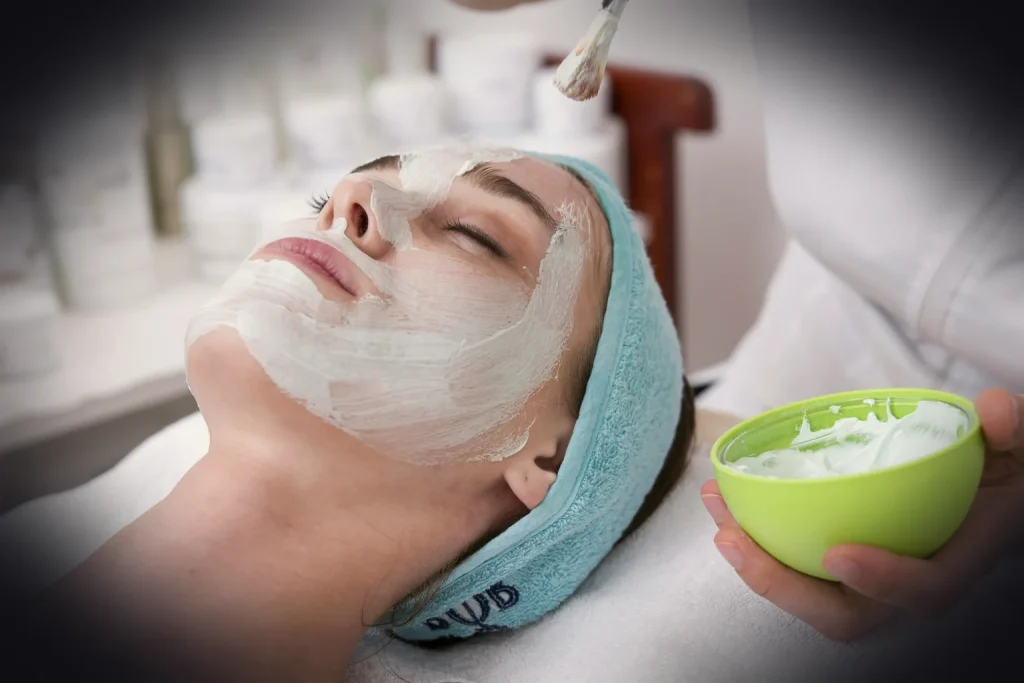
TL;DR: Five minutes of attentive face massage produces real, measurable benefits — for circulation, puffiness, and the way your products absorb. It does not, however, sculpt your jawline.
Quick answer
A five-minute face massage uses light pressure and a few specific stroke patterns to move lymph, increase circulation, soften muscle tension in places you didn’t realize were holding tension, and help products absorb. Done in the evening with a slip-providing product — an oil, a balm, a thick cream — it produces a modest, repeatable list of benefits: less morning puffiness, a brief post-massage flush of color, and a calmer nervous system from the slow contact alone. Daily practice over months compounds. It will not change your bone structure.
Why bother
Five minutes is a real ask in a busy evening, so the benefits should be honest.
Lymphatic drainage is the first. Gentle upward and outward strokes move lymph toward the nodes near the ears and collarbones, which reduces fluid retention. Morning puffiness in particular responds well to consistent evening practice.
Circulation is the second. A few minutes of attentive massage brings blood to the surface. You can see it in the mirror immediately. That fresh blood brings nutrients and clears waste.
Tension is the third. Most of us carry it in places we never think about — jaw, mouth, the band between the eyebrows. Massage softens these, and after a few weeks you start noticing when you’re clenching during the day.
Absorption is the fourth. Light pressure over a serum or oil helps it penetrate marginally better than just patting it on.
The fifth is the underrated one. Five minutes of slow, attentive contact is parasympathetic activation. Cortisol modestly drops. Whether that shows up in your skin is harder to say, but the calming effect is real, and many people describe sleeping better as the most noticeable change.
The five-minute sequence
Start with clean skin and a slip-providing layer. A face oil, a thick balm, or a generous amount of a rich moisturizer all work. Wash your hands. Sit in front of a mirror. Slow down — the whole thing falls apart if you rush.
Forehead, about a minute. Fingertips at the center of the forehead, gentle upward strokes toward the hairline. Move outward across the brow. Finish with five seconds of pressure on the temples.
Brow and eye area, forty-five seconds. Switch to your ring finger — it’s the weakest finger and the right tool for delicate skin. Trace outward from the inner brow, around the orbital bone. Light tapping under the eye, more like a piano than a knock. Everything moves outward toward the temples.
Cheeks, about a minute. Whole-hand contact now — palms and fingers. Long sweeping strokes from the center of the face outward and upward. Roll lightly across the cheekbones toward the ears. The lymph nodes are there; you’re moving everything in that direction.
Jaw and chin, forty-five seconds. Thumbs and the side of the knuckles work well here. Roll from the chin outward along the jawline. Press into the TMJ — the spot where the jaw joint hinges, just in front of the ear — and hold for five seconds. Open and close your jaw gently to release.
Neck, about a minute. Long downward strokes from the jawline down the side of the neck toward the collarbone. The neck moves down, not up. The skin here is thin; keep the pressure light, especially in front.
Final thirty seconds. Palms over the face, one full breath. A press at the temples. A final outward sweep from the center of the face. Done.
The mistakes most people make
Pulling. Always work with the skin, not against it. Don’t drag downward, don’t stretch.
Too much pressure. Light to moderate. Eye area, lip area, and forehead want a featherweight touch.
Skipping slip. Friction without a slip product creates micro-irritation that compounds.
Massaging during an active acne breakout, especially cystic. Wait until the surface is calm.
Rushing. The lymphatic and nervous-system benefits both depend on slow, attentive movement. Five fast minutes is worse than three slow ones.
Tools that help, honestly
Gua sha is the most useful add-on. The stone allows more glide and slightly more pressure than your hands. Daily use is fine if the pressure is right. Jade or rose quartz rollers are gentler and cooler, useful for a brief drainage pass at the end. Microcurrent devices (NuFace, ZIIP) deliver a small electrical signal with modest cumulative effects on muscle tone — evidence is real but smaller than the marketing. LED masks pair well with massage beforehand. None of these replace the hand technique.
What it actually delivers
Reduced morning puffiness is the most reliable result. A brief glow from circulation is visible immediately. Slightly better product absorption over serums or oils. A real stress reduction effect within two weeks. And a habit that anchors mindful skincare.
What it doesn’t deliver: permanent face slimming, jaw definition, or anything structural. “Face yoga” claims for sculpting are wildly overstated. It also doesn’t replace actives. Retinoids, vitamin C, sunscreen — those are doing different work.
When face massage isn’t appropriate
Active cystic acne. Open wounds or healing scars. Recent filler (wait two weeks). Recent Botox (wait at least twenty-four hours, longer if you’re being conservative). Any active skin infection. A bad rosacea flare.
Timeline
Immediate effects — glow, slight depuffing, the relaxation — are visible the first night. Two weeks of daily practice tends to produce a noticeable reduction in morning puffiness that holds through the day. By six to eight weeks, the cumulative effects on absorption and tension begin to show. Past that, it becomes maintenance — the kind of slow practice that pays back in months and years rather than days.
FAQ
How often? Daily is ideal. Three or four times a week still produces benefit.
Best time? Evening, for most people. You have time, the relaxation pairs well with going to sleep, and the lymphatic benefits show up the next morning. A morning session works if it fits your life.
Should I massage on retinoid nights? Skip massage on retinoid nights to reduce irritation. Save it for hydrator or oil nights.
Does face yoga work? Modestly. There’s some evidence for muscle support; the marketing claims are bigger than the evidence. Massage is more universally useful.
How does this compare to a professional facial? A facial is more thorough, includes extractions, and uses stronger treatments. Home massage is the daily practice in between.
Sources
Hwang UJ et al. Effect of facial muscle massage. Annals of Dermatology, 2018. AAD position on facial massage and lymphatic drainage, 2024.
Tool: cystic acne severity score — decides if you need OTC, Rx, or in-clinic.
Tool: LED mask decision tool — where the data is strongest.
Keep reading
Keep reading
- Application TutorialsHow to introduce retinol without the peeling, burning, quitting cycle
- Routines & How-TosWedding skincare: a 12-week plan that doesn’t sabotage you in week 11
- Application TutorialsMulti-masking, without making it a production
Related: Cleansing Brushes: The 7-Year Arc From Must-Have to Barrier-Buster, and Gua Sha and Jade Rollers: 90% of the Benefit Is the Massage, 10% Is the Stone.
References
- Kligman AM, Christensen MS. The biology of the stratum corneum revisited. Int J Cosmet Sci. 2011. PubMed.
- Draelos ZD. The science behind skin care: cleansers. J Cosmet Dermatol. 2008. PubMed.
Have a question about “Face massage at home: a 5-minute routine that’s worth the time”?
Ask our editorial desk. Best questions become full follow-up articles, reviewed by our medical reviewer. No medical advice given in private — answers run as articles or not at all.