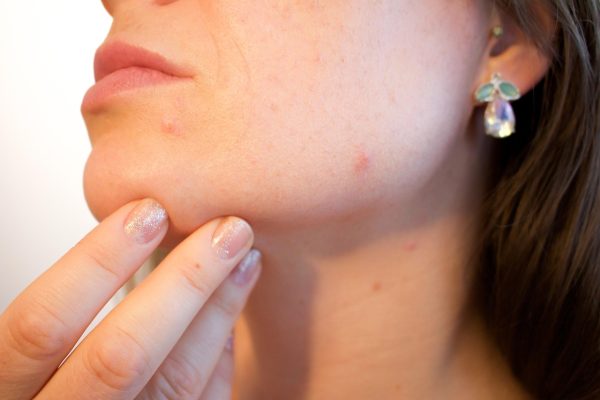
TL;DR: Menopause changes skin in measurable, predictable ways. Most generic anti-aging routines don't speak to what's actually shifting.
Quick answer
Estrogen falling during menopause changes skin in a handful of specific ways: thinner, drier, slower to turn over, less firm, often more pigmented, sometimes more reactive. The right routine leans into lipid replenishment, keeps the retinoid (often at lower frequency), adds peptides, treats pigmentation actively, and never skips SPF. A lot of readers also benefit from procedural treatments at this stage. The goal isn’t to look 30. It’s healthy, comfortable, hydrated skin that ages on its own terms.
What menopause actually does to skin
Estrogen has its hands in a lot. As it falls off, several things shift at once.
Skin gets thinner. Estrogen supports collagen and elastin synthesis, and dermal thickness drops as estrogen does.
Skin gets drier. Estrogen also supports sebum production and barrier lipid synthesis, and both drop.
Cell turnover slows. From roughly 28 days in your 20s to 50, 60, sometimes more. Surface texture issues that used to clear in a week now linger.
You lose firmness in places that matter visually — midface volume, jawline definition, the eye area.
Pigmentation often comes forward. Melasma may appear or worsen; old sun spots get louder.
Hot flashes have a skin effect of their own. Repeated vasodilation feeds rosacea-prone patterns and persistent redness.
And there’s vaginal and vulvar dryness, which is the same hormonal physics. Skin issues here aren’t limited to the face.
The routine
The daily floor is a cream or oil cleanser (fragrance-free), a lipid-rich moisturizer with ceramides plus cholesterol plus fatty acids, and broad-spectrum SPF 30+. Mineral often feels better at this stage.
Daily actives: vitamin C at 10–15% (a stable derivative is often better tolerated than L-ascorbic acid), a peptide serum, humectant layering on damp skin (hyaluronic acid, glycerin, polyglutamic acid), and niacinamide at 5%. The gentler concentration matters more than the higher one.
Active treatments roughly four nights a week: a retinoid at moderate strength (0.3–0.5% retinol, retinaldehyde 0.05%, or prescription tretinoin 0.025% — work this out with your derm). A mild AHA like lactic 10% once or twice a week, not more.
Targeted as needed: tranexamic acid (2–5% topical, or oral with medical guidance for stubborn melasma). Bakuchiol as the gentler retinoid alternative if tolerance is limited. PDRN serum two or three nights a week for regenerative support. Azelaic acid if there’s redness or perimenopausal acne in the mix.
Optional but useful additions: a facial oil at night (squalane, marula, rosehip), slugging once or twice a week in dry climates, a peptide eye cream, and a richer body moisturizer for the neck, hands, and chest where crepey skin shows up first.
What changes from your earlier-decade routine
Increase the hydration layers and the lipid replenishment — multiple humectants on damp skin, then a heavier moisturizer or oil on top. Increase your attention to pigmentation; it’s more prominent now.
Hold daily SPF, vitamin C, and retinoid use (with whatever strength and frequency works for current tolerance).
Reduce your appetite for harsh actives. Cut frequency before you cut strength. Drop daily strong AHAs to once or twice a week max. Swap foaming cleansers for cream cleansers.
Add tranexamic acid for pigmentation, PDRN if accessible, an eye cream, and the procedural treatments you didn’t need ten years ago.
HRT and skincare
Hormone replacement therapy modestly helps skin alongside its primary purpose of symptom management.
HRT can slow skin thinning, improve hydration, modestly improve elasticity, and reduce the vascular reactivity that drives hot-flash redness. It isn’t a primary skincare intervention, doesn’t replace a topical routine, and isn’t appropriate for everyone.
The skin-only case for HRT is modest. The real conversation, with your doctor, is broader. If HRT is on the table for other reasons, the skin benefit is a useful side effect.
Procedures worth considering
Menopausal skin often responds well to combined approaches. Microneedling with PRP or growth factors for texture, fine lines, and pigmentation. Fractional laser (Halo, Fraxel) for sun damage and overall surface. RF (Thermage, Ulthera) for laxity. Mild chemical peels (TCA, Jessner’s) for tone and texture. IPL or BBL for sun spots. Botox for expression lines. Filler for midface volume restoration.
A consistent home routine plus occasional procedural work meaningfully outperforms either alone.
Where people go wrong
Running a 30-year-old’s anti-aging routine on menopausal skin. Different physiology, different priorities.
Quitting retinoids the first time they irritate. Reduce frequency. Buffer with richer moisturizer. Don’t drop them entirely; the long-term value is real.
Ignoring procedural options. This is honestly where most of the visible improvement comes from at this stage.
Believing topical products can restore volume. They can’t. Filler is the actual tool for that conversation.
Comparing to celebrities at the same age. Most are working with access, lighting, professional treatments, and editing you don’t have visibility into.
Lifestyle factors that move the needle
Sleep, which menopause loves to disrupt. Stress management, because cortisol amplifies everything. Enough protein. Daily SPF (pigmentation accelerates without it). Hydration. Less alcohol, which affects both vascular reactivity and sleep. Not smoking, if that applies.
Mental health note
Menopause-related skin changes can hit self-image hard. If that’s where you are, therapy can help separate appearance from worth. Realistic expectations matter — most readers won’t look 30 again, and chasing that is a kind of suffering. Procedural treatments are a valid choice when budget and preference align. So is the path of accepting the changes. Both are reasonable, and one isn’t more enlightened than the other.
When to involve a specialist
Annual skin check (skin cancer risk is highest at this age). When you’re considering procedures. For stubborn pigmentation, adult-onset acne, or significant shifts in skin patterns. For any HRT conversation, your gynecologist or a hormone specialist is the right room.
FAQ
Is it too late to start a serious routine in menopause? No. Even a late start produces measurable improvement, especially with consistent SPF.
Will my skin “settle” after menopause? Yes. The steepest shifts are in perimenopause; post-menopause is more stable. You shift from constant adjustment to maintenance.
Are at-home microcurrent or LED devices worth it? Modestly. The benefit is real but smaller than the marketing suggests. A reasonable supplement, not a centerpiece.
Should I see an endocrinologist just for skin? Usually not. Start with your OB or primary care.
Is menopause skincare a permanent commitment? Yes. The routine continues indefinitely with adjustments as your skin shifts.
Sources
Hall G, Phillips TJ. Estrogen and skin. JAAD.org/” rel=”noopener” target=”_blank”>Journal of the AAD.org/” rel=”noopener” target=”_blank”>American Academy of Dermatology, 2005. Calleja-Agius J, Brincat M. The effect of menopause on the skin. Gynecological Endocrinology, 2012.
Keep reading
Keep reading
- By Age (Teens-50+)Skincare in your 50s and beyond: comfort, hydration, and confidence
- Anti-AgingCrepey skin on the neck and hands: what actually helps
- By Age (Teens-50+)Skincare in your 40s: a strategy, not a 12-step routine