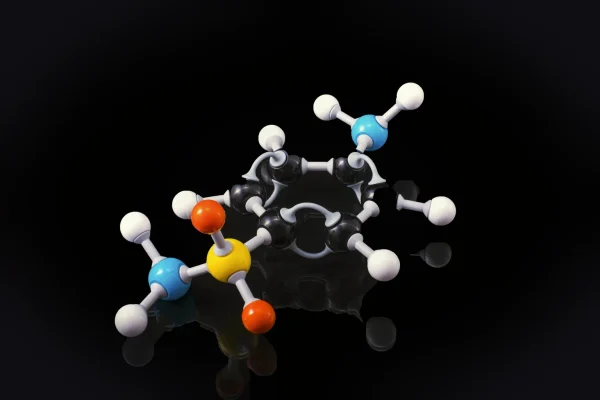
Lactic acid is what your muscles produce during exercise, and what live cultures produce when they ferment milk. In skincare it’s the gentlest of the major AHAs because the molecule is larger than glycolic acid, so it can’t dive as deep as fast. That sounds like a disadvantage and isn’t — it means lactic acid exfoliates the surface effectively while staying off the nerves that scream during a glycolic peel. The added bonus: it’s a natural component of your skin’s own moisturizing factor, so the molecule isn’t foreign chemistry.
The molecule that explains everything
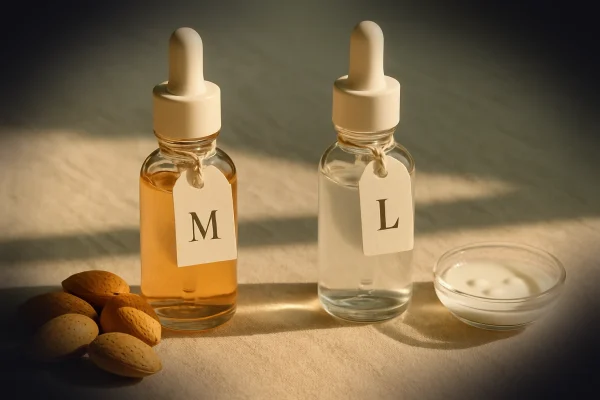
Glycolic acid is the smallest AHA (76 daltons) and penetrates fast and deep — hence the results, and the sting. Lactic acid is 90 daltons, just enough larger to slow penetration and reduce neural irritation. Mandelic acid, the largest common AHA at 152 daltons, is gentler still but works more slowly. The full family map is in AHA, BHA, PHA: the acid family tree. Molecular size is the single most useful concept for picking an AHA: smaller for resilient skin with deep texture needs, larger for sensitive skin with surface concerns.
Concentrations that actually do something
5% for everyday surface smoothing on the face. 8–10% for a more visible weekly treatment. 12% is the high end for face products in most regions and is best treated as a once-a-week thing. Body lotions go higher (10–15%) because body skin tolerates more. Anything labeled “2% lactic acid + hydrating” is a hydrating product with a token acid; useful, but not what you reach for to treat texture. Read the percentage and the pH together — a 10% lactic acid at pH 4.5 is gentler than 8% at pH 3.5, and most well-formulated products land in the pH 3.5–4 window.
The hydration angle
This is the thing most AHA write-ups miss. Lactic acid is a natural humectant — it pulls water into the stratum corneum the same way hyaluronic acid does, just with the exfoliation bonus. The Smith trials from the mid-90s established that lactic acid increases skin hydration measurably, which is why dry skin types tolerate it better than glycolic. It’s an exfoliant that doesn’t leave you drier on the way out, which is unusual for the category and why dermatologists routinely recommend it for mature, dry, or eczema-adjacent skin where glycolic is too aggressive.
The contrarian take on “gentler means weaker”
It doesn’t. What I keep seeing is people abandoning lactic acid after a month because “nothing happened,” then jumping to 10% glycolic and getting six weeks of texture improvement followed by three weeks of barrier damage. Lactic acid at 8% used consistently for twelve weeks produces equivalent surface results to glycolic acid for most users, without the rebound. The honest comparison is in glycolic vs lactic acid: which AHA belongs in your routine. Patience is the missing ingredient, not strength.
The body case
This is where lactic acid earns its place permanently. 10–12% lactic acid lotion on the upper arms and thighs is the most reliable home protocol for keratosis pilaris — those rough little bumps caused by keratin plugging hair follicles. Six to eight weeks of consistent nightly use, no extreme exfoliation required. The KP-specific protocol is in keratosis pilaris: the ‘chicken skin’ on your arms and thighs, and what actually treats it. For sensitive or barrier-compromised skin who still want exfoliation, Mindful Masks with a lactic-acid base are the safer weekly format. Body skin handles daily lactic acid in a way facial skin typically doesn’t, which simplifies the protocol significantly.
How to use it without overdoing it
Two to four nights a week is the sweet spot for face. Apply to clean, dry skin. Wait ten minutes before layering anything to let pH equalize, then moisturize. Sunscreen is non-negotiable the next morning — AHAs increase UV sensitivity for a week after application, which is the leading cause of pigmentation flare-ups in people who exfoliate aggressively without strict SPF. Don’t layer with retinol on the same night unless you’ve been on both for at least three months. Vitamin C in the morning is fine, and pairs particularly well with lactic acid for dullness because the two address surface and pigment-level dullness through different mechanisms.
Frequently asked questions
- Is lactic acid better than glycolic acid?
- For dry, sensitive, or mature skin: yes. For oily, resilient skin chasing fast resurfacing: glycolic is faster. Lactic acid is the better default for most home users because it gets you most of the way there with a fraction of the irritation, and adds hydration as a bonus that glycolic does not.
- How often should I use lactic acid?
- Two to four nights a week for the face. Daily use isnu2019t needed and tends to compromise the barrier in the second month. For body use u2014 keratosis pilaris, rough elbows, strawberry legs u2014 daily application of a 10u201312% lotion is fine and is actually how the body protocols are designed to work.
- Can I use lactic acid every day?
- On the body, yes. On the face, most people are better off at three to four times a week. Daily lactic acid on facial skin will work if your barrier is solid, but itu2019s easy to drift into over-exfoliation territory u2014 tight, shiny, paradoxically oilier skin that you misread as needing more exfoliation.
- Does lactic acid help with hyperpigmentation?
- Mildly, by accelerating the turnover of pigmented surface cells. Itu2019s a useful supporting ingredient but itu2019s not a primary depigmenting agent the way tranexamic acid, azelaic acid, or hydroquinone are. Use it as an exfoliating layer alongside a real pigment treatment, not as a standalone solution for melasma or stubborn PIH.
- Lactic acid morning or night?
- Night, almost always. AHAs increase photosensitivity for about a week after application, so even with diligent sunscreen, evening use is the safer default. The skinu2019s repair processes are also more active overnight, so the post-exfoliation rebuild lines up better with the natural circadian rhythm of the skin.