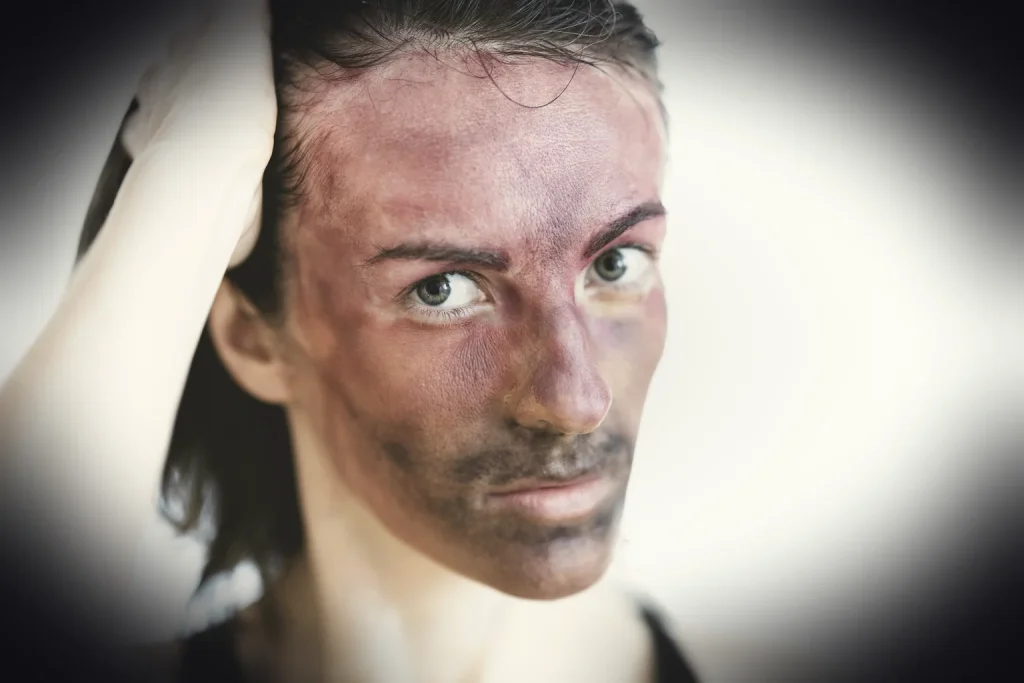
The summer email I get most often is some version of “my regular acid suddenly hurts, did the formula change?” The product is fine. The skin is different. Summer changes the physical and chemical environment that acids act on, and the same 8 percent glycolic toner that felt like nothing in February will sting on a humid July evening.
The explanation comes down to three things: temperature, pH, and hydration. Each shifts in summer, and each affects how an acid behaves on skin.
Temperature accelerates the reaction
Acid exfoliation is a chemistry reaction. The acid loosens the protein bonds (corneodesmosomes) that hold together the dead cells of the stratum corneum, and the loosened cells then shed. Like every chemical reaction, this one runs faster as temperature rises. A rough rule from physical chemistry: every 10 degrees Celsius (18 Fahrenheit) of temperature increase roughly doubles the reaction rate.
Skin surface temperature ranges from about 30 degrees Celsius in cool environments to over 36 degrees Celsius in hot or sun-exposed conditions. That’s an effective doubling of acid reaction speed. The same applied dose, on warmer skin, breaks more bonds per minute than it would on cooler skin. The sting that signals “strong enough” arrives sooner, lasts longer, and sometimes crosses into actual irritation.
Sweat changes the pH and buffering
Healthy skin sits at a surface pH around 4.5 to 5.5, slightly acidic. Acid exfoliants are formulated to work at specific pH ranges (glycolic acid at pH 3 to 4, salicylic acid at pH 3 to 3.5) where the active form dominates over the inactive form. The product’s own pH gets applied to the skin’s slightly higher pH, and the net pH on contact determines how much active acid is actually present.
Sweat has a more variable pH and tends to raise surface pH temporarily, sometimes up to 6.5 or higher with heavy sweating. The buffering capacity of skin (its ability to resist pH changes) also shifts with hydration. The result is that in summer, a freshly cleansed but warm and sweaty skin surface presents a different chemical environment to an acid than the same skin in winter. Sometimes the acid hits a more reactive surface than its formulation assumes.
Hydration speeds penetration
The stratum corneum is more hydrated in humid summer conditions, with higher water content in the corneocytes themselves. Hydrated skin is more permeable to water-soluble actives, including most acid exfoliants. The same dose of lactic acid penetrates deeper and faster on hydrated summer skin than on dry winter skin, reaching the living layers below the stratum corneum more readily and triggering more inflammatory response there.
This is the part most people underestimate. The product hasn’t changed strength. The skin’s resistance to it has dropped.
What helps
Drop frequency, not strength. If you used 8 percent glycolic three times a week in winter, drop to once or twice a week in summer. Same product, half the frequency, similar net exfoliation over the month.
Switch to gentler acids. Lactic acid and mandelic acid both penetrate more slowly than glycolic and tolerate summer conditions better. A 5 percent lactic acid two to three times a week is often a more comfortable summer routine than a 5 percent glycolic at the same frequency.
Apply at night only. Skin cools overnight, and acids have time to do their work without competing with daytime UV exposure. Don’t use acids in the morning during summer unless you’re very confident about your SPF and reapplication habits.
Stop layering acids with retinoids. The retinoid-plus-acid combination is risky year-round and genuinely problematic in summer. Pick one. Use the retinoid four to five nights a week, the acid one to two nights a week, and never on the same night.
Apply on dry skin, not damp. Damp skin amplifies penetration. After cleansing, wait three to five minutes for skin to dry before applying acid.
The contrarian view: summer is the wrong time to push exfoliation
The summer instinct is to exfoliate more because skin looks dull and sweat-soaked and oily. That instinct is wrong. Summer is when post-inflammatory hyperpigmentation forms most readily, and over-exfoliation in summer is the single most common driver of new pigmentation in the cohort of people I see. Pull back. Use acids less, use SPF more, and accept that some textural unevenness in August is the cost of avoiding a darker complication in September.
The skin will not lose ground from a summer of lighter exfoliation. It will lose ground from a summer of irritation.
What the numbers say
A 2018 study in the International Journal of Cosmetic Science measured penetration of glycolic acid through human skin samples at 25, 32, and 37 degrees Celsius and found roughly 2.3-fold increase in cumulative absorption from 25 to 37 degrees. The same study reported increased erythema and barrier disruption at the higher temperature with the same applied dose. Separately, a 2020 review in the Journal of the American Academy of Dermatology on hyperpigmentation noted that post-inflammatory pigmentation rates rise sharply in months with peak UV exposure, with topical exfoliant use cited as one of the most common preventable iatrogenic contributors. The FDA’s guidance on AHA-containing products specifically recommends UV protection and notes increased photosensitivity during the four weeks following AHA use.
FAQ
Can I just use a higher SPF and keep my normal acid routine? SPF helps but doesn’t fully offset the increased sensitivity. The acids penetrate differently in summer regardless of UV protection. Reducing frequency is the more direct fix.
What’s the safest acid for summer skin? Mandelic acid at 5 to 10 percent, used two to three times a week. It penetrates slowly, has a larger molecule that limits depth, and is well-tolerated on most skin types.
Should I stop acids entirely between June and September? Not necessarily. Reduce frequency and gentleness rather than stopping. Continuous low-level exfoliation maintains barrier and tone better than stop-start cycles.
Why does my acid sting more after a workout? Combination of warmer skin, raised pH from sweat, and increased blood flow to the surface. Wait 20 to 30 minutes after a workout and after cleansing before applying acid.
Are summer-specific acid products marketing nonsense? Mostly, yes. The acid itself doesn’t need to be reformulated for season. The cadence and pairing are what need to change.
Related reading: AHA vs BHA: when to use which, post-inflammatory hyperpigmentation management, and barrier-friendly exfoliation.
Filed under chemical exfoliation, summer, sensitive, lactic acid.
Sources
Smith WP. Comparative effectiveness of alpha-hydroxy acids on skin properties. International Journal of Cosmetic Science, 1996. Bashir SJ et al. Cutaneous bioavailability of glycolic acid as a function of temperature. International Journal of Cosmetic Science, 2018. FDA Office of Cosmetics and Colors. Alpha hydroxy acids: safety considerations.
Keep reading
- Compare & DecideBest Gentle Exfoliant for Sensitive Teen Skin in 2026, PHAs and Beyond
- Compare & DecideAlternative to AHA for Sensitive Scalp: Gentler Routes to a Calm Scalp
- Routines & How-TosThe weekly acid cycling map: a day-by-day plan for sensitive skin
References
- Green BA, Yu RJ, Van Scott EJ. Clinical and cosmeceutical uses of hydroxyacids. Clin Dermatol. 2009. PubMed.
- Smith WP. Epidermal and dermal effects of topical lactic acid. J Am Acad Dermatol. 1996. PubMed.
Have a question about “Why your acid burns differently in summer: heat, sweat, and pH mathematics”?
Ask our editorial desk. Best questions become full follow-up articles, reviewed by our medical reviewer. No medical advice given in private — answers run as articles or not at all.