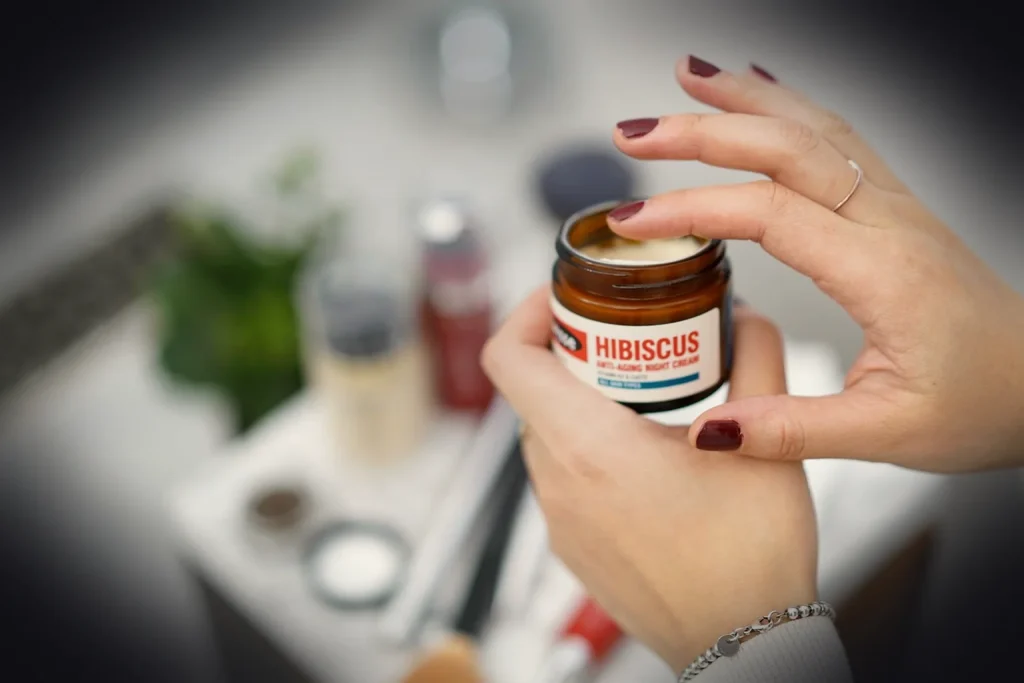
The first time I tried the original K-beauty 12-step routine, I made it eleven days. Day twelve was a Wednesday with an early flight. I did the cleanser, the moisturizer, and the SPF. The other nine steps stayed in the bathroom. By day fifteen, I had quietly downgraded to a six-step. By day thirty I was on four. By day sixty I admitted the truth to myself: the routine I was actually doing was not the routine I had been Instagramming.
I tell that story because it is the most common version of how multi-step routines actually go. The failure mode is not skin reaction. It is fatigue, travel, late nights, and the gap between aspiration and the Tuesday version of yourself who just wants to go to bed.
The attention budget no one mentions
A skincare routine has two budgets. One is biological, what your skin can absorb without revolt. The other is attentional, what you can actually maintain at 11pm on a workday. The biological budget is widely discussed. The attentional budget is almost never discussed, which is why so many routines are designed by people whose job is content rather than continuity.
Twelve steps, twice a day, is twenty-four discrete behaviors. Each one is small. Stacked, they are forty minutes of bathroom time. Most working adults will do that for two weeks while the novelty is fresh, then quietly delete steps until the routine fits the life. The deleted steps are not chosen carefully. They are chosen by which jar is hardest to open or which one ran out first.
What “8-step” smuggled back in
The 8-step revival is the 12-step minus four obvious cuts (essence, eye cream, sleeping mask, neck cream) plus the same ambient assumption that more is better. The math is friendlier. The category problem is identical. Eight separate products competing for absorption windows, eight separate purchases, eight separate decisions every night about whether tonight is a special-treatment night or a basics night.
Tool: eye cream decision tool — tells you if you actually need one.
The result, in my experience, is the same drift. The “8-step” advertised in the morning becomes a “5-step” by Friday and a “3-step” by Sunday. The shame around that drift is its own problem, because it convinces people they failed at skincare, when what failed was the design of the routine.
The contrarian section: more steps is mostly photo composition
This is the part I expect pushback on. Most of the visible value of the longer routines, in the content I see online, is photographic. Ten jars on a marble counter looks like an aesthetic. Three jars looks like a chore. Brands and creators have an incentive to push the ten-jar version because it sells more product and films better. The skin-result delta between a well-chosen five-step and a stacked twelve-step is, at best, marginal. At worst, the longer routine is actively worse because each new active dilutes the workspace for the others and competes for absorption.
The shelf is part of the product. Once you see that, you cannot unsee it. The minimalist five-step is genuinely effective and genuinely under-photographed. The maximalist twelve-step is genuinely photogenic and genuinely diminishing-returns at the skin level.
What a sustainable routine looks like
Five products, one schedule. Cleanser. Moisturizer. SPF in the morning. One serum that earns its place, like the Microbiome Glow Serum for postbiotic-driven calmness. One active two-to-three nights a week, rotated. That is it. The whole routine fits inside seven minutes.
Sustainable is a high bar. It has to work on a Tuesday when you are tired, a Friday when you are out, and a Sunday when you have time. Most twelve-step routines are designed for Sundays and pretend the other six days do not exist.
Why consistency wins over complexity
Skin responds to repetition, not surprise. The American Academy of Dermatology guidance on basic care is consistent on this: a small number of well-chosen products, used daily, outperforms larger rotations with poor adherence. The mechanism is straightforward. Cell turnover is on a 28-day cycle for younger adults, longer with age. You need at least two full cycles, ideally three, before judging what an active is doing. A routine you skip three nights a week never finishes a cycle. The active never gets the runway to show.
The honest comparison
If you have been running a stacked routine for years and it is working, you have a working routine. The argument here is not “no one can do twelve steps.” It is “most people who claim a twelve-step routine are actually running a four-step routine three days a week and feeling guilty about it.” The honest version of the four-step is more useful than the dishonest version of the twelve-step.
For more on which products to cut first when you trim, see why your active list is too long. For the underlying philosophy, the slow skincare manifesto covers it in detail. The more-is-more fallacy piece covers the diminishing-returns curve.
Tool: slow skincare routine builder — 4 products max, swapped in over 3 weeks.
FAQ
What if I genuinely enjoy a long routine? Then keep it. The argument is about sustainability, not pleasure. A person who reliably does ten steps because they love it is in better shape than a person who reliably does three steps and resents them. The failure mode is when the routine is aspirational rather than actual.
Is there a number that is too few? Probably two. Cleanser plus SPF in the morning with no moisturizer leaves skin dry, and dry skin reacts more. Three to five is the working range for most adults.
What about teen skin? Even simpler. Three products max: gentle cleanser, light moisturizer, SPF. Add a single active only for a specific named problem.
How do I decide what to cut first? Anything described as “essence,” “first treatment lotion,” or “hydrating toner” can usually go without consequence. Most decorative masks too. Multiple serums collapse to one.
Won’t I lose results? Most readers report the same or better skin three months in. Less reactivity. More predictable behavior. Less monthly spend.
Sources
- American Academy of Dermatology. “Skin care tips dermatologists use.” aad.org
- Draelos ZD. “The science behind skin care: cleansers.” Journal of Cosmetic Dermatology, 2018.
- British Association of Dermatologists. Patient information leaflets, 2024 edition.
Tag hub: All skinimalism coverage
Keep reading
Tool: slugging decision tool — skin types and routines where it helps vs backfires.
Tool: glass skin routine — the 7 steps with realistic timelines.