TL;DR
A 30ml serum used at the correct dose lasts roughly eight to ten weeks. That window matches the stability of microbiome-friendly actives and antioxidants without giving the formula time to lose potency. Bigger bottles look like better value and degrade past peak before you finish them. We chose the format to match the chemistry, not the shelf.
The bigger bottle is one of skincare’s most reliable optical illusions. A 100ml serum for the same price as a competitor’s 30ml feels like a smart purchase until you do the math on how long the formula actually performs at full strength. The honest answer for most active-loaded serums is six to eight weeks after opening, which is roughly the time it takes the average user to work through a 30ml bottle. Anything beyond that volume is, for the formula’s purposes, dead weight on the bathroom shelf.
What 30ml actually buys you
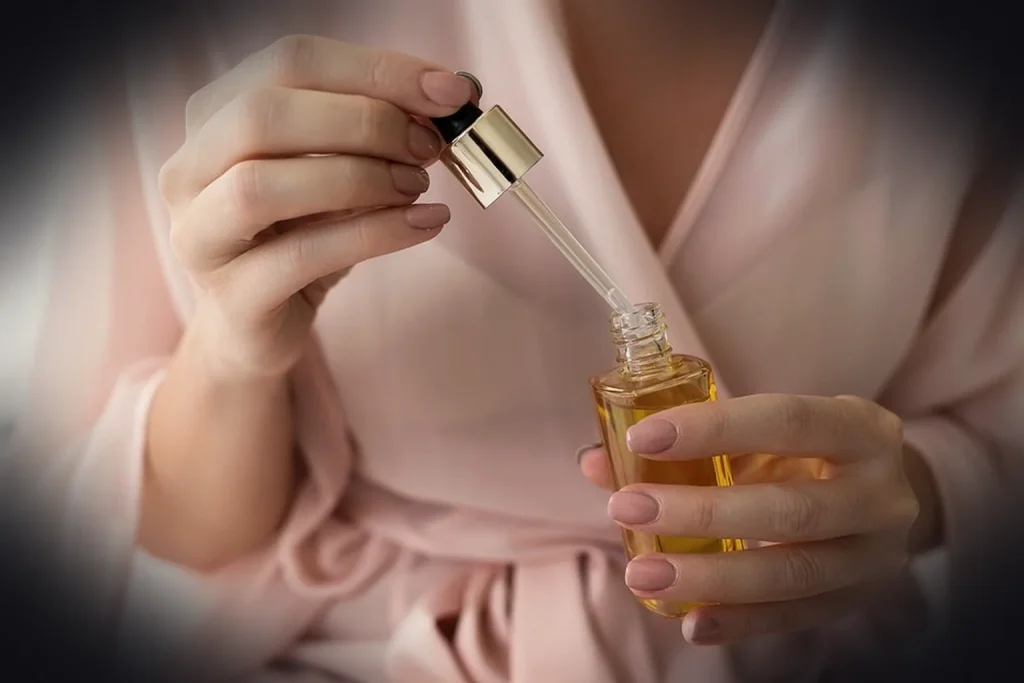
A reasonable serum dose is half a pipette or two pumps, roughly 0.3 to 0.4ml per application. Used twice daily, that is 0.6 to 0.8ml per day, or 18 to 24ml per month. A 30ml bottle delivers eight to ten weeks of use at full dose, which is approximately the window in which the active ingredients in Microbiome Glow Serum hold their measured concentration within our formulation tolerance. The math is not arbitrary. We designed the bottle volume to match the use curve to the stability curve. A bigger bottle would still contain product on day 100, but the product on day 100 would not be the product you bought on day 1.
Why active stability sets the bottle size
The actives fall into three categories. Postbiotic ferments and lysates lose structural integrity in the presence of oxygen over weeks. Stabilized antioxidants degrade through controlled oxidation regardless of how well the bottle is sealed; the engineering buys time, not permanence. Peptides are more stable but susceptible to slow hydrolysis at room temperature. Combine those three in one formula and you have a product whose measured potency drops perceptibly past around 60 to 70 days of opened use. A 50ml bottle would sit at room temperature for three to four weeks past its stability window. A 100ml bottle would be roughly 40 percent degraded by the time you finished it.
Why the industry sells bigger anyway
Larger formats win on retail psychology. Cost-per-millilitre looks lower; perceived value rises; impulse purchases convert better. The fact that the molecule is dying inside the bottle does not show up on the price-per-millilitre label, so most consumers cannot see the tradeoff. Brands selling 100ml or 150ml serums assume either that the formula is stable enough to survive a five to six month use window (the actives are relatively inert), or that the customer will replace the product before they finish it (a portion of every bottle is thrown away). Both are defensible business choices; neither maps onto our microbiome chemistry.
What we considered and rejected
50ml was the obvious next option. It would have looked like better value at retail and worked acceptably for slower, less concentrated serums; we rejected it because the extra 20ml would have spent its last fortnight outside the design potency window. 15ml mini sizes work as travel SKUs and trial entry points, but as the primary purchase the cycle is too short to evaluate the product fairly. Bulk refill pouches were tempting on the sustainability side, but decanting from a pouch into a primary bottle defeats the airless pump’s whole purpose.
The honest tradeoffs
30ml is more expensive to manufacture per millilitre than 50ml or 100ml; the bottle, pump, label, and carton cost roughly the same regardless of fill volume. We absorb part of that cost; the rest is reflected in the price. We are not selling 30ml because it is cheap to make. We are selling it because it matches the chemistry. A customer who finishes a bottle every eight to ten weeks reorders more often than one buying a 100ml bottle every five months, and we treat the cadence as a feature: the bottle paces with the routine.
The contrarian read on our own decision
Larger formats are not inherently dishonest. For a hyaluronic acid serum with no oxidatively sensitive actives, a 100ml bottle that lasts five months is fine; the chemistry tolerates it. The format failure is when brands ship antioxidant-heavy or biologically active serums in volumes that exceed the formula’s lifespan and trust the consumer not to notice. We are not claiming smaller is always better; we are claiming it for formulas like ours.
What this means for you as the buyer
You finish what you buy before it loses potency. The cost per millilitre is higher than a 100ml competitor; the cost per effective dose is roughly comparable, because half of the 100ml competitor’s volume is below the design potency by the time it is used. The price-per-millilitre comparison is the wrong unit.
Frequently asked questions
Can I buy a larger size? No. The format is fixed for stability reasons. A 15ml trial size is the only smaller option.
How long after opening should I use the bottle? Ten weeks at standard dose. The product is still usable beyond that, but the potency is past the design window.
Should I refrigerate the serum? Room temperature is fine; refrigeration is unnecessary and can cause condensation issues if the bottle is moved between cold and warm environments.
Why is the trial size 15ml and not 5ml? A meaningful trial of an active serum needs four to six weeks. Five millilitres is not long enough to evaluate fairly.
Do you offer a subscription? A repurchase reminder timed to your actual use rate, not a forced auto-ship. We do not push delivery before the bottle is empty.
The format decision lives alongside the packaging choice and the launch calendar. See why we chose airless pumps for the container reasoning, why we launch in 2026 for the timing, and the slow skincare manifesto for the broader thesis. Tag hub: skinimalism.
Sources
Halla N et al. Cosmetics preservation: a review on present strategies. Molecules, 2018 (PubMed/NIH). Pinnell SR. Cutaneous photodamage, oxidative stress, and topical antioxidant protection. JAAD, 2003 (PubMed). U.S. Food and Drug Administration, period-after-opening guidance for cosmetics (FDA).